Full Article
about Valdeconcha
Tagus riverside village; farmland and crops
Hide article Read full article
A small village in La Alcarria
Valdeconcha sits in La Alcarria, a comarca in the province of Guadalajara, and offers a clear sense of how rural life still functions in this part of Castilla-La Mancha. It stands on gently rolling land at around 750 metres above sea level, surrounded by cereal fields and agricultural tracks that link it to nearby villages. Today, just over forty people live here, and much of daily life remains tied to the land.
The landscape described by Camilo José Cela in Viaje a la Alcarria, a well-known travel book in Spain, is still recognisable in places like this. Wide horizons, understated villages and a rhythm shaped by clearly defined seasons continue to define the area. Valdeconcha is not a monumental destination, nor does it try to be. Its interest lies in showing how these small settlements in La Alcarria were organised and what has endured over time.
Architecture shaped by necessity
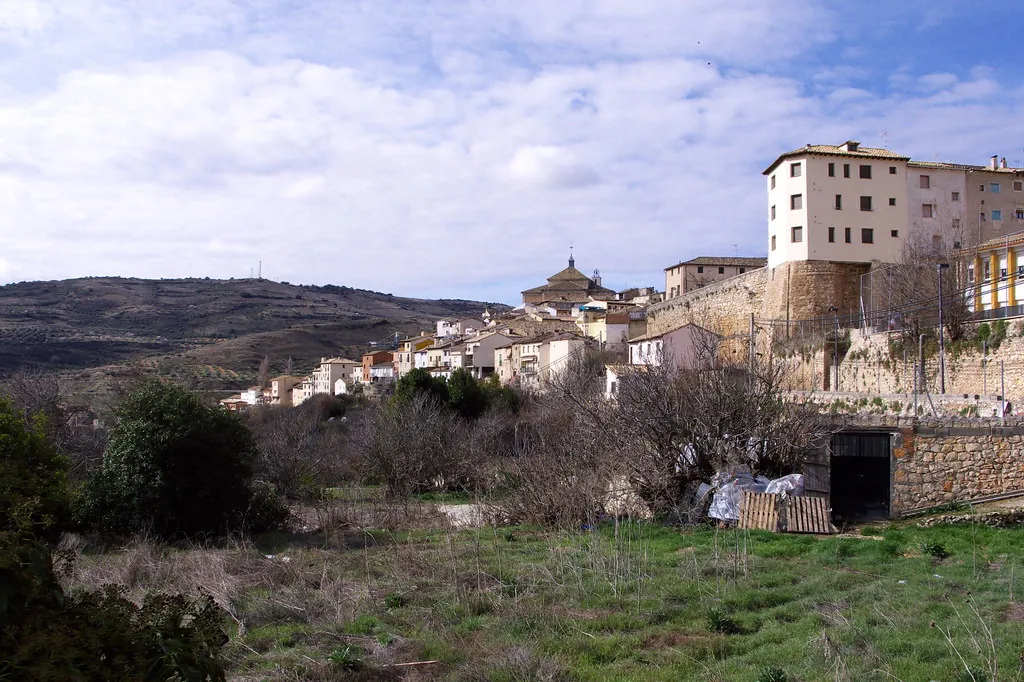
At the centre of the village stands the parish church, the main landmark in the urban layout. Its origins are usually placed in the 16th century, though later alterations have changed parts of the structure. It is a restrained building, constructed with thick masonry walls and designed more to withstand the climate than to impress visually.
Clustered around it are the houses of Valdeconcha. Many are built in stone or rendered masonry, reflecting traditional construction methods in the area. Some still retain continuous balconies and small sun-facing galleries known as solanas, spaces once used to dry agricultural produce. These details hint at a way of life closely connected to farming.
Older features also remain visible. Former corrals and agricultural outbuildings are often integrated into the homes themselves, something common in villages of La Alcarria well into the 20th century. The layout of the streets reinforces this sense of gradual growth. They are short, slightly uneven and do not follow a strict plan, instead reflecting successive expansions from the original nucleus of the village.
The open landscape of La Alcarria
The surroundings of Valdeconcha are defined by the characteristic agricultural landscape of the comarca. Large cereal fields stretch across the terrain, occasionally interrupted by a solitary holm oak. Dirt tracks run through shallow valleys and connect the cultivated plots.
There are no nearby mountains or dense forests. The visual focus is the open countryside, where the scale of the land becomes more apparent from the small hills that edge the municipal area. From these gentle rises, the views extend across the fields and towards the horizon.
Seasonal changes bring noticeable shifts in colour. In spring, the cereal crops alter the tones of the landscape, and the paths become easier to walk. At other times of year, ochres and yellows dominate, typical of Spain’s central plateau. The setting remains simple but expressive of the agricultural cycle that shapes it.
Walking the agricultural paths
The tracks leading out from the village largely follow historic agricultural routes. These paths were once used to reach cultivated plots or to connect with neighbouring settlements, and many still serve that purpose today.
They are straightforward to follow, even without specific signposting, as long as the pace remains unhurried. Rather than fixed walking routes, they offer a way to move through a working landscape that continues to serve its original function.
Along the edges of these paths, traces of earlier land use can still be seen. Dry stone walls mark boundaries, while occasional wells or small agricultural structures appear along the way. These elements are modest but contribute to an understanding of how the land has been organised and used over time.
A calendar shaped by seasons
Life in Valdeconcha changes noticeably throughout the year, as is often the case in villages with a very small population. During the colder months, activity is quiet and limited. In summer, the atmosphere shifts as relatives and former residents return, many of whom still keep houses in the village.
The annual festivities usually take place during the warmer months. They combine religious events with simple gatherings among neighbours, creating moments when the village briefly recovers some of the movement it had in earlier times. These occasions are less about spectacle and more about continuity, maintaining connections between people and place.
Visiting Valdeconcha today
Valdeconcha can be explored on foot in a short amount of time. The appeal is not in seeking out individual monuments but in observing the structure of the village and the landscape that surrounds it. Its scale, both in physical size and in daily life, remains largely unchanged.
Visitors are advised to arrive prepared if planning to spend several hours in the area, as services are limited. In return, what Valdeconcha offers is increasingly rare in La Alcarria: a very small village that still preserves its original proportions and the quiet of the surrounding countryside.