Full Article
about Villaconejos de Trabaque
Known for its wine caves and wickerwork; set beside the Trabaque river
Hide article Read full article
A village shaped by its setting
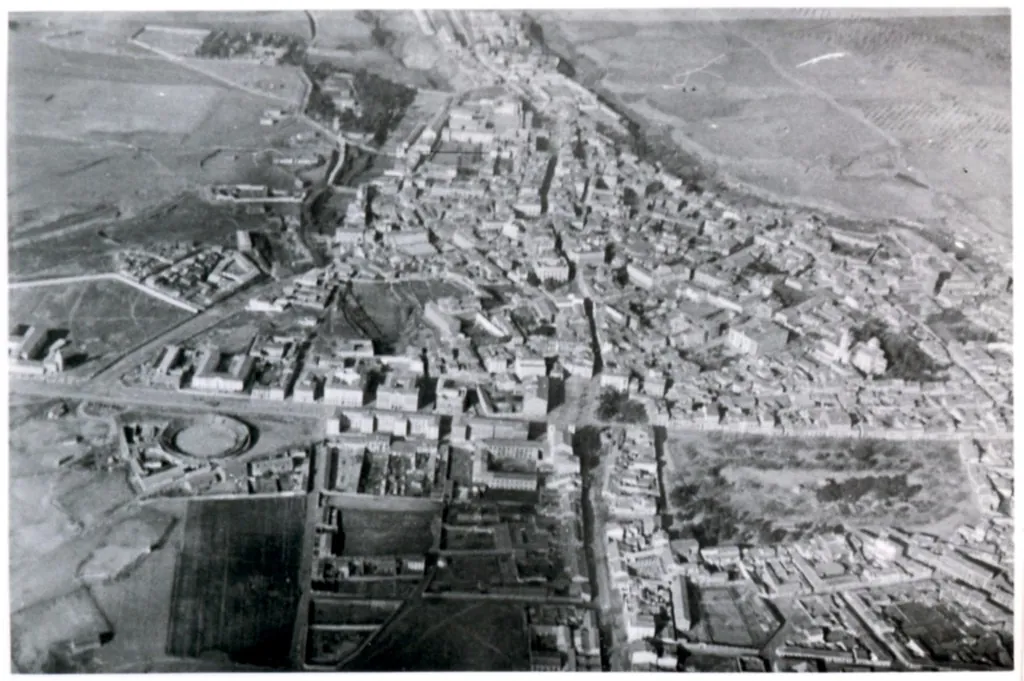
Villaconejos de Trabaque sits in the Alcarria of Cuenca, a region where the terrain dictates the rules. Here, at about 840 metres, the plateau breaks into small valleys that hold the Trabaque stream. The village’s layout makes sense when you see it: streets follow old paths to fields and pens, not any design. Houses were placed where the work was.
The name comes from the rabbits in the countryside and the Trabaque stream itself. This isn’t a mighty river, but its course marks the land, bringing lines of poplars and brambles to an otherwise dry expanse of cereal fields. The architecture follows suit. You see stone and masonry houses with curved tiles and iron balconies—buildings made to last, with wide doors for carts and internal courtyards that once held animals.
The church and the logic of the centre
The parish church of San Juan Bautista is a sober stone building from the 16th century, modified later. Its significance is topographic. It anchors the highest point, and the square before it has always been the communal stage: for announcements after mass, for gatherings during fiestas. The space around it feels more important than the architecture within.
Walking from there, the village’s history is in the details. Look for the heavy wooden doors studded with iron, the worn stone lintels, the courtyards visible through archways. Some houses have been carefully restored, often by families who return in summer. The centre is small; you can walk its entirety in twenty minutes. The point isn’t to see a monument, but to read the traces of a working landscape.
The territory of the stream
Beyond the last houses, the land opens into a classic Alcarria scene: rolling hills of barley and wheat, patches of scrub and pine. The Trabaque stream cuts a green seam through it. A network of dirt tracks, maintained for farming, follows its course and branches out toward old sheepfolds and isolated farmsteads.
These tracks are the real walking routes. They connect to neighbouring villages like Cañaveras or Albendea, making for walks of two or three hours through quiet country. In spring, the fallow land blooms with poppies and camomile. Come autumn, if there’s been rain, the pine woods attract people foraging for mushrooms—a practice that requires local knowledge and permission.
Movement and seasons
There are no waymarked grand routes here. The experience is one of permeability. The secondary roads see so little traffic they are used more by cyclists than cars. The rhythm of a visit is set by the light and the heat. In summer, the plateau bakes by midday; movement happens early or late. That’s also when you might see buzzards circling over the fields, using the thermal currents.
Time and community
The village’s calendar is liturgical. The main fiesta for San Juan Bautista falls in late August, when the population swells with returning families. The program typically includes a mass, a procession, and a dance in the square. Holy Week is observed with a quiet intensity, with processions that involve much of the remaining community.
These events aren’t spectacles for outsiders; they are the mechanism that sustains the social fabric. They explain why certain houses are shuttered most of the year but come alive in summer.
A practical footing
You come to Villaconejos de Trabaque on foot or by car. It’s a place to be walked slowly, with an eye on how the land meets the built form. Combine it with a visit to other Alcarria villages—the distances between them are short, but each has its own character.
This isn’t a destination for checklist tourism. It’s a place where you see the continuity of rural life, written in stone, path, and seasonal return. You either find interest in that quiet dialogue or you don’t; the village makes no special effort to convince you.