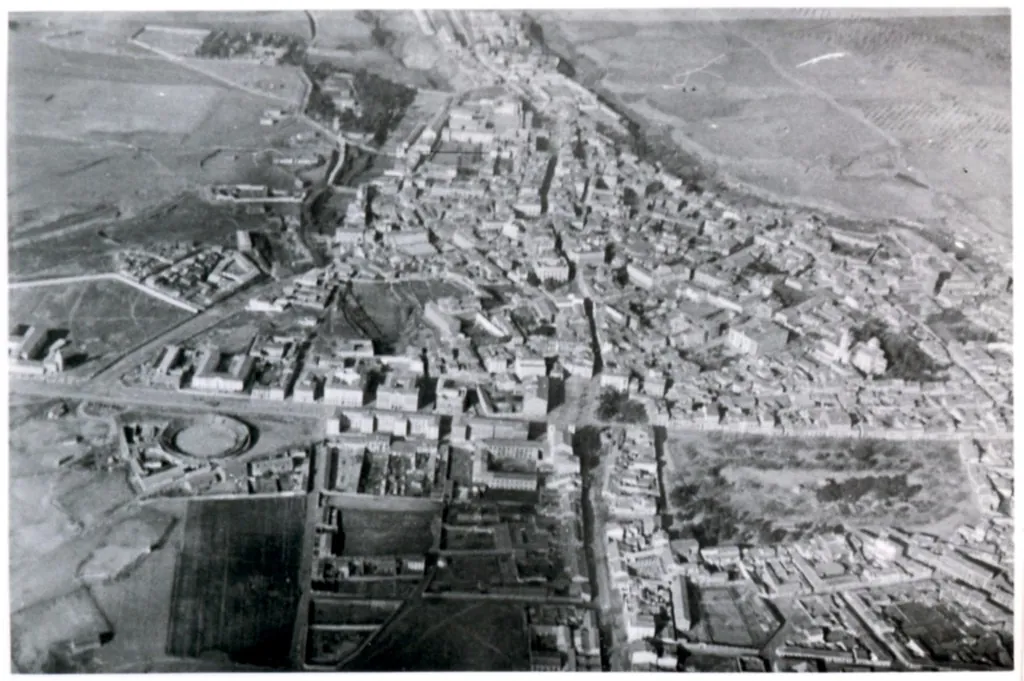
Vista aérea de Villanueva de Argecilla
Instituto Geográfico Nacional · CC-BY 4.0 scne.es
Castilla-La Mancha · Land of Don Quixote

Villanueva de Argecilla

The thermometer on the car dashboard drops a full four degrees in the last ten minutes before Villanueva de Argecilla appears. At 1,020 m the air t...

30 inhabitants · INE 2025
1020m Altitude

Why Visit

Mountain Church of San Blas Cultural visits

Best Time to Visit

summer

San Blas Festival (February) agosto

Things to See & Do
in Villanueva de Argecilla

Heritage

  • Church of San Blas
  • Rural surroundings

Activities

  • Cultural visits
  • Hiking

Festivals
& & Traditions

Fecha agosto

Fiestas de San Blas (febrero)

Las fiestas locales son el momento perfecto para vivir la autenticidad de Villanueva de Argecilla.

Full Article
about Villanueva de Argecilla

Small rural settlement; church with Romanesque façade

Ocultar artículo Leer artículo completo

The thermometer on the car dashboard drops a full four degrees in the last ten minutes before Villanueva de Argecilla appears. At 1,020 m the air thins and the wind sharpens; even in late May you’ll be glad of a jumper once the sun slips behind the cereal fields. This is Spain’s high plateau in miniature—thirty-odd stone houses, a single church tower and a horizon so wide it feels like someone has tugged the edges of the landscape outward.

The village that forgot to grow

There is no dramatic plaza mayor, no ochre-washed alleyway dripping with geraniums. Instead, low walls of honey-coloured limestone shoulder straight onto the lane, wooden gates hang slightly askew, and the only sound is the gravelly crunch of your own boots. Halfway along the single street an elderly man in a beret nods a greeting, then disappears behind a plank door that probably last saw paint under Franco. Population signs still claim twenty-eight residents; on a weekday you may count fewer.

The parish church of Nuestra Señora de la Asunción is locked more often than not, yet its stone blocks absorb the late-afternoon light like a sponge, turning the colour of burnt cream. Circle the building and you’ll notice how the apse sits directly on the bedrock—builders here simply sliced off the hilltop and started laying courses. Inside, if you find the key-keeper’s nephew (try the bar, open Thursday to Sunday), the reward is a nave barely twenty paces long, floored with worn bricks that echo every footstep.

Walking without waymarks

Official hiking routes stop at Sigüenza, fifteen minutes down the GU-186. From Argecilla you get something looser: a lattice of farm tracks that unroll over the crests like lightly ironed ribbon. Pick any lane eastwards and within twenty minutes the village shrinks to a smudge on the skyline; wheat and barley ripple like water in a breeze that has already crossed three provinces unhindered. There are no signposts, so download an offline map before you leave the last 4G pocket near the A-2. Spring brings poppies and corn marigolds to the field margins; September turns everything bronze and rustles with harriers hunting mice among the stubble. Stout shoes suffice—this is not the Pyrenees—but carry water; the nearest fountain is back in the square.

Winter arrives early at this altitude. Daytime temperatures can stay below freezing from December to February, and the road from Sigüenza is treated with grit, not cleared. If you want snow-dusted cereal terraces and a sky the colour of gunmetal, come in January, but pack snow chains and expect the bar to be shut.

Eating in a place with no menu

The village’s only social centre doubles as grocer, tavern and gossip shop. Opening hours are written on a scrap of cardboard: 11:00–14:00 and 17:30–20:30, “si hay gente”. Coffee comes in glasses thick enough to survive a dishwasher that never arrived; a caña of lager costs €1.20 and arrives with a free tapa of local sheep’s cheese, the Manchego curado tasting closer to a five-year British cheddar than anything rubbery sold under the same name in UK supermarkets. Do not ask for vegetarian paella—rice here is for sick children and there is no paella pan in sight. Instead, order gachas manchegas, a garlicky porridge thickened with flour and sweet paprika; request “sin chorizo” if meat is off the cards. For anything more elaborate, fill the boot in Sigüenza first: the Friday market on Plaza Mayor sells leeks the width of broom handles and lamb shoulders already scored for the oven.

When the diaspora returns

Normal service pauses during the fiestas of La Asunción, around 15 August. Suddenly every second house sprouts a Madrid number-plate, fairy lights zig-zag across the street and a sound system appears in the square playing 1980s Spanish pop until the Guardia Civil remind them of the curfew. The population swells to 200; the bar runs out of beer by midnight and someone’s uncle is dispatched to Sigüenza for emergency crates. If you crave atmosphere over solitude, these three days deliver it, but book accommodation early—rooms in the Parador de Sigüenza jump from €120 to €190 and still sell out.

Night skies and petrol gauges

Darkness here is thorough. Walk fifty metres beyond the last streetlamp and the Milky Way spills across the sky like sugar on slate. August nights can dip to 12 °C even after a 35 °C day, so bring a fleece. Shooting stars are common in mid-August; the Perseids burn bright in the thin, dry air.

Practicalities are unglamorous but vital. The final petrol station lies 22 km away in Molina de Aragón; running the heater on a cold April evening can leave you embarrassingly short. Mobile reception is patchy—Vodafone picks up one bar on the church steps, EE usually none—so download driving directions before leaving the motorway. Cash is king; contactless failed to catch on and the nearest ATM is back on Sigüenza’s main drag. Finally, English is rarely spoken: a polite “Buenas tardes” and a stab at ordering in Spanish oil the wheels better than slow-motion shouting.

Leave before sunrise in October and you’ll see the cereal stubble steaming as it warms, the village silhouette balanced on the horizon like a ship on a calm sea. There are no souvenir shops, no hashtags carved into benches, no coach parks hidden behind olive trees. Just a high, quiet place where Spain remembered how to stand still for a moment—something no amount of tapas trails or audio guides can manufacture.

Key Facts

Region
Castilla-La Mancha
District
La Alcarria
INE Code
19318
Coast
No
Mountain
Yes
Season
summer

Livability & Services

Key data for living or remote work

2024
TransportTrain nearby
EducationElementary school
Housing~6€/m² rent · Affordable
Sources: INE, CNMC, Ministry of Health, AEMET

Official Data

Institutional records and open data (when available).

  • RUINAS DEL TORREÓN Y DEL ANTIGUO HOSPITAL
    bic Genérico ~0.1 km

Planning Your Visit?

Discover more villages in the La Alcarria.

View full region →

More villages in La Alcarria

Traveler Reviews