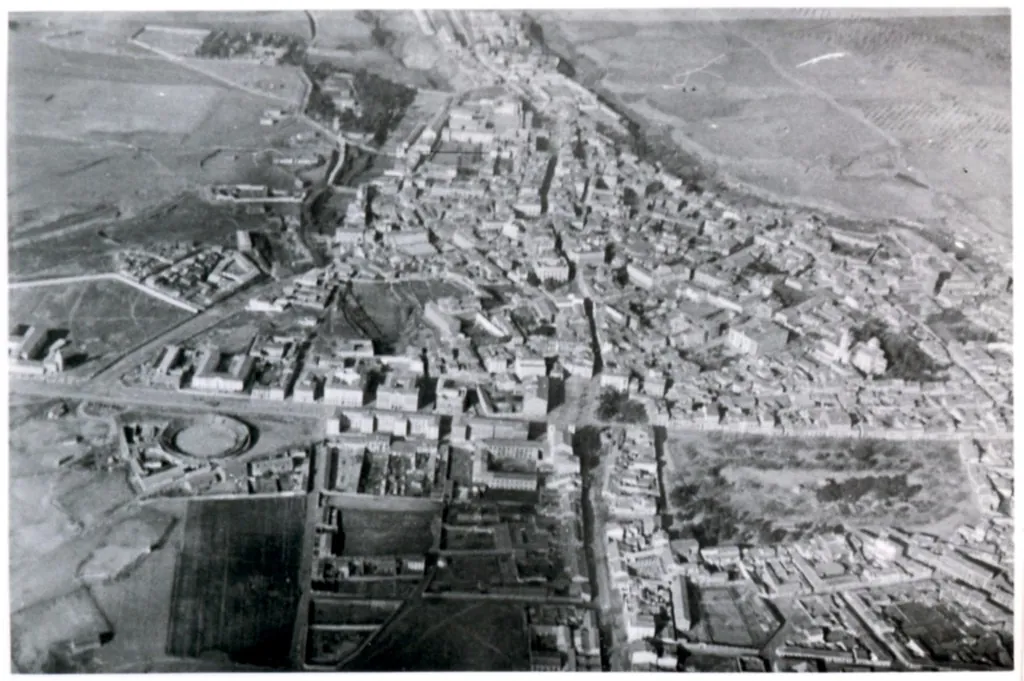
Vista aérea de Yebes
Instituto Geográfico Nacional · CC-BY 4.0 scne.es
Castilla-La Mancha · Land of Don Quixote

Yebes

The morning train from Madrid's Atocha station disgorges its cargo of suits and laptops at 7:43 am. By 8:15, those same commuters are ordering cort...

5,637 inhabitants · INE 2025
870m Altitude

Why Visit

Mountain Astronomical Observatory Astrotourism

Best Time to Visit

year-round

San Bartolomé Festival (August) agosto

Things to See & Do
in Yebes

Heritage

  • Astronomical Observatory
  • Valdeluz development

Activities

  • Astrotourism
  • Hiking

Festivals
& & Traditions

Fecha agosto

Fiestas de San Bartolomé (agosto)

Las fiestas locales son el momento perfecto para vivir la autenticidad de Yebes.

Full Article
about Yebes

Municipality home to the AVE station and Ciudad Valdeluz; contrast between village and city.

Ocultar artículo Leer artículo completo

The morning train from Madrid's Atocha station disgorges its cargo of suits and laptops at 7:43 am. By 8:15, those same commuters are ordering cortados in Yebes' single café, having traded the capital's chaos for a village where the loudest sound is typically the church bell marking the quarter hour. This is modern Spain in microcosm: a place where 5,200 residents live at 879 metres above sea level, yet work thirty kilometres away in the capital's glass towers.

The View from the Paramera

Yebes sits on one of those characteristic limestone plateaux that Camilo José Cela trudged across in his 1948 travelogue "Journey to the Alcarria". The landscape remains essentially unchanged – wheat fields ripple towards horizons that seem impossibly distant, interrupted only by the occasional olive grove or the rounded silhouette of another distant hill. The air carries that particular dryness that makes Castilian winters bite and summers sear, though spring brings a brief explosion of wildflowers that transforms the dun-coloured earth into something almost lush.

Walk five minutes from the modern residential developments that have mushroomed since 2005, and you're onto dirt tracks that haven't altered since Cela's day. The GR-123 long-distance footpath skirts the village, following ancient drove roads where shepherds once guided their flocks towards winter pastures. These routes roll gently rather than climb dramatically – this is walking country for those who prefer contemplation to perspiration. A circular route to the abandoned hamlet of Valdeluz takes ninety minutes and requires nothing more technical than comfortable shoes and a water bottle.

The village's relationship with its hinterland remains refreshingly functional. Local farmers still drive their tractors through the streets, and the morning dog-walkers follow paths that double as access routes to the surrounding cereal fields. Unlike many Spanish villages that have fossilised into museum pieces, Yebes continues to work its land, even if most of the heavy lifting is now done by combine harvesters rather than the mules that characterised the Alcarria's agricultural past.

Concrete and Constellations

The astronomical observatory dominates the northern skyline like a giant white golf ball that has rolled in from some futuristic fairway. This is Spain's National Astronomical Centre, and while you can't simply wander in for a look around, its presence has an unexpected benefit. Light pollution regulations mean that Yebes maintains darker night skies than anywhere else within an hour of Madrid. Drive ten minutes out of the village on any clear evening, and the Milky Way becomes visible to the naked eye – something impossible in the capital's orange glow.

The village's recent growth stems directly from Madrid's housing boom. Between 2000 and 2010, Yebes' population tripled as developers threw up apartment blocks to house capital workers seeking affordable property prices. The result is neither pretty nor particularly ugly – just functional. The old centre, a compact knot of streets around the fifteenth-century church, occupies perhaps ten minutes of wandering time. The rest is modern Spain: neat residential blocks with underground parking, a municipal swimming pool that's packed during July's 35-degree afternoons, and a health centre that serves several neighbouring villages.

This newness has its advantages. The roads are wide enough for two cars to pass, every house has fibre-optic broadband, and there's ample parking around the small Tuesday market where locals buy vegetables and gossip. The downside? Yebes lacks the patina of age that draws many visitors to Spanish villages. Don't expect medieval alleyways or Renaissance plazas. Instead, come for a glimpse of how ordinary Spaniards actually live when they're not serving tourists.

What Passes for Local Specialities

The village's culinary offerings reflect its transitional nature. The single remaining traditional bar, La Parrilla Alcarreña, serves proper migas – fried breadcrumbs with garlic and pork belly – on winter weekends, accompanied by the local young red wine that costs €2.50 a glass. The owner, Jesús, still makes his own morteruelo, a pâté of game and pork that spreads like potted meat but tastes of juniper and thyme. Arrive after 2 pm on Sunday, and you'll find families lingering over three-hour lunches that inevitably conclude with honey-drenched desserts made from the hives that dot the surrounding hills.

The newer restaurants cater primarily to the commuter crowd, offering €12 menu del día lunches of grilled chicken and chips, or salads for the health-conscious. One establishment has attempted to create "gourmet tapas" – which translates to traditional dishes presented on slate plates at twice the normal price. Stick to the old places, where the tortilla arrives still trembling from the pan and the house wine comes in unlabelled bottles that the waiter pours with theatrical generosity.

When to Visit, When to Avoid

Spring arrives late at this altitude – expect still-cool mornings through April, when the surrounding fields turn emerald with new wheat growth. May brings the most comfortable walking weather: warm enough for t-shirts at midday, cool enough for proper sleep at night. Summer proper starts in June and doesn't relinquish its grip until September. During July and August, the landscape becomes a study in gold and brown, temperatures regularly exceed 35 degrees, and sensible locals retreat indoors between 1 pm and 5 pm.

Autumn offers perhaps the best compromise: September maintains summer's blue skies but loses the brutal heat, while October paints the occasional poplar in yellow among the endless olive green. Winter hits hard when it comes – frosts are common from December through February, and the paramera's wind can make 8 degrees feel like minus figures. Snow falls perhaps once each winter, rarely settling for more than a day.

Access remains straightforward year-round. From Madrid, the A-2 motorway makes the journey in twenty minutes outside rush hour, though Friday evenings heading out and Sunday nights returning can add an extra thirty minutes to the drive. Trains run every thirty minutes from Atocha, taking 35 minutes to reach Yebes station – which sits two kilometres from the village itself, requiring either a taxi (€8) or a forty-minute walk along a path that becomes decidedly unpleasant during August's heat or January's gales.

Those seeking postcard Spain should probably look elsewhere. Yebes makes no attempt to court tourists – there's no souvenir shop, no guided tours, no carefully curated "authentic experiences". What it offers instead is something increasingly rare: a functioning Spanish village where life continues regardless of whether visitors appear, where the bar owner remembers your coffee order on your second visit, and where the surrounding landscape remains essentially as it was when conquistadors rode these same tracks towards their ships in Extremadura.

Key Facts

Region
Castilla-La Mancha
District
La Alcarria
INE Code
19326
Coast
No
Mountain
Yes
Season
year-round

Livability & Services

Key data for living or remote work

2024
ConnectivityFiber + 5G
TransportTrain nearby
HealthcareHospital 5 km away
Housing~5€/m² rent · Affordable
Sources: INE, CNMC, Ministry of Health, AEMET

Planning Your Visit?

Discover more villages in the La Alcarria.

View full region →

More villages in La Alcarria

Traveler Reviews