Full Article
about Yebra
Historic town of the Order of Calatrava; agricultural setting
Hide article Read full article
By mid-morning, in one corner of the square, the shadow of the church of San Andrés stretches across the stone paving. In winter there is still a trace of early frost, and a cold dampness rises through the soles of your shoes. Tourism in Yebra almost always begins here, in this quiet plaza where neighbours cross slowly, hands in pockets or carrying a small bag.
At around 750 metres above sea level, in the heart of La Alcarria, the village moves at a pace that has little to do with the busier destinations in the province of Guadalajara. There is no rush to see a list of sights. The square, the church tower and the unhurried rhythm of daily life set the tone from the outset.
The Streets and the Church of San Andrés
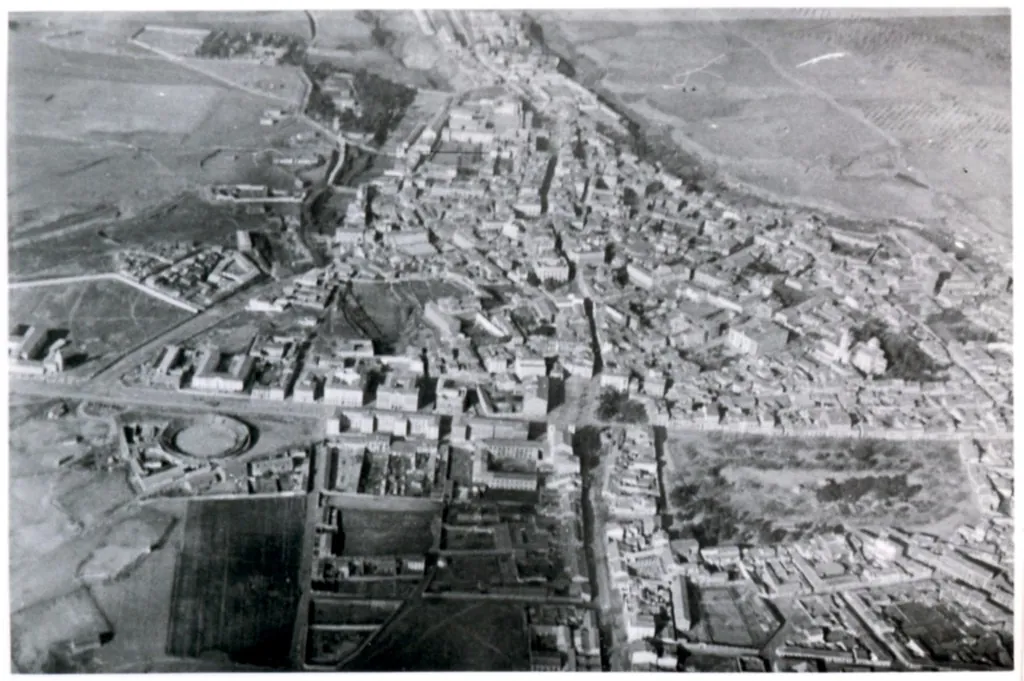
The layout is simple. Short streets rise and dip gently, lined with stone houses mixed with brick and wooden gates that have seen several layers of paint. Some façades show recent repairs; others keep the muted tones left by passing years.
The parish church of San Andrés dominates the square. It is not a monumental building, yet from almost any corner of the old centre its tower eventually comes into view. It acts as a quiet reference point as you move through the village.
Around it, details hint at a rural past that still shapes the present: former entrances to animal pens, small wine cellars dug beneath certain homes and courtyards where tools are still stored. These are not arranged as attractions, but they tell their own story about agricultural routines and long days in the fields.
Yebra’s urban centre is compact. A slow walk is enough to trace its outlines, pausing now and then to notice a worn doorstep or a heavy wooden door. There is little traffic and few distractions, just the sound of footsteps on stone and the occasional greeting exchanged across the street.
The Fields of La Alcarria
A few minutes on foot are enough for the landscape to open up. The rolling cereal fields follow one another in the soft undulations typical of La Alcarria, a historic region in central Spain known for its dry farmland and wide horizons. Between the crops, patches of holm oak appear, along with scattered olive groves and dirt tracks that crunch under car tyres or bicycle wheels.
Early in the morning the air often carries the scent of cold earth and crushed thyme. At sunset, low light lingers on the stubble and in the tops of the oaks. It is a brief moment. As soon as the sun drops, the temperature falls quickly, especially outside the summer months.
Stone threshing floors can still be seen, where grain was separated decades ago. Scattered across the fields are simple lambing shelters, many now half-ruined. These modest constructions underline how closely the local economy has long been tied to cereal crops and livestock. The landscape feels open and functional, shaped by work rather than spectacle.
The sense of space is one of Yebra’s defining features. There are no dramatic landmarks on the horizon, only a sequence of low hills and cultivated land. The appeal lies in that continuity, in the way the fields stretch out without interruption.
Quiet Paths Towards the Tagus
Several rural tracks leave Yebra and link up with neighbouring villages. They are straightforward routes, better suited to an unhurried walk or a gentle cycle than to demanding hikes. The terrain rises and falls gradually, without sudden changes.
To the south, the land slopes little by little towards the Tagus, Spain’s longest river. The river itself is not always visible from the paths, yet its presence is felt in the vegetation and in the birdlife. With a pair of binoculars, it is easy to spot partridges taking flight from the fields or a bird of prey gliding on rising air currents. At certain times of day, quails can be heard hidden among the crops.
Shade is scarce across the open hills. In summer, setting out early is advisable. By midday the sun falls directly on the slopes and the heat builds quickly. Outside the hottest months, the same exposure means cooler air, particularly once evening approaches.
These tracks are not signposted as formal tourist routes. They function first and foremost as working paths for farmers and as connections between communities. For visitors, they offer the chance to experience the surrounding countryside at its own pace, without facilities or interpretive panels.
Honey and Everyday Life
Yebra does not have an infrastructure designed specifically for visitors. Village life continues to revolve mainly around the countryside and the residents who live here year-round. Anyone planning to spend the day should come prepared or rely on services in nearby towns.
This part of Guadalajara province is known for Miel de La Alcarria, honey with a Denominación de Origen, a protected designation that guarantees its origin and quality. It is thick and aromatic, with a dark amber tone that varies according to each season’s flowering. The flavour reflects the plants that grow across these fields, tying the product directly to the landscape.
Daily life remains discreet. There are no large visitor centres or scheduled activities shaping the day. Instead, the village follows agricultural calendars and personal routines. Doors open in the morning, neighbours talk briefly in the square and by evening the streets fall quiet again.
Festivals and Returns
August brings a noticeable change. Many residents who live elsewhere return for a few days, and the village fills more than usual. The patron saint festivities typically include processions, music at night and long gatherings in the street once the heat begins to ease. Conversations stretch on outdoors, and the square regains a livelier tone.
Semana Santa, or Holy Week, is more restrained. The streets remain largely silent and activity centres on religious events, without large displays. The atmosphere is reflective rather than festive, in keeping with the tradition observed across much of Spain during this period.
These moments in the calendar highlight a common pattern in rural areas: those who left maintain their connection, returning when they can. For a brief spell each year, the population swells and the rhythm shifts.
Getting There and Choosing Your Moment
From the city of Guadalajara, Yebra lies roughly 50 kilometres away via secondary roads that cross much of La Alcarria. From Madrid, the journey takes just under an hour and a half, combining the A‑2 motorway with regional roads.
If quiet is the aim, weekdays preserve the kind of silence that becomes apparent as soon as the car door closes. In summer weekends there is more movement, mainly from those coming back to spend time in their family homes.
Yebra is not a place for elaborate plans. It suits a short walk along the tracks, sitting in the square as evening falls and listening as the village settles into silence once more at dusk. The experience is simple and direct, shaped by fields, weather and the steady presence of San Andrés watching over the plaza.