Full Article
about Uceda
Historic town with remains of walls and a castle; unique Romanesque church
Hide article Read full article
If you are coming to Uceda for a look around, start with the practicalities. The car is usually left at the top, near the main square. There is no great strategy required. The old quarter is small and can be covered on foot in a short time. Streets slope downhill and some end in cul-de-sacs, so the usual approach is simple: park once and walk.
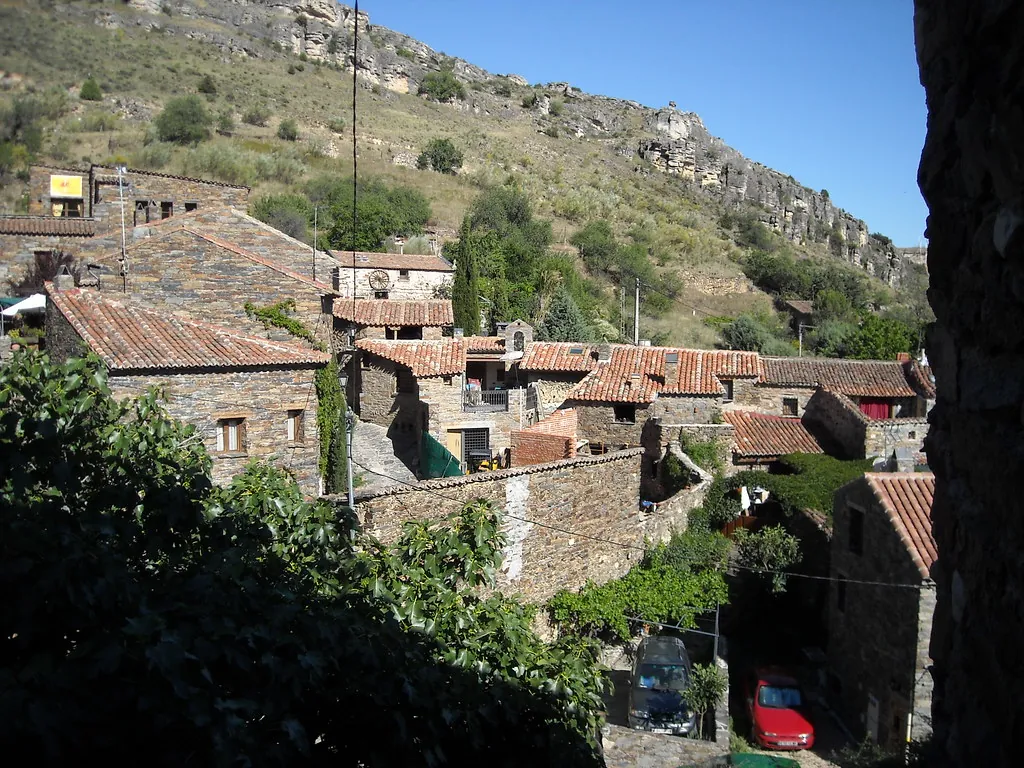
The municipality has around 3,400 inhabitants, though far fewer live in the historic centre itself. Many residents commute to work elsewhere, especially to Guadalajara or Madrid. Uceda sits high on a hillside in the Campiña, with open views across the valley below. Whitewashed houses, tiled roofs and stone-paved streets define the scene. It is typical of this part of the province, neither more nor less.
Getting There and Finding Your Way In
From Guadalajara the journey takes a little over half an hour. The final stretch runs through open countryside, with the occasional scattered housing development along the way.
Access to the old town is from the upper side of the village. There is a small square where it is normally possible to leave the car without much circling. From that point onwards, walking makes more sense. The streets are narrow and fairly steep, and driving through them would be awkward.
Uceda does not require much orientation. Everything of interest lies within a compact area, arranged along sloping lanes that descend towards the edge of the hillside.
What You Will Find, and What You Will Not
The Iglesia de la Asunción stands at the top of the village. Its apse is often described as Romanesque-Mudéjar, probably dating from the 12th century. Mudéjar refers to a style that blends Christian and Islamic influences, common in parts of central Spain during the medieval period. The rest of the building was constructed later.
The main doorway is more elaborate than the rest of the structure and contrasts with the surrounding houses. Inside, the church feels large for a village of this size. It has three naves and a gilded altarpiece that serves its purpose without much flourish. If the church is open, the visit is brief.
The square itself remains quiet in terms of services. In the old quarter there are not many amenities. It is best not to assume anything about availability or schedules. For more choice when it comes to eating or staying overnight, most people head to nearby villages or back towards Guadalajara.
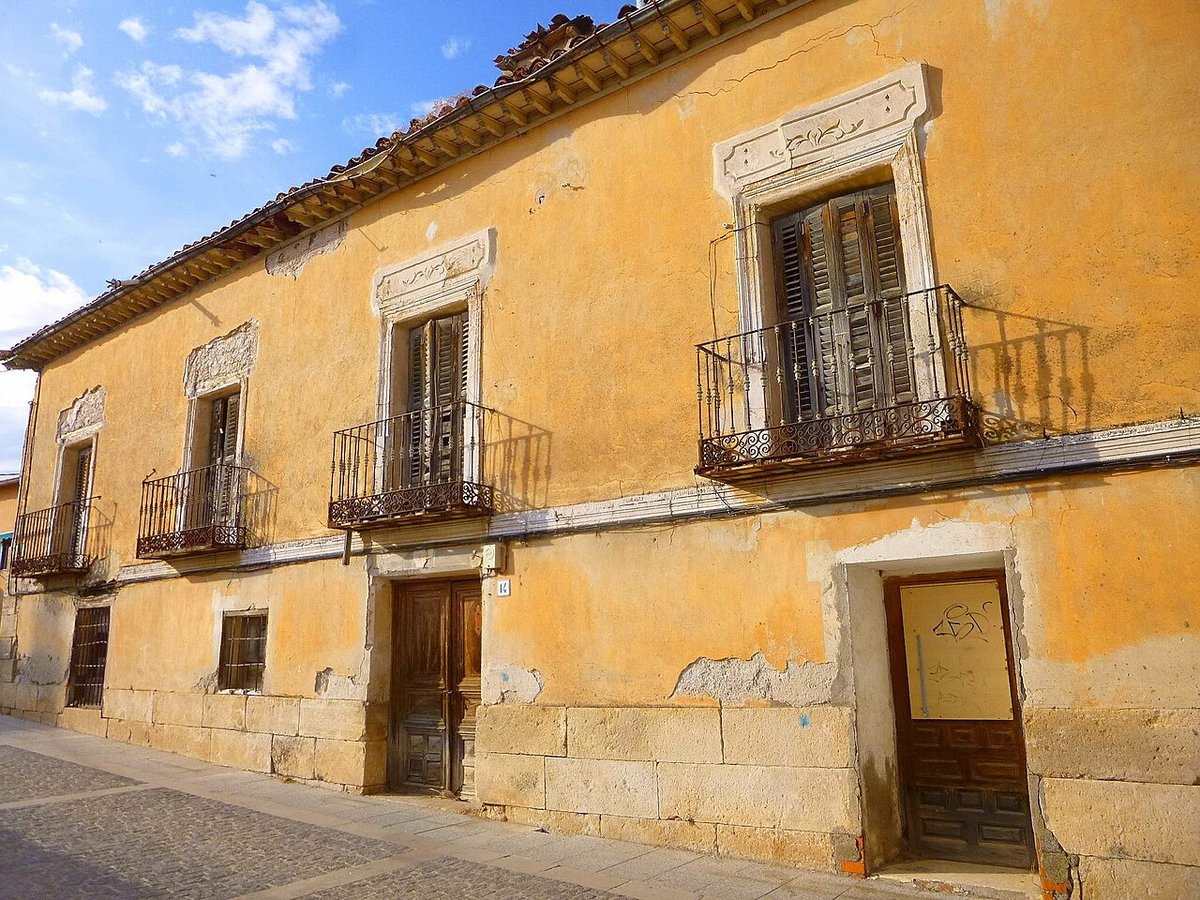
The town hall occupies a multi-storey building with an iron balcony. On one of its façades appears the historic name “El Cubillo de Uceda”. This name was used for a time to distinguish the village from others with similar names. Today it is rarely heard.
There is no long list of sights. Uceda does not attempt to fill the day with attractions. Its appeal lies in the setting and in the quiet coherence of the old streets.
The Romería to the Hill
At the beginning of September, local residents usually take part in a romería to a nearby hill topped by a cross. A romería is a traditional pilgrimage or communal walk to a religious site, common in many parts of Spain. The route follows a dirt track through pine trees.
An image is carried on shoulders along the path, and the day ends at the clearing on the hill. After dark, lights can be seen on the slope. Older residents recall that in the past the descent was made by torchlight. Today most people rely on torches or mobile phones instead.
The event is modest in scale and rooted in local custom. It reflects the rhythm of a place where community gatherings still revolve around the church and the surrounding landscape.
The Palace That Is Not Here
The Palacio de Uceda, the one that appears in history books, is not in the village at all. It stands in Madrid, on Calle Mayor. The Duke of Uceda ordered its construction in the 17th century, at a time when this area carried more weight than it does now.
In the village itself there is no clear trace of that ducal past. No palace survives, and no visible remains point to it. What endures is the name.
This absence often surprises visitors who arrive expecting grand architecture tied to the title. Instead, Uceda presents a simpler face. Its history is quieter, and whatever prominence it once had is no longer expressed in stone.
A Short, Unhurried Visit
Morning is a good time to pass through and explore at an easy pace. In half an hour it is possible to see the church, the square and the streets that slope down towards the valley viewpoint.
Anyone in search of a wide range of restaurants, terraces or a busy atmosphere will need to look elsewhere. Uceda works better as a brief stop along a wider route than as a destination for a full day. There is nothing wrong with that. Many villages follow the same pattern.
What stays with you is the position above the Campiña, the quiet of the lanes and the sense of a place that functions first as a home for its residents. Tourism fits around that reality, not the other way round.