Full Article
about Aldeanueva de San Bartolomé
Known locally as Aldeanovita; noted for its slate architecture and prehistoric dolmens.
Hide article Read full article
A village that wakes slowly
Early in the morning, when the only sound might be the occasional distant car on the local road, Aldeanueva de San Bartolomé holds a very particular kind of silence. It is not empty. Chickens can be heard in nearby yards, the wind moves through the encinas, and sometimes there is the sharp knock of a shutter being opened. The air often carries the scent of dry earth and firewood, especially in the colder months.
Aldeanueva de San Bartolomé sits in the comarca of La Jara, at the western edge of Castilla-La Mancha, not far from Extremadura. It is a small municipality, with around four hundred inhabitants, and that scale shapes daily life. Streets remain calm, neighbours know each other by name, and there is little sense of hurry. The village stands just over five hundred metres above sea level, surrounded by dehesas and low scrubland where encinas, cork oaks and jaras dominate. In spring, the jaras release a resinous scent that defines the area.
The square and the church of San Bartolomé
The centre of Aldeanueva de San Bartolomé gathers around its main square, a simple open space where several streets meet. At certain times of day, light falls at an angle across the whitewashed façades, and if the fountain is running, the sound of water blends with conversations from those pausing in the shade.
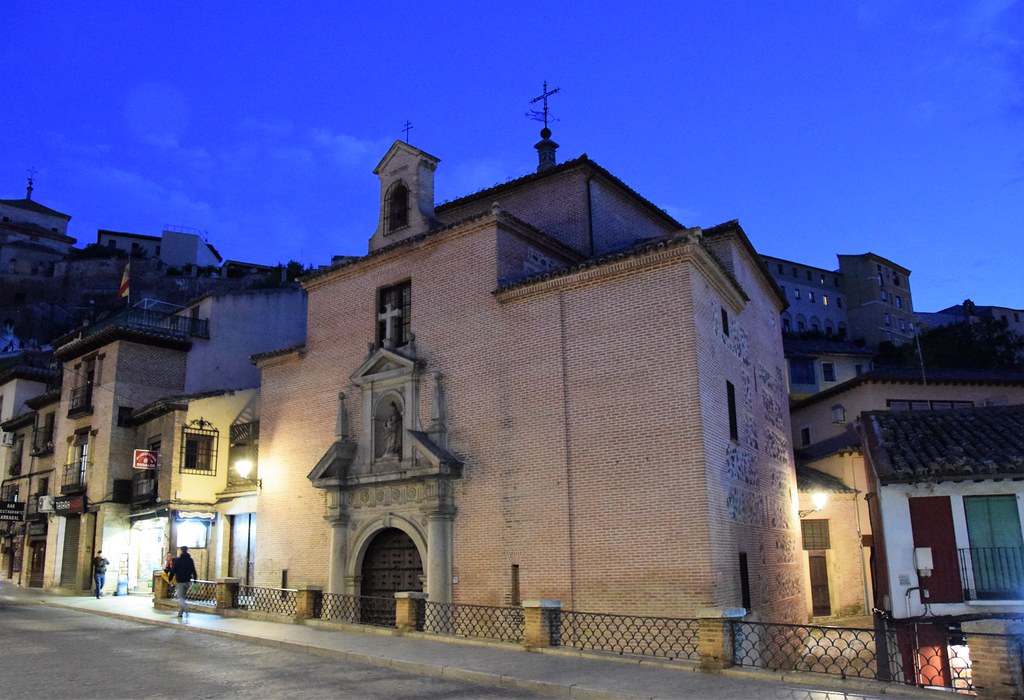
On one side of the square stands the parish church of San Bartolomé. It is a sober stone building with a single nave. Its origins are usually placed around the 16th century, though it has been altered over time, as is common in rural churches that have remained in continuous use. From the outside, the bell tower stands out clearly against the village skyline. Inside, the dark wood of the altarpiece and various older elements suggest centuries of ongoing use rather than major restoration.
Streets shaped by time
Walking through the village does not take long, but it is best done slowly. The layout of the streets is irregular, with gentle slopes and corners where shade appears suddenly in summer. Houses tend to have thick walls, wooden doors and wrought iron grilles, many of which have been in place for generations.
In spring, pots often appear at entrances or in small inner courtyards. Geraniums, the occasional jasmine, and other plants may not be fully visible from the street, but their scent drifts out when a door is left open.
The landscape of La Jara
The surroundings of Aldeanueva de San Bartolomé reflect the typical landscape of La Jara. There are open dehesas, patches of scrub and dirt tracks that disappear into the encinas. It is not dramatic in an obvious sense, yet it carries a dry, horizontal beauty, especially at sunset when the light softens into muted gold.
Several agricultural tracks and footpaths begin at the edge of the village. These are used daily by farmers, livestock keepers and locals out for a walk. Not all are clearly marked, so it helps to have a map or an app when exploring the area. Early morning and late afternoon are when wildlife is most active. Deer can sometimes be seen at a distance, and wild boar may be heard moving through the undergrowth.
Autumn is often a good time to walk here. The heat has eased, and the ground is covered with leaves and, in some years, mushrooms.
Cooking tied to the land
The cooking found in the homes of Aldeanueva de San Bartolomé reflects the interior of La Jara. It centres on simple dishes designed for long working days outdoors. Stews made with small game appear regularly, along with pork and hearty spoon dishes that are best enjoyed when the weather begins to cool.
In autumn, many people from the surrounding area head into the countryside to look for mushrooms, especially níscalos when the season is favourable. As in any mushroom-growing region, those unfamiliar with the terrain usually go with someone who knows it well.
The days of San Bartolomé
The festivities dedicated to San Bartolomé, held towards the end of August, bring a noticeable shift in the village’s rhythm. During those days, many families who live elsewhere return, and the streets become much busier than usual.
The celebration combines religious events with activities in the square and gatherings among neighbours who may not have seen each other for months. There are also events connected to rural life and local traditions, something commonly seen across the villages of La Jara during their main annual festivities.
Timing a visit
Aldeanueva de San Bartolomé is best experienced at a slow pace and during the quieter parts of the day. In summer, the heat can be intense around midday, so early mornings and late afternoons are the most comfortable times to walk through the streets or head out into the surrounding countryside. In winter, clear and cold mornings bring a sharp, clean light across the dehesas that frame the village.
The appeal of the place lies in these small shifts in light, sound and activity, rather than in any single landmark. It is a setting where everyday life continues at its own steady pace, shaped by the land and the seasons.