Full Article
about Estrella (La)
Small town in La Jara; known for its slate landscapes and rockrose.
Ocultar artículo Leer artículo completo
The shepherd's mobile phone cuts through the morning stillness. He's calling ahead to check if the village bar's open—standard practice when your nearest neighbour lives half a kilometre away and the altitude's already nudging 900 metres. This is La Estrella, where Castilla-La Mancha's rolling plains finally surrender to the Sierra de San Pedro, and where modern life arrives via patchy 4G rather than dual carriageways.
At 180 kilometres southwest of Madrid, the village hangs suspended between two worlds. Below, the olive groves of La Jara stretch towards Toledo; above, holm oaks give way to crags where griffon vultures ride thermals. The road up from Puente del Arzobispo climbs 400 metres in twenty minutes, enough to drop the temperature by five degrees and make British visitors question their packing choices. Even in July, nights require a proper jacket.
The Architecture of Absence
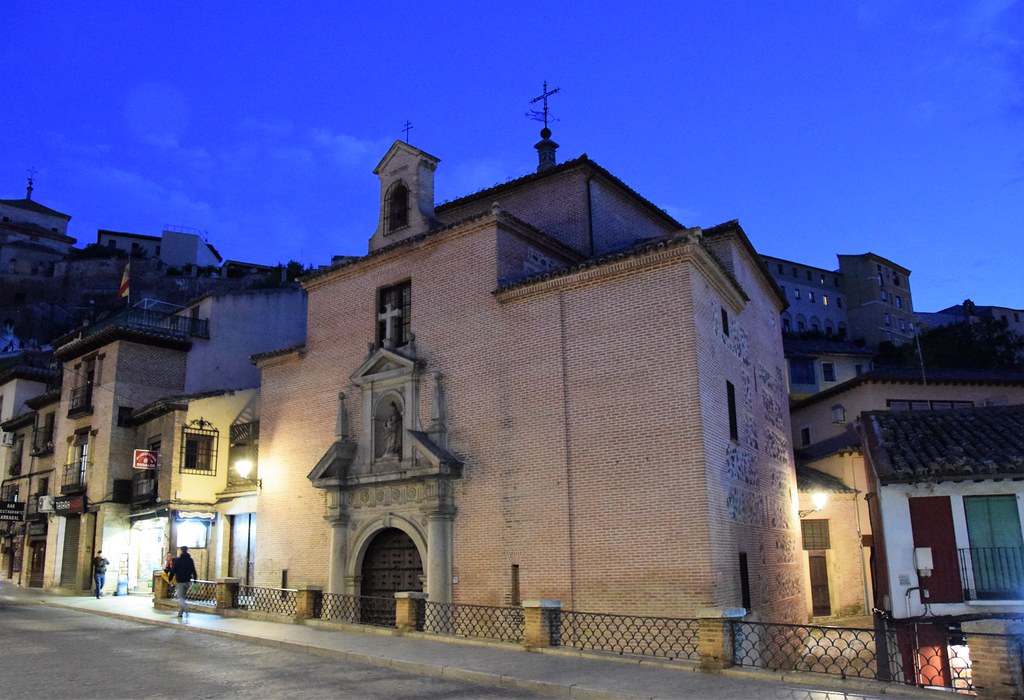
There's no medieval quarter to tick off, no cathedral spire dominating Instagram feeds. La Estrella's beauty lies in what isn't there. No souvenir shops flogging Don Quixote keyrings. No tour buses clogging single-track roads. Instead, whitewashed houses with terracotta roofs cluster around a 16th-century church so modest it barely registers on architectural surveys. The bell tower's weathered stone tells more honest stories than any guidebook: generations marking time between harvests, fiestas, and the slow erosion of rural life.
Wooden doors hang heavy on iron hinges, each scratch and dent mapping decades of agricultural traffic. Peer through the wrought-iron grilles and you'll spot the tell-tale signs of village demographics: mobility scooters parked beside firewood piles, satellite dishes sprouting from ancient walls, the occasional Brexit-battered UK registration plate glimpsed through open gates. Roughly fifteen percent of properties belong to foreign owners, mostly Brits who've traded Kentish commuter belts for Castilian silence.
The village's name supposedly derives from a medieval silver mine, though locals joke it's because you need stellar navigation skills to find the place. GPS signals flicker and die among these granite outcrops; better to follow the smell of woodsmoke or the sound of generators kicking in during winter storms. When snow arrives—typically January through March—the 12-kilometre access road from the CM-4000 becomes properly treacherous. Chains essential. Optimism optional.
Walking Where Google Fears to Tread
Footpaths radiate from La Estrella like cracks in sun-baked earth, following ancient drove routes that predate the Reconquista. These aren't waymarked National Trust trails with car parks and cafés. They're working tracks where shepherds still move goats between winter pastures and summer grazing, where wild boar root among cork oaks, and where the only interpretive panels are fresh wolf prints in the dust.
The circular route to Cabañeros National Park's northern boundary takes four hours if you're fit, six if you stop to photograph every imperial eagle. Start early; afternoon temperatures in August hit 38°C, and shade's scarce once you drop below the tree line. Water sources are non-existent—carry two litres minimum. Local farmers won't mind you crossing their land provided you close every gate, but they'll happily charge €20 if their sheep escape because you didn't.
Spring transforms these hills into something approaching an English watercolour. From March through May, rockroses paint entire slopes white, while pink cistus and purple lavender create accidental colour coordination that would make a Chelsea garden designer weep. The scent carries for miles on thermal currents, mixing with wild thyme and the ever-present tang of sheep manure. Authentic, let's call it.
Autumn brings mushroom hunting, though regulations shift annually depending on rainfall and regional politics. Locals guard their níscalo spots with the paranoia of Kent anglers protecting carp lakes. Approach the subject carefully in the bar; mentioning that Waitrose stocks frozen chanterelles marks you as an amateur. Better to ask about weather patterns, then casually mention you've got proper wicker baskets rather than plastic bags. Details matter here.
Calories and Conversations
Bar Central opens at 7 am for farmers and 11 am for everyone else. There is no menu. Whatever María's cooking is what you're eating. Migas—fried breadcrumbs with garlic, peppers and enough cholesterol to worry your GP—cost €4 and could fuel a morning's hiking. The gazpacho pastor arrives as a thick stew, nothing like Andalucía's chilled soup. It's rib-sticking fare designed for people who'll spend eight hours on horseback; weekend walkers should probably share portions.
Wine comes from Villacañas, twenty kilometres north, sold by the glass for €1.20 or by the plastic bottle for €3. It's rough, honest stuff that tastes of iron-rich soil and minimum intervention. The local cheese—queso de oveja—develops a complexity that London delis would charge £8 for a sliver. Here, an entire wheel costs €12 if you know Mercedes who keeps goats behind the cemetery. She speaks no English but understands enthusiastic nodding and cash.
Evening meals happen late. The village's single restaurant—really just someone's front room with extra tables—serves dinner from 9:30 pm. Book by 6 pm or don't bother. Specialities depend on hunting season: wild boar stew in winter, partridge rice in autumn, the occasional surprise of venison when someone's relative visits from the Sierra de Gredos. Vegetarian options extend to omelette or omelette. Coeliacs should probably self-cater.
When Stars Earn Their Name
Light pollution maps show La Estrella floating in a sea of black—proper dark sky territory, rare in southern Europe. On clear nights, the Milky Way appears so bright it casts shadows. Shooting stars aren't wishes here; they're Tuesday. The village's astronomical society—three locals with telescopes and a retired physics teacher from Birmingham—meets monthly in the church square. Visitors welcome, though bringing your own binoculars proves you're serious rather than just ticking another experience off the list.
Winter stargazing requires commitment. Temperatures drop to -5°C regularly, and the wind whipping across these exposed slopes carries ice particles that feel like glass against skin. Thermal everything isn't fashion; it's survival. But the rewards are proper Orion views that make Greenwich Observatory's planetarium seem like a faulty lightbulb.
Summer offers meteor showers without the hypothermia. The Perseids in August peak at sixty meteors per hour, viewed from deckchairs borrowed from the bar. Someone usually brings a guitar. Someone else brings homemade anisette that tastes of liquorice and poor decisions. The combination creates nights that blur the edges between tourist and temporary local, between foreign and familiar.
The Practical Reality Check
Getting here demands either a hire car from Madrid Barajas—two hours on the A-5 followed by increasingly nervous navigation—or three buses and a taxi from Toledo. The latter option takes six hours and requires patience usually reserved for Southern Rail commuters. Once arrived, leaving becomes similarly complicated. Taxi back to the main road costs €35 if Miguel's available, €50 if he's not. Miss the daily bus at 2 pm and you're staying another night.
Accommodation means self-catering. Three village houses rent to visitors, found via Spanish websites that crash Chrome and require phone calls to owners who speak rapid Castilian. Expect to pay €60-80 per night for somewhere that sleeps four. There's no pool, no air-conditioning, and the Wi-Fi's questionable. Bring books. Bring card games. Bring the ability to entertain yourself without Netflix.
The nearest supermarket sits fourteen kilometres away in Los Navalmorales. It stocks UHT milk, tinned tomatoes, and little else that resembles British staples. The fresh fish counter opens Thursdays when the delivery van arrives from Cadiz. Bread happens twice daily; miss the 10 am batch and you're eating yesterday's loaf. Planning becomes essential rather than aspirational.
Perhaps that's La Estrella's real attraction. Not the views or the walking or the star-gazing—all available elsewhere with better infrastructure. Rather, it's the village's stubborn refusal to adapt to tourist expectations. Here, you fit around agricultural rhythms or you don't fit at all. The place won't change for visitors, and that's precisely its charm. Just remember to phone ahead before you arrive. The bar might be shut for a christening, and mobile reception's patchy at best.

