Full Article
about Alcázar de San Juan
Major rail hub and service center in the heart of La Mancha; Cervantes-related birthplace with lively cultural and commercial activity
Ocultar artículo Leer artículo completo
The 16th-century Torre del Gran Prior opens its iron-studded door at 10:30 sharp. Inside, a spiral staircase climbs 30 metres to a roof terrace that lets you see exactly what Don Quixote meant by the “endless plain”. There is nothing quaint about the view: cereal fields run ruler-straight to every horizon, the Sierra de Toledo a pale bruise 60 km west. This is Alcázar de San Juan, a work-a-day market town of 31,000 that happens to own one of the best Renaissance towers in Castilla-La Mancha—and a railway museum that can hold children (and their fathers) hostage for a full morning.
A Town That Moved With the Times—and the Trains
Alcázar’s golden age arrived late. The Knights of St John had already built their palace here in the 1500s, but the place really grew when the Madrid–Almansa line steamed through in 1861. Grain, saffron and Manchega sheep could now reach the capital overnight; in return the town got iron footbridges, engine sheds and a social club for railwaymen that still serves the best coffee in the Plaza España. The Museo del Ferrocarril occupies the old repair depot south of the centre. You can walk underneath a 1960s shunting engine, climb into the cab of a steam loco and discover why the water tower had to be exactly 11 metres high. Labels are in Spanish, yet the smell of coal and machine oil is bilingual enough. Admission is €3; closed Mondays.
History buffs should tick the tower first, then stroll three blocks to Santa María la Mayor. The church mixes late-Gothic ribs with plateresque dressings—evidence that money arrived just as the Renaissance reached Castile. Inside, a 17th-century organ case glitters with gold leaf that escaped Napoleon’s troops by the simple expedient of being painted dull brown. The sacristan will switch on the lights if you ask; tips appreciated.
Eating Like a Local—Which Means Slowly
Manchego cuisine is built for harvesters. Start with pisto manchego, a thick pepper-and-aubergine stew topped with a fried egg; it tastes like a Spanish cousin of ratatouille but arrives in portions that would shame a Frenchman. Duelos y quebrantos—scrambled eggs with chorizo crumbs—makes a protein-heavy breakfast, though locals eat it at eleven and again at six. The safest introduction to regional cheese is a plate of semi-curado Manchego with membrillo (quince paste); order it with a glass of Airén, the local white that is crisp, low in alcohol and mercifully cheap. Restaurants cluster around Calle Postas and the arcaded Plaza de Toros; expect €14–18 for a three-course menú del día, bread and wine included. Sunday lunch is serious business—book or turn up before two o’clock or you’ll be offered the last table next to the kitchen door.
If the thermometer is heading past 35 °C (it will, July to mid-August), abandon the centre and head for the Parque Alces on the south-western edge. The park’s lagoons were dug when the high-speed rail line needed earth; now they’re stocked with carp and lined with poplars. A kiosk sells cold beer and churros until nine at night, and the breeze that skims the water is the closest thing Alcázar has to a beach.
Windmills, But Not the Instagram Sort
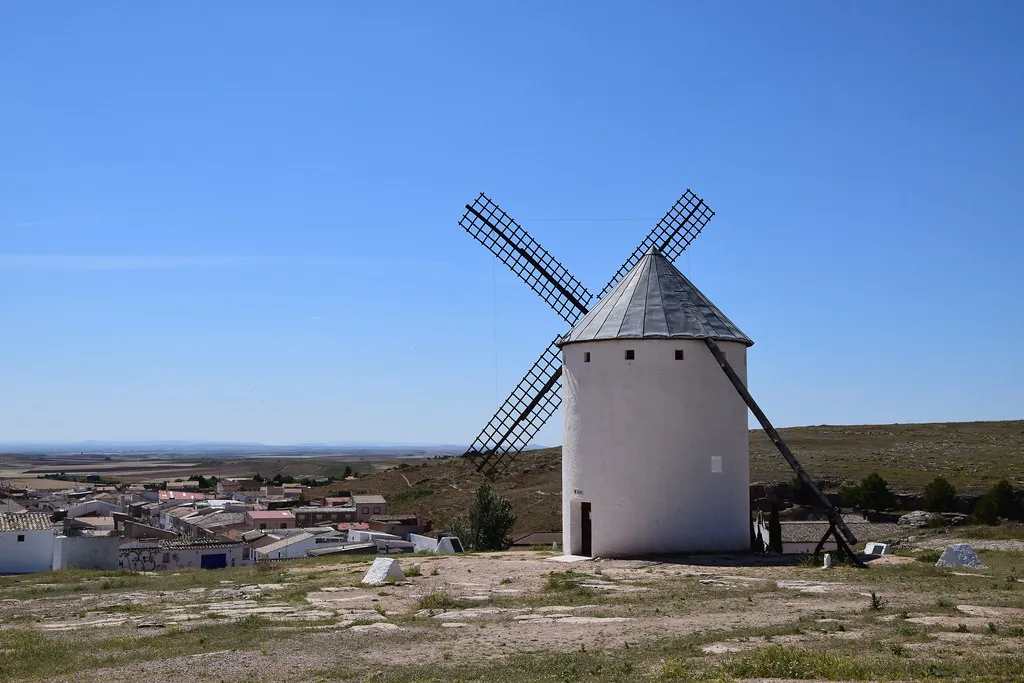
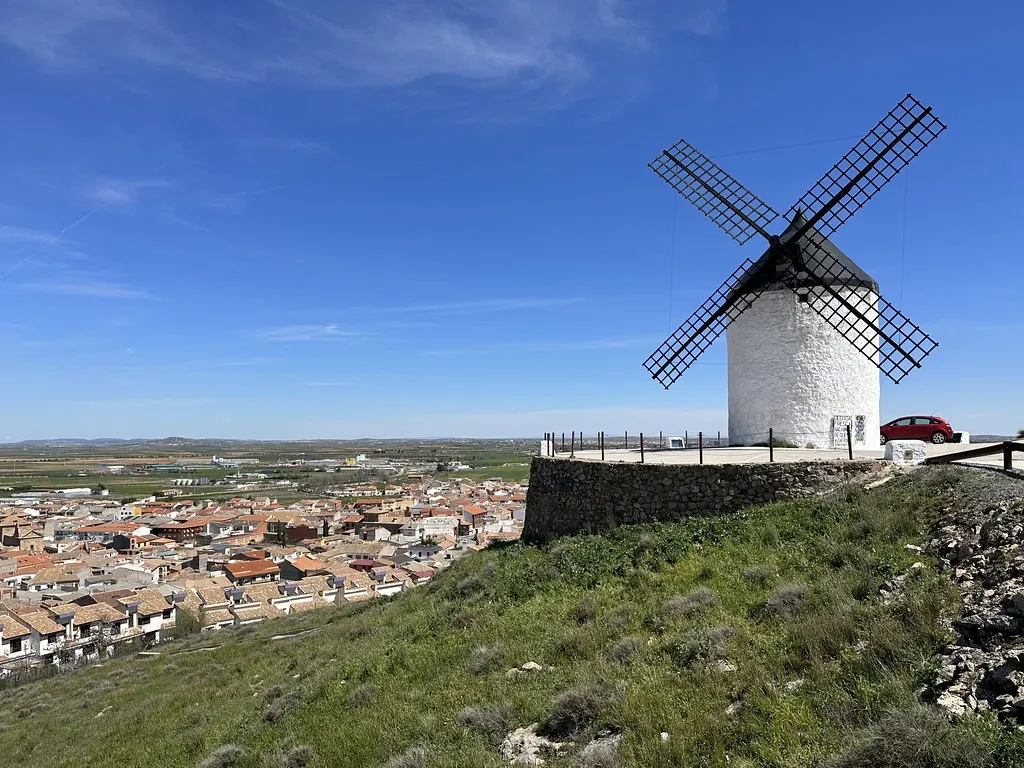
Cervantes never wrote “Alcázar” in his manuscript, yet the town keeps a plausible claim on his birth. A small display in the Casa-Museo de Hidalgo argues the case with baptismal gaps and property deeds; whether you leave convinced or merely amused, the courtyard is worth five minutes for the 18th-century well alone. The windmills that Quixote mistook for giants are 18 km away at Campo de Criptana—close enough for a half-day detour, far enough that Alcázar itself is mercifully free of souvenir tilting-spears. Drive out at sunset when the white sails turn pink and the tour buses have already left for Toledo.
Back in town, the weekly Monday market is exactly what a Spanish market should be: plastic awnings flapping, hawkers shouting two-euro deals on socks next to ladies who’ve been selling saffron since 1982. There is no handicraft aisle; instead you’ll find Manchego curing in cloth, jars of honey blended with rosemary, and stall-holders who will slice jamón while debating Leicester’s 2016 Premier League win—football transcends language.
Getting Here, Getting Around, Getting Out
Alcázar sits on the AVE high-speed spur between Madrid and Alicante. A morning train leaves Madrid-Puerta de Atocha at 08:40 and arrives 1 h 20 later; from Alicante the journey is 2 h 30. The station is a 15-minute walk from the historic core, but July heat makes the pavements shimmer—factor in a taxi (€6) if you’re laden with cases. Drivers exit the A-4 at km 124, skirt the industrial estate and park free under Alces Park; the centre is then a ten-minute stroll along Avenida Reyes Católicos.
Hotel choice reflects the town’s role as a stop-over rather than a hideaway. The three-star modern blocks on the southern ring road (Sercotel, Exe) all have pools, underground parking and rooms at €70–90 in shoulder seasons. Inside the old centre only the boutique Palacete de la Mancha offers character—six rooms round a 19th-century patio—but you trade the pool for cobbled quiet and church-bell alarms at eight. Booking.com reviews complain about traffic noise; they forget the town empties after midnight and earplugs cost 50 c.
When to Come, When to Leave
May and June deliver 28 °C afternoons, 14-hour daylight and stork clatter from every chimney pot. September is almost as good, with the grape harvest adding trailers of bobbing Tempranillo to the roads. July and August are furnace-hot; sightseeing is tolerable only before eleven and after six, though the August fiestas (7–15th) throw fireworks, open-air concerts and a respectable bullfight into the night-time ledger. Winter is bright but sharp—mornings hover at 3 °C and the wind whips across the plain. The tower stays open, the park café closes, and hotel rates drop below €50.
Alcázar de San Juan will never compete with Cuenca’s hanging houses or Toledo’s cathedrals. It offers instead a slice of working La Mancha where you can climb a Renaissance tower, drive a steam-engine whistle and still be back on the Madrid train in time for dinner. Stay one night, maybe two if you fancy cycling the flat farm tracks that Cervantes rode, and then roll south towards Andalucía—or north to the capital—with a wheel of vacuum-packed cheese rattling in your suitcase.