Full Article
about Alcázar del Rey
A town with a history tied to ancient fortifications; it retains the typical La Mancha layout.
Hide article Read full article
A small village on a long road
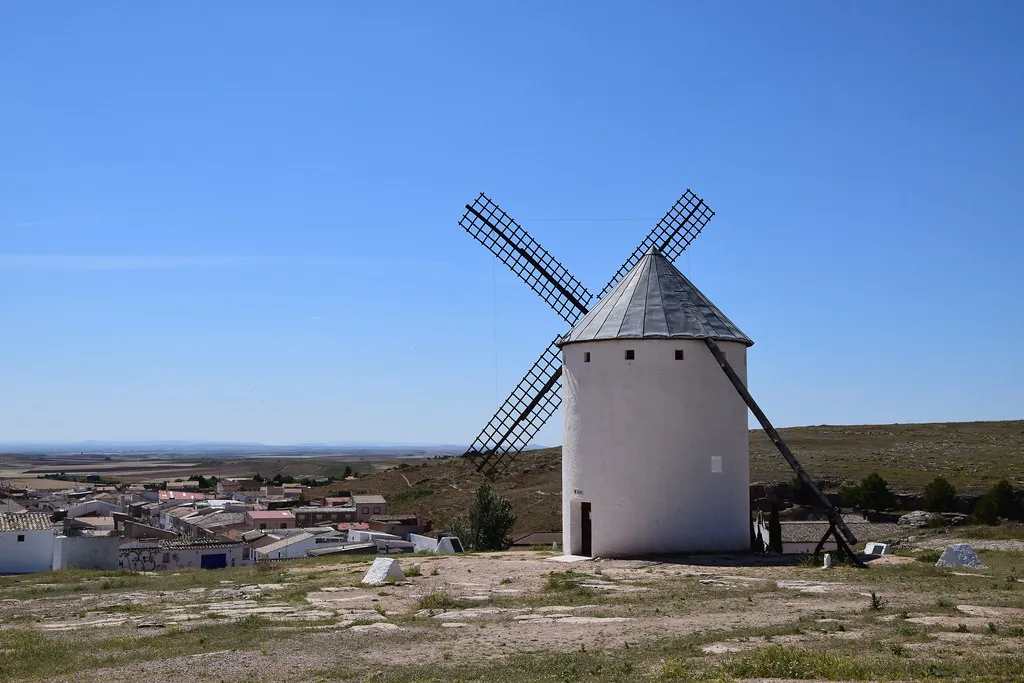
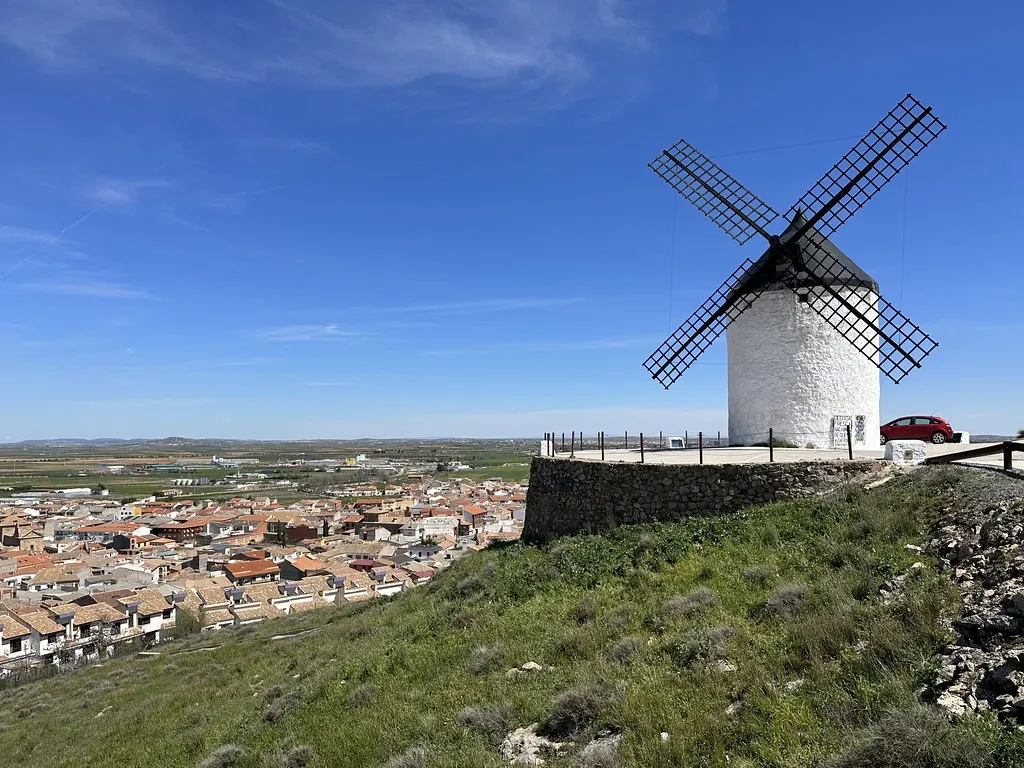
Driving across La Mancha often brings a particular kind of moment. Kilometres of open land stretch out, one straight after another, a gentle bend, more fields, and then suddenly a small village appears, almost as if placed there to remind you that people still live in the middle of all that space. Tourism in Alcázar del Rey fits neatly into that scene.
This is not a stop filled with signs or monuments demanding attention every few steps. It tends to be the sort of place reached by chance, when curiosity takes over on a nearby route. Low houses, quiet streets, and countryside in every direction set the tone.
Around 170 people live here today. It is enough to keep daily life going, but few enough that many streets remain calm for most of the day.
A village without a tourist façade
Alcázar del Rey does not try to impress. The centre is small and easy to walk, with narrow streets and houses built according to the needs of this part of La Mancha. Thick walls help with the heat, wooden gates open onto courtyards, and iron balconies sit above whitewashed lower walls designed to cope with long summers.
Nothing here feels staged. The buildings show the passing of time quite naturally. Some are well maintained, others wait for renovation, and some stay closed for much of the year.
At the centre stands the parish church of Nuestra Señora de la Asunción. It is a sober structure, the kind that does not seek attention. Plain walls, a simple tower, and the sense of a building that has endured many cold winters and intense summers define its presence.
The landscape beyond the streets
What really defines Alcázar del Rey lies outside the village itself. Step beyond the last houses and the surroundings open up immediately into farmland. There are cereal fields, some olive groves, scattered vineyards, and low rolling hills that repeat towards the horizon.
The colours shift with the seasons. Spring brings a brief but striking green across the fields. In summer, the land turns golden. Autumn softens everything into muted tones, with the vast sky of the plateau dominating the view.
Wide agricultural tracks lead out from the village. They are mostly used by farmers heading to their land, either by tractor or car. For walking or cycling without much difficulty, they work well, with the understanding that the main attraction is the open landscape rather than marked routes with frequent signposts.
Those who enjoy observing the countryside at a slower pace will find it easy to spot birds typical of these plains. There is no need for hides or long waits. Stopping the car, watching quietly, and allowing a bit of time is usually enough.
A place to pause, not to fill a schedule
It helps to arrive with the right expectations. Alcázar del Rey has no tourist offices, no museums, and no long list of sights to tick off.
The usual plan is much simpler. Park the car, take a relaxed walk through the village, then head out along one of the nearby tracks and spend some time looking across the landscape. It may not sound like much, yet after days on the road or in busy cities, that simplicity can feel welcome.
This is a place that works best as a short stop during a wider route through the province of Cuenca in La Mancha, rather than as a destination for several days.
Eating and staying nearby
Services in the village are very limited. There may be a bar or tavern open depending on the time of year or the day of the week, but it is not wise to plan a visit around having many options.
A more practical approach is to eat or stay in nearby, slightly larger towns, then come to Alcázar del Rey for a walk or to explore the surrounding countryside by car along smaller roads.
When the village comes to life
For much of the year, the pace remains slow and steady. Summer brings a noticeable change, when people who work elsewhere return and local festivities take place. These celebrations are traditionally dedicated to San Antonio.
They follow the rhythm of a small village. There is a procession, music in the evenings, neighbours gathering again in the square, and long shared tables where food is enjoyed together. Nothing about it is grand, yet it is closely tied to everyday life here.
Choosing the right moment
Spring is a good time to see the fields at their most lively. The cereal crops are still green, and the landscape looks very different from the dry tones of summer.
Early autumn also has its appeal, with less heat, softer light, and ochre colours that suit the wide plains of La Mancha.
In the end, Alcázar del Rey is not about collecting landmarks. It is about understanding what a small village in La Mancha looks like today: unhurried, surrounded by land, and moving to its own rhythm. It may not fill an entire day, but it tends to stay in mind when similar landscapes appear again from the road.