Full Article
about Almendros
A farming village with a notable religious heritage; it keeps the essence of rural La Mancha life.
Hide article Read full article
A Pause in the Middle of La Mancha
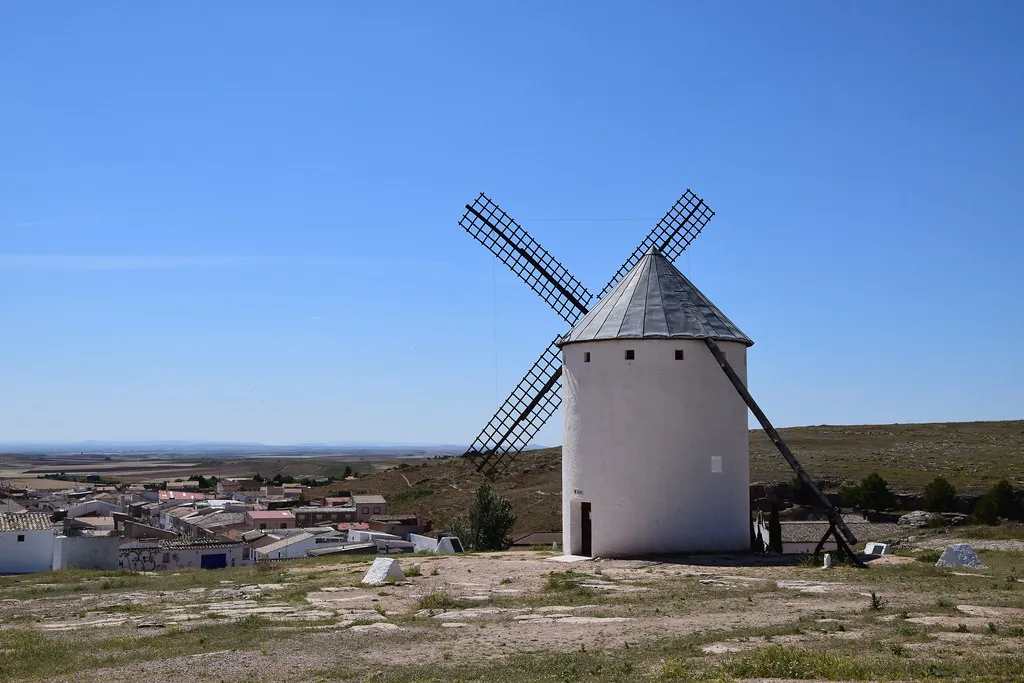
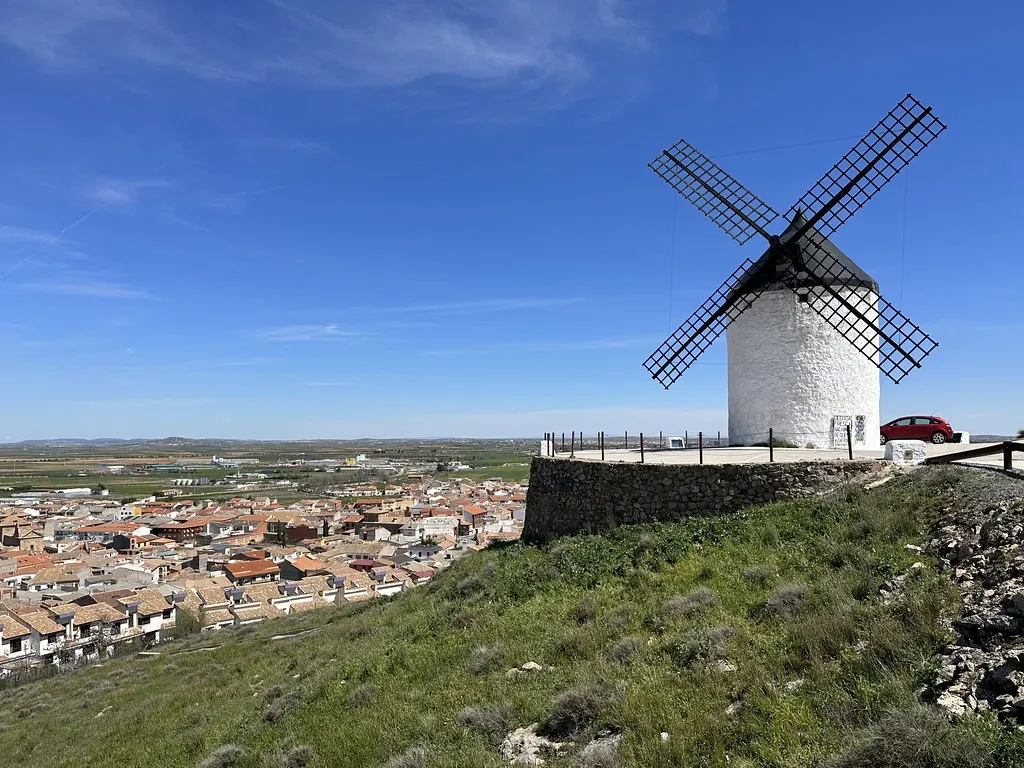
Tourism in Almendros feels a bit like slowing the car in the middle of La Mancha because the landscape makes you ease off the accelerator. There is no large sign announcing that you have arrived somewhere important. Just open fields, quiet roads and a small village that carries on at its own pace.
Almendros is in the province of Cuenca and has around 240 inhabitants. It is surrounded by cereal crops stretching as far as the eye can see. This is the kind of place where the calendar seems to move more slowly, where daily life follows agricultural rhythms rather than visitor seasons.
There are no grand monuments or a historic quarter packed with striking façades. The most recognisable building is the Iglesia de la Invención, built in brick at the beginning of the 20th century. Its simple bell tower rises above the rooftops and can be seen from almost anywhere in the village. In many towns across La Mancha, the church tower acts as a reference point when you are walking back from the surrounding tracks and fields, and Almendros is no exception.
Calle Real runs through the centre and leads to a small square where the town hall stands. The atmosphere is calm rather than lively. Stay a while and sooner or later someone passes by, stopping to greet a neighbour or comment on how the harvest is shaping up this year.
A Short Walk with Small Details
Almendros can be explored quickly. In half an hour you will have found your bearings. The interest lies in the details rather than in major sights.
There are worn wooden doors, old iron grilles on balconies and whitewashed walls that have been repaired in patches over the years. Many houses are arranged around interior courtyards, a common solution in this part of Spain to cope with the harsh summers of La Mancha. These shaded spaces offer relief when temperatures climb.
In some streets, large gateways hint at the village’s agricultural past and present. They once provided space for storing machinery, trailers or animals. Even today, they are reminders that farming remains central to local life.
There are no tourist information boards or marked routes. Walking here tends to be a matter of wandering without a strict plan. What catches the eye might be something simple: a flock passing along the road, or the sound of a conversation drifting from an open yard. The pace encourages you to look at ordinary scenes more closely.
The Landscape: Cereal Fields and Clean Horizons
Almendros sits within the wide plains of La Mancha, a landscape that appears repetitive at first glance yet is never exactly the same. Fields of wheat, barley or sunflowers change with the season. Straight dirt tracks cut across the farmland, and the horizon feels broad and uninterrupted.
In spring the fields turn green for a few brief weeks. Summer brings a shift to golden tones that many people immediately associate with La Mancha. When the wind picks up, the ears of grain move in slow waves across the surface of the fields.
For those who enjoy walking or cycling, the agricultural tracks are the obvious way to explore the surroundings. There are no significant hills, so progress is easy and steady. Some paths connect with other nearby villages in the area, although the appeal is less about reaching a particular destination and more about travelling between open fields.
Early in the morning or towards sunset, birds of prey can often be seen circling above the crops. Kestrels and harriers are among the species that appear, scanning the wheat fields for movement. The sky, wide and clear, becomes part of the experience.
Eating in a Small Village
In a municipality of this size, there is no defined gastronomic scene. What you will usually find are simple bars where cooking follows long-established local traditions.
Typical dishes from La Mancha are filling and rooted in rural life. Migas, made from fried breadcrumbs and usually associated with shepherding traditions, are common. There are also embutidos, cured sausages and other pork products, along with queso curado, a firm aged cheese that is characteristic of the region. When winter cold sets in, spoon dishes and stews take centre stage.
It is also quite common for visitors to eat in slightly larger nearby towns and then come to Almendros for a quiet walk. This combination makes sense if you are travelling around the wider area of Cuenca province and want to see different types of villages.
Festivals and Local Life
The patron saint festivities usually take place in summer. During this period, many residents who live elsewhere for most of the year return to the village. The atmosphere changes noticeably. Streets that are quiet for much of the year fill with more people, and there are popular activities and processions through the centre.
Semana Santa, or Holy Week, is observed in a simple and restrained way. Religious events are closely tied to the local community. It is not a celebration designed to attract large numbers of visitors. Instead, it forms part of the village calendar, much as it does in many small towns across Castilla-La Mancha.
These moments in the year highlight the contrast between Almendros in its everyday routine and Almendros when former residents come back, reconnecting with family and neighbours.
Is It Worth the Detour?
Almendros is not a destination to visit in order to tick off major sights. It works better as a pause on a wider journey through La Mancha, a place to get a sense of how many villages in this region remain closely linked to the land.
Those who appreciate quiet places, unplanned walks and a silence broken only by the sound of a tractor on the road will find that here. The experience is simple, and that simplicity is precisely the point.