Full Article
about Almonacid del Marquesado
Famed for its La Endiablada festival; a village with a strong cultural identity and age-old traditions.
Ocultar artículo Leer artículo completo
The thermometer on the chemist’s door reads –3 °C at eleven in the morning, and the only movement is a cloud of sheep breath drifting across the plaza. Almonacid del Marquesado wakes slowly, if at all, in February. The bakery has sold its last rosquillos by 08:30, the bar is heating coffee on a single-ring burner, and the church bell, cast in 1762, still rings the hour with a crack in its note that makes every dog in the village howl. At this altitude—892 m on the southern lip of the Serranía de Cuenca—the wind carries the smell of snow even when the sky is cobalt.
Most visitors who make the 80 km hop south-east from Cuenca capital arrive in summer, when the roadsides are striped with saffron-coloured stubble and the temperature nudges 38 °C. They come for the Fiesta de la Endiablada, a riot of cowbells, soot-blackened faces and home-brewed anis in which half the village dresses as devils and the other half pretends not to notice. Accommodation is non-existent: the nearest beds are 14 km away in Tarancón, and the Saturday-night bus back to Madrid leaves before the fireworks finish. If you do want the fiesta, book Tarancón early, bring earplugs and expect to walk the last 5 km after the road closes.
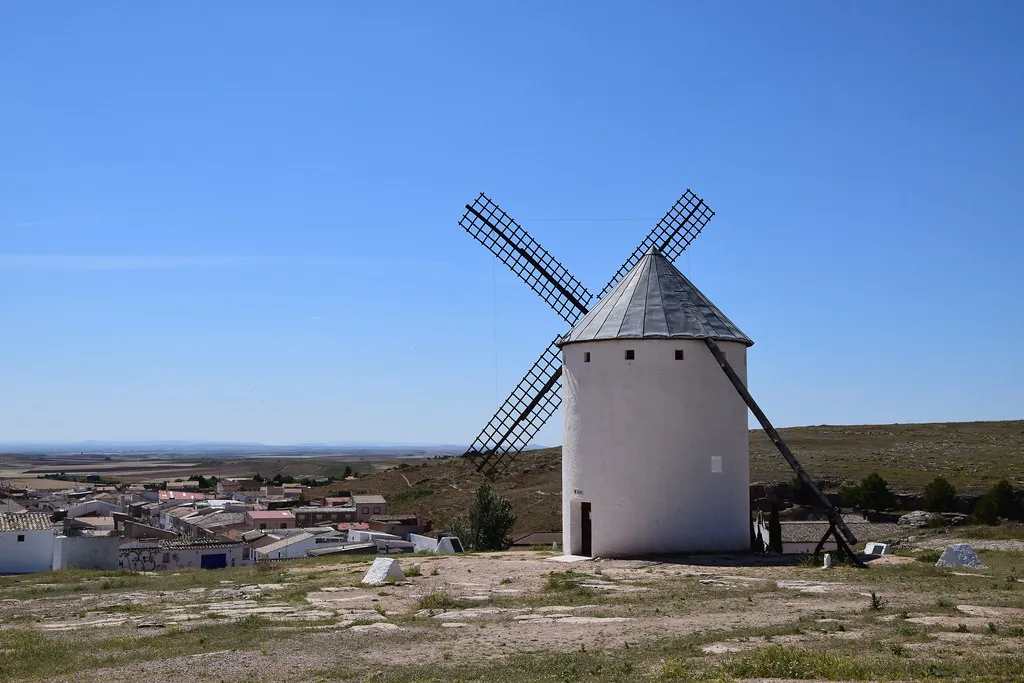
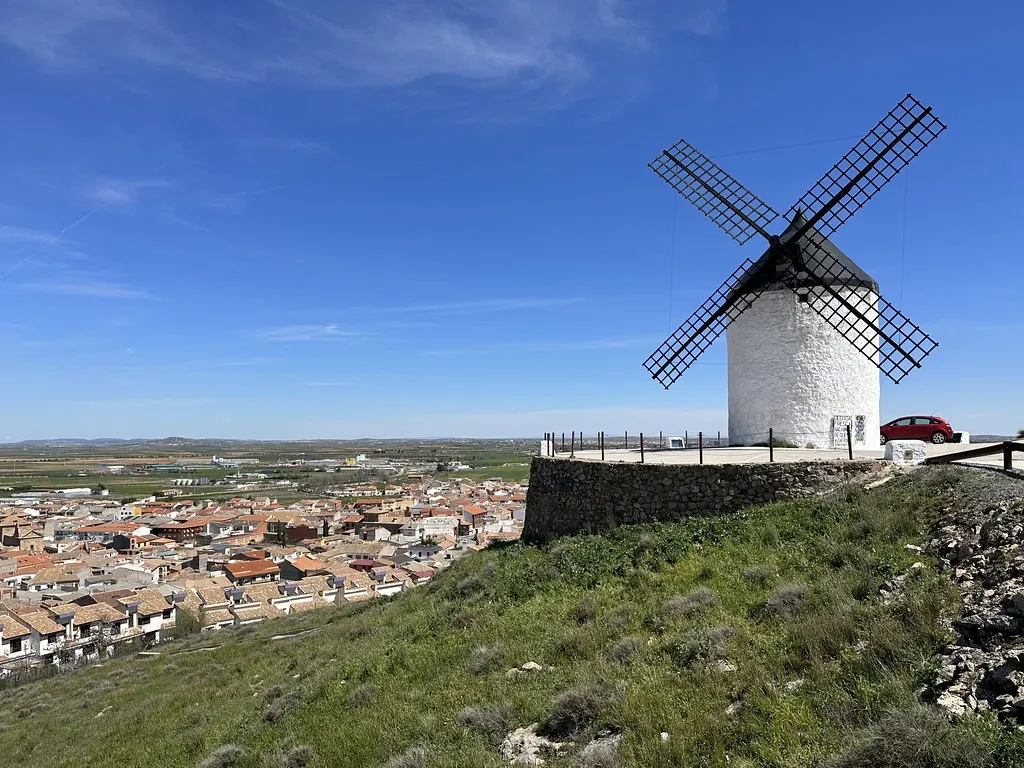
The rest of the year Almonacid is quiet enough to hear your own pulse. The grid of chalk-white houses, built fat-walled against both extremes of the continental climate, ends abruptly at wheat fields that roll away until they fray into sky. There is no castle to speak of—just a knee-high outline of masonry beside the cemetery—so sight-seeing is reduced to three honest stops: the sixteenth-century brick church with its single, asymmetric tower; the tiny ethnography room above the ayuntamiento (open Tuesday and Thursday, key from the mayor’s secretary); and the mirador south of the village where the land drops 200 m and the view stretches clear to the wind turbines of Tarancón. Allow forty minutes, including the climb.
What fills the day is the landscape itself. A web of unmarked caminos radiates from the last streetlamp, graded by nothing more technical than the prints of the last tractor. The easiest circuit heads west past the ruined threshing circles to a stand of holm oaks, 45 minutes out and 45 back; you’ll share the track only with crested larks and the occasional hunter scanning the verges for quail. After rain the clay sticks to boots like wet cement—gaiters are worth packing between October and May. In July the same path is a dust ribbon and the only shade is what you carry; start at dawn or resign yourself to a scarlet neck.
Food is farmhouse fare, served at farmhouse hours. The single comedor, Casa Agueda, opens its doors at 14:00 sharp and cooks until the stew pot is empty. Expect gachas— a thick porridge of flour, water and wild mushrooms—followed by cordero al caldero, lamb so tender it slips off the vertebrae. Vegetarians get pisto manchego, a pepper-and-aubergine fry that tastes of olive smoke and little else. A three-course lunch with wine lands under €14, but bring cash: the card machine broke in 2019 and no one has rushed to replace it. If you arrive outside the 14:00–16:00 window, the village shop stocks tinned tuna, UHT milk and a surprisingly good local queso de oveja wrapped in waxed paper. It closes between 14:00 and 17:00, so time your hunger accordingly.
Winter visits reveal a different rhythm. The sun still shines—Cuenca province clocks 2,800 hours a year—but the thermometer dips to –8 °C at night and most houses rely on a single pellet stove for warmth. Pensioners in quilted coats shuffle to the bar for a carajillo (coffee laced with brandy) while the plaza’s fountain skins over with ice. Photographers get steel-blue skies and wheat stubble rimed white; everyone else remembers why Spaniards invented the siesta. Roads can glaze over without warning—carry snow chains from December to March—and the daily bus from Tarancón is cancelled at the first flake. Check CRTM timetables the evening before; they update on Twitter faster than the website.
Spring is the sweet spot. By late April the nights stay above 5 °C, daytime creeps to a comfortable 18 °C and the steppe erupts with poppies. Bird-watchers train binoculars on calandra larks and the occasional Great Bustard that strays from the Tablas de Daimiel. Walking options lengthen: a 12 km loop east to the abandoned hamlet of Villar de Teje reveals stone sheep folds and a threshing floor carpeted with wild thyme. There is no bar en route, so fill water bottles in the plaza fountain and pack the wine biscuits you should have bought earlier.
Practicalities fit on the back of an envelope. Petrol: none; fill up on the A-3 or in Tarancón. Cash: nearest ATM is 14 km away; the bar will not change a fifty. Phone signal: patchy outside the square; download offline maps before you leave the CU-116. Accommodation: zero hotels, two village houses signed as apartamentos rurales (€45–€55 a night, two-night minimum, WhatsApp booking only). Heating costs extra—ask before you accept the key. If they are full, the hostel in Vega del Codorno has metal bunks and a communal kitchen that smells of last century’s garlic.
Leave time for the small things: the way church bells echo off grain silos at dusk; the smell of rain on parched clay; a farmer waving you through a field gate because “the path is quicker that way.” Almonacid will never make a top-ten list. It offers no souvenir shops, no audio guides, no sunset selfies framed by bougainvillea. What it does give, generously, is space to remember how quiet the world can be—until the devils start ringing their bells again.