Full Article
about Arenales de San Gregorio
A young municipality surrounded by vineyards and pine forests, known for its quiet atmosphere and the quality of its melons and wines.
Ocultar artículo Leer artículo completo
The tractor arrives before sunrise. By six-thirty its headlights are sweeping across wheat stubble, the driver already checking moisture levels in the soil. From the village edge, 660 metres above sea level, the beam appears to skim across an ocean of flatness that runs clear to the horizon. This is how days begin in Arenales de San Gregorio—not with church bells or café con leche, but with diesel engines and the business of feeding Spain.
At this altitude the air carries a sharpness missing on the baking plains below. Mornings can start at 8 °C even in late May, while afternoon temperatures still push past 30 °C. The swing matters to farmers deciding whether to spray fungicide on the vines, and it matters to walkers who set out too late and discover there is absolutely no shade between here and the next village, 12 km away.
The Horizontal Landscape
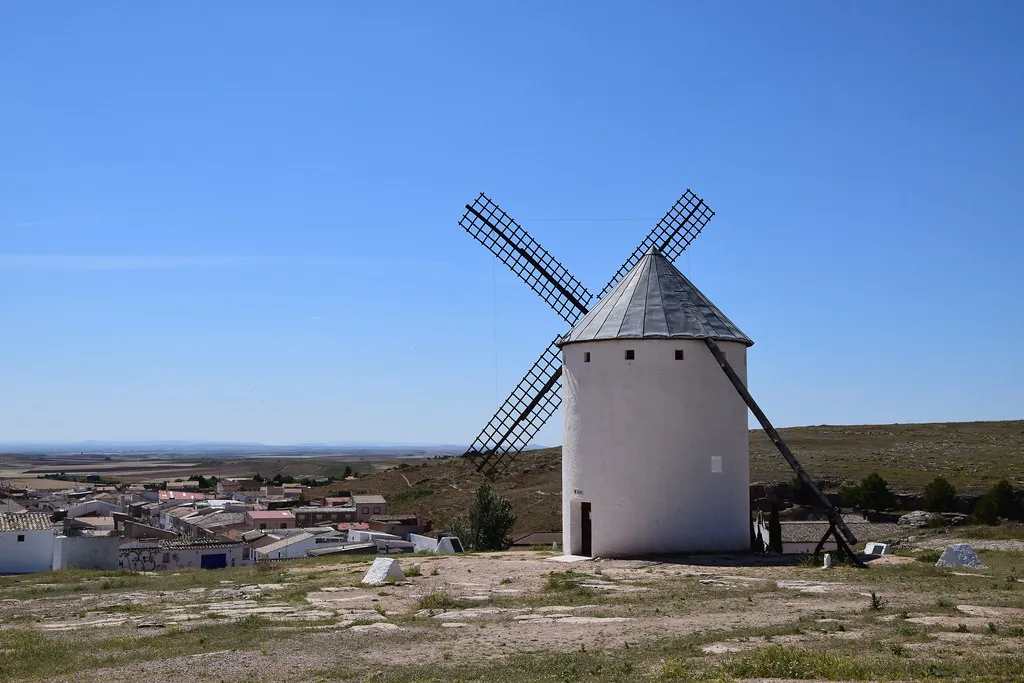
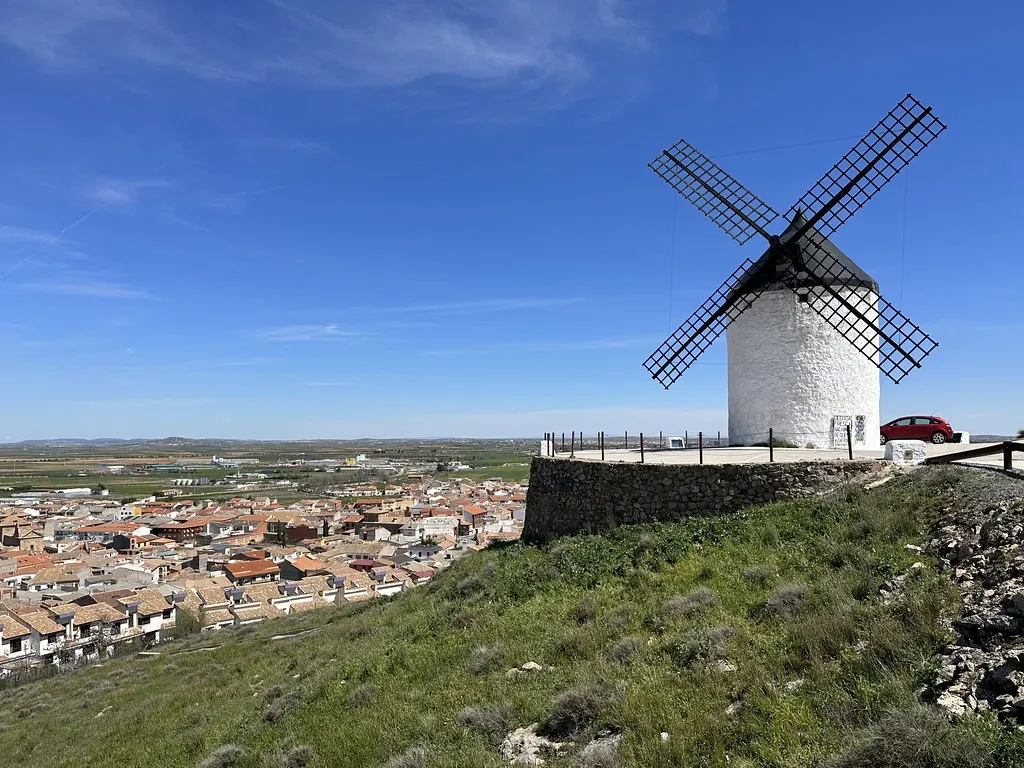
Castilla-La Mancha is famous for windmills and Don Quixote, yet around Arenales the topography refuses to provide even a hill for Cervantes' hero to tilt at. The municipality sits on a raised plateau of Miocene clay, blown into gentle dunes centuries ago and now locked solid under cereal fields. When the wind comes—usually from the west—it travels uninterrupted for fifty kilometres, gathering a dry, slightly bitter scent of thyme and sun-baked earth.
That flatness creates optical illusions. A lone holm oak appears to walk backwards as you approach; the village water tower seems to shrink rather than grow. Local drivers gauge distance by the angle of the church tower against the sky, a trick learned from their fathers. Visitors relying on GPS discover that the straight farm tracks marked as "local roads" are gated at dusk and impassable after rain.
The agricultural calendar writes the visual script. In April the wheat is ankle-high, an almost violent green that hurts the eyes under noon sun. By late June the colour has muted to gold, the heads heavy enough to ripple like animal fur whenever the wind changes. After harvest the stubble field becomes a pale carpet scattered with straw bales; then the disc harrow turns everything to chocolate-brown furrows, and the cycle starts again. Only the vineyards—small plots of Airén and Tempranillo—break the monoculture, their woody stems giving the landscape a darker winter skeleton when cereal fields lie bare.
A Village That Refuses to Be a Museum
Arenales de San Gregorio harbours precisely 588 inhabitants according to the padrón, though you will be hard-pressed to see more than a dozen at once. Mid-morning the only sound is the hum of refrigerators in the closed bar and the slap of washing against metal basins in back courtyards. Houses are single-storey or, at most, one modest upper floor topped with orange terracotta. Walls are thick—60 cm of adobe or early concrete—designed to swallow daytime heat and release it after sunset. Paint is recent, almost glossy, because villagers still white-wash every Easter whether tourists come or not.
There is no heritage trail, no ceramic shop, no medieval wall. Instead you get working infrastructure: a cooperative grain store whose conveyor belt rattles for three weeks each July; a veterinary clinic open two mornings a week; a pharmacy that doubles as the place to renew your Spanish health card. The church, Nuestra Señora de la Asunción, keeps its doors unlocked but unstaffed; inside, the temperature drops ten degrees and the air smells of wax and stone. A laminated sheet lists the cost of flowers for a funeral: 35 € for the pedestal spray, 15 € for the ribbon inscription—prices decided by the parish council, not by market research.
Walk the three principal streets and you will pass five parked cars, two of them with doors left open and keys on the seat. Vehicle insurance is cheaper here than in Madrid because nobody bothers to lock anything. Crime statistics for the past five years show one stolen bicycle and a dispute over a hunting dog that wandered into a neighbour's plot. The Guardia Civil vehicle cruises through on Tuesday and Friday at random times, mainly to check tractor documentation.
Eating What the Fields Provide
Gastronomy in Arenales is not a weekend hobby; it is the most efficient way to use what the land already grows. Migas—fried breadcrumbs spiced with chorizo and grapes—started as a fieldworker's second breakfast, designed to travel in a cloth and taste good cold. Today the same dish appears at Sunday lunch, but the recipe alters with the season: less pork in high summer when meat spoils quickly, more pimentón after the autumn pig slaughter when paprika helps preserve cured sausages.
The village bar, open from 07:00 until the last customer leaves (rarely later than 22:30), serves a fixed-price menú del día for 11 €. Monday is pisto day—Spain's answer to ratatouille—because the weekend leftovers of tomatoes, courgettes and onions need using. Thursday is cocido stew, simmered overnight in the electric cooker the owner switches on before closing. There is no written wine list; instead the proprietor lifts a plastic colander off a 20-litre box of La Mancha DO Tempranillo and asks "¿Vas a comer o solo picar?" ("Are you eating or just nibbling?"). The answer determines whether you get a tumbler or a smaller cup.
For self-caterers the weekly mobile shop—white van, loudspeaker playing the same 1989 Eurovision hit—stops outside the church at 11:30 every Wednesday. Fresh fish arrives packed in ice from the Mediterranean, 200 km away: hake at 8 €/kg, prawns only if someone pre-orders. Cheese is Manchego curado, 32 €/kg, sold in vacuum-packed wedges because the driver learned that British visitors worry about customs regulations when driving home through Santander.
Walking the Grid
Flat terrain sounds easy until you study a map. The farm tracks form a perfect chessboard: one-kilometre squares designed so a 40-metre seed drill can turn without reversing. Walking three squares feels trivial on paper; in July it equates to 45 minutes without shade, no water source, and a horizon that never gets closer. Local advice is to start at sunrise, carry two litres per person, and plan a loop that ends before 11:00 when the soil starts shimmering.
Two signed routes do exist. The 7 km "Vuelta a la Dehesa" skirts the municipal boundary through a thin strip of holm oak pasture where you have a slim chance of seeing great bustards performing their clumsy mating shuffle. The 12 km "Caminos del Cereal" is a figure-of-eight across wheat and barley plots; farmers ask walkers to keep to the unplanted 3-metre edge and to close any gate opened to allow a tractor through. Neither path has toilets or litter bins—take your rubbish back to the village bin outside the school.
Spring brings calcareous steppe flowers: pink crucifer, violet milk-vetch, a tiny blue scabious that closes at midday. Autumn is bird season: skylarks in flocks so large they register on weather radar, hen harriers quartering the stubble, the occasional golden eagle drifting down from the Montes de Toledo. Winter walks can be magical—frost outlines every furrow—but check the forecast: when the plateau fills with fog the temperature stays below zero all day and the return track becomes a featureless white corridor.
Getting There, Staying Sane
No train line reaches Arenales. The bus from Ciudad Real operates on Tuesday and Thursday, leaving at 07:15, returning at 14:00 sharp; miss it and you wait 48 hours. Car hire from Madrid-Barajas airport is the practical choice: take the A-4 south to Puerto Lápice, then the CM-420 through Alcázar de San Juan. After Campo de Criptana watch for the brown sign; the turn-off appears suddenly after a rise, easy to overshoot at 100 km/h. The final 6 km are single-track asphalt with two short concrete sections—legacy of a 1990s EU grant—perfectly passable but nerve-wracking when a combine harvester occupies the middle.
Accommodation is limited to three rural houses. La Casa del Alcalde sleeps four, has English-speaking owners who leave a pint of milk in the fridge "because Brits like tea first thing," and costs 90 € per night with a two-night minimum. Larger groups head to Gran Casa Rural La Vendimia seven kilometres away in Los Arenales de la Moscarda—a seven-bedroom villa with pool, but you will need to drive in for bread. Mobile coverage is 4G on the plateau, yet stone walls swallow signal; step outside to send your "I'm alive" WhatsApp.
August fiestas fill every bed and bring traffic jams of Seat hatchbacks decorated with ribbon. Book nothing then unless you enjoy processions at 02:00 and brass bands rehearsing under your window. Late March to mid-May is kinder: wildflowers, comfortable 20 °C afternoons, and the grain cooperative sells 5 kg sacks of last year's chickpeas for 4 €—perfect souvenir until customs asks why your luggage smells of farm.
Leave the village before dusk on your final evening. Pull over where the road climbs a slight embankment, kill the engine, and look back. Arenales appears as a single knot of white cubes against dark soil, the church tower poking up like a misplaced chess piece. There is nothing dramatic, no Instagram crescendo—just the slow turning of irrigation sprinklers catching the last light, and the certainty that tomorrow the tractors will start again long before the village wakes.