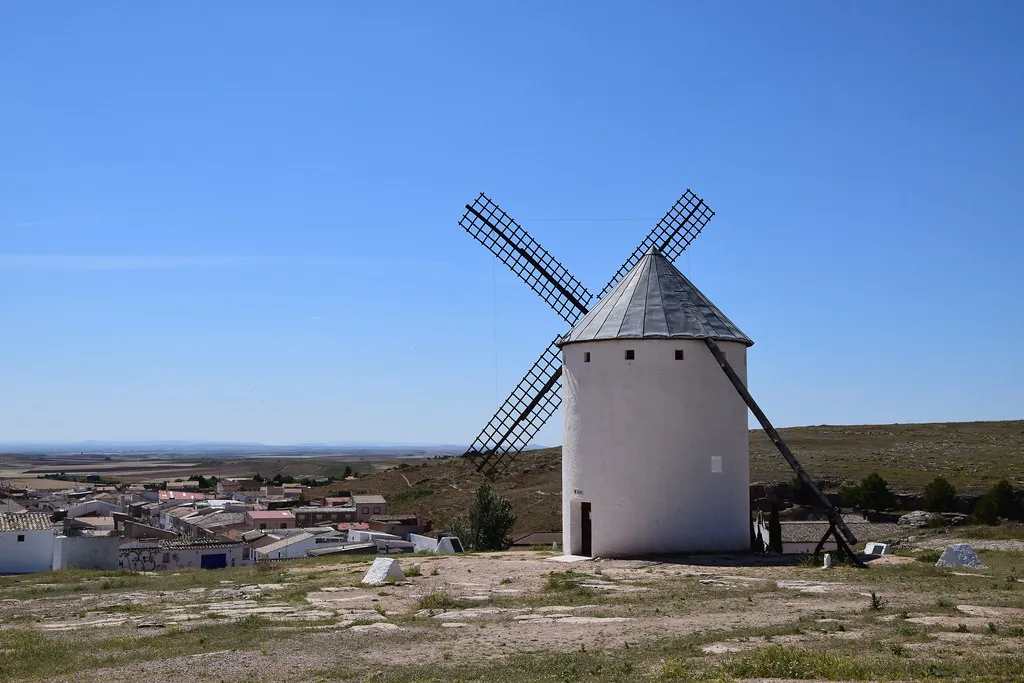
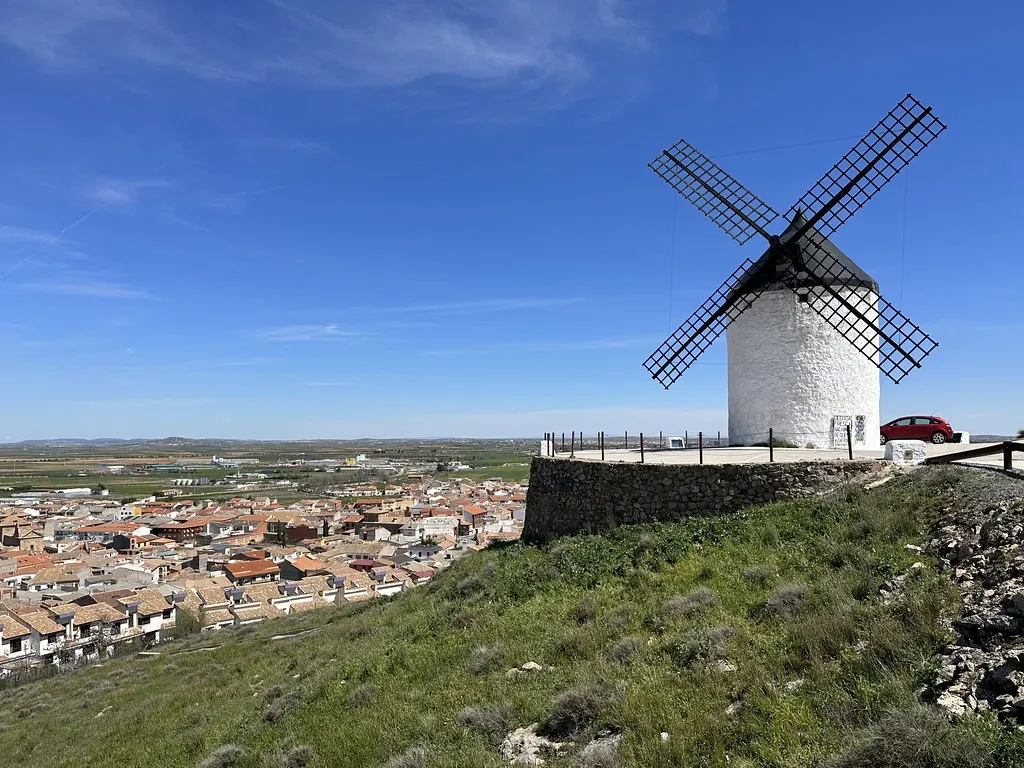
Vista aérea de Camuñas
Instituto Geográfico Nacional · CC-BY 4.0 scne.es
Castilla-La Mancha · Land of Don Quixote

Camuñas

The first thing that strikes you about Camuñas is the silence. Not the eerie sort, but the practical hush of a place where tractors outnumber cars ...

1,742 inhabitants · INE 2025
674m Altitude

Why Visit

Union Mill Corpus Christi Festival (Tourist Interest)

Best Time to Visit

spring

Corpus Christi (June) junio

Things to See & Do
in Camuñas

Heritage

  • Union Mill
  • Church of the Assumption
  • Ethnographic Museum

Activities

  • Corpus Christi Festival (Tourist Interest)
  • Windmill Route

Festivals
& & Traditions

Fecha junio

Corpus Christi (junio), San Nicasio (octubre)

Las fiestas locales son el momento perfecto para vivir la autenticidad de Camuñas.

Full Article
about Camuñas

Known for the Pecados y Danzantes of Corpus Christi; a Manchegan village with a windmill

Ocultar artículo Leer artículo completo

The first thing that strikes you about Camuñas is the silence. Not the eerie sort, but the practical hush of a place where tractors outnumber cars and the loudest sound at midday might be the church bells counting the hour. Forty minutes' drive south-west from Toledo, this scatter of low white houses sits anchored to the plains like an afterthought—population 1,800, one bakery, two butchers, and a bar that still writes the daily menu on a scrap of cardboard wedged behind the coffee machine.

A Plaza without Postcards

British visitors expecting ceramic souvenir shops or a twee "old quarter" will be disappointed. Camuñas trades in grain, not tourism. The Plaza Mayor is simply a rectangle of cracked granite slabs shaded by a few plane trees; the nearest thing to a gift outlet is the agricultural co-op that sells bulk fertilizer and, on request, a two-euro bottle of local virgin olive oil. Sit on the stone rim of the fountain long enough, though, and the village reveals itself: the postman knows every surname, the teenagers share one bench, and the elderly men play mus—a Basque card game imported decades ago by migrant shearers—with the intensity of Wimbledon finalists.

Architecture buffs can tick off the sixteenth-century Iglesia de Nuestra Señora de la Asunción in five minutes. Its real interest lies inside: a gilded altarpiece paid for by New-World silver and a side chapel whose floor is paved with worn tombstones of Moorish masons resettled after the Reconquista. Ask the sacristan (he lives opposite, door painted mint green) and he’ll unlock the sacristy to show a 1595 Flemish tapestry that nobody has yet bothered to rope off. Donation: whatever coins you have.

Easter Takes to the Cobbles

Come Holy Week the silence shatters. From Palm Sunday to Easter Tuesday Camuñas stages Los Pecados y Danzantes, a street drama recognised as a regional fiesta of tourist interest—though "tourist" remains a relative term. The cast is entirely local: forty-odd men, women and children who inherit their roles. Devils wear velvet suits the colour of paprika and whip the ground with horsehair ropes; angels balance wire wings covered in goose feathers; the Seven Deadly Sins parade in hooded robes of lime, violet and blood-orange. There is no raised stage. Action happens around you: Gluttony may breathe garlic on your jacket; Pride will stride past trailing cheap perfume. The script is medieval Castilian, incomprehensible even to most Spaniards, but the message—virtue versus vice—comes over loud and clear.

Accommodation within the village is impossible during the fiesta. The nearest beds are in the industrial town of Illescas, 35 minutes away, where the Hotel Velada charges about €65 for a double. Book early; half of Toledo province drives down after work to watch Thursday night’s performance, and the single access road clogs from 19:00 onwards. Bring a folding stool if you can’t stand for two hours; chairs are not provided and doorsteps are jealously guarded.

Flat Earth Walks and Sheep Tracks

Outside Easter the surrounding landscape reverts to agricultural soundtrack: skylarks, distant cultivators, the occasional burst of shotgun as someone pots a rabbit. The terrain is classic La Mancha steppe—so flat that the grain silos at Lillo, 12 km away, appear to hover like ships on the horizon. Two way-marked circuits leave from the cemetery gate. The shorter (4 km) loops around the saline lagoon of Tirez, where flamingos sometimes drop in during April migration. The longer (11 km) follows an old drove road to the ruined Ermita de la Virgen de la Vega; grain fields give way to vineyards whose small bush vines resemble upturned spiders. There is no shade and summer temperatures touch 40 °C; carry at least two litres of water and start at dawn when dew still smells of fennel.

Cycling works too, though tarmac is obligatory—farm tracks turn to axle-deep dust by July. The CM-400 carries little traffic beyond tractors; a pleasant 25-km out-and-back westwards reaches the windmill ridge at Consuegra, blades creaking above fields of saffron crocus. Bike rental does not exist in Camuñas; arrange it in Toledo before you come.

Cheese, Quince and Anything That Moves

Food is hearty rather than refined. The bar Sociedad offers a three-course menú del día for €11: bowl of pisto (ratatouille topped with fried egg), followed by cordero asado—shoulder of lamb slow-cooked in a wood-fired clay oven until the bones slide out clean. Pudding is usually arroz con leche thick enough to stand a spoon in. Vegetarians survive on tortilla and the seasonal gazpacho manchego, a game stew whose name confuses everyone because it contains no chilled tomato soup. Local cheese is cabra al vino, a semi-soft goat’s round soaked in red wine for 48 hours; the rind turns an alarming shade of violet but the interior tastes of meadow herbs and slightly sour cherries. Ask for it at the counter of Quesos Cerrato on Calle Nueva; they’ll vacuum-pack a wedge for the journey home.

Wine comes from the Denominación de Origen La Mancha, the world’s largest demarcated region. Quality swings from paint-stripper bulk to surprisingly elegant cencibel (the local tempranillo) aged in American oak. Bodegas Romero de Ávila, ten minutes outside the village, opens for free tastings on Friday mornings—ring ahead because the owner still tends vines himself and may be on a tractor. Expect to pay €4-6 a bottle for the reserva; UK duty makes it cheaper to drink on site.

How to Arrive and When to Leave

Public transport is patchy. There is one weekday bus from Toledo's Estación de Autobuses at 07:15, returning at 14:00—fine for a quick look, useless for Easter or dinner. A taxi from Toledo costs about €70 each way; share through BlaBlaCar and you’ll halve it. Drivers should note that the A-4 motorway south of Toledo has no services for 80 km; fill the tank at the last Repsol before the turn-off.

Stay the night only if you crave immersion over comfort. The single guest house, Casa Rural La Plaza, has three rooms above a bakery that starts kneading at 04:30. Earplugs provided; price €50 including breakfast of thick hot chocolate and churros. Otherwise base yourself in Toledo and day-trip: the city’s Parador often drops to €120 in winter if you book direct.

Camuñas will never feature on a "Ten Prettiest Villages" list. It offers instead the Spain that guidebooks skim past: a working grain village where tradition is lived, not performed, and where the welcome comes without a souvenir receipt. Turn up outside fiesta season and you may have the plaza to yourself—plus one elderly card sharp who’ll insist you take the fourth hand.

Key Facts

Region
Castilla-La Mancha
District
La Mancha
INE Code
45034
Coast
No
Mountain
No
Season
spring

Livability & Services

Key data for living or remote work

2024
ConnectivityFiber + 5G
HealthcareHospital 22 km away
Housing~5€/m² rent · Affordable
CoastBeach nearby
January Climate5°C avg
Sources: INE, CNMC, Ministry of Health, AEMET

Official Data

Institutional records and open data (when available).

  • MOLINO DE VIENTO LA UNIÓN
    bic Monumento ~3.8 km

Planning Your Visit?

Discover more villages in the La Mancha.

View full region →

More villages in La Mancha

Traveler Reviews