Full Article
about Cañada Juncosa
Small farming town ringed by pines and holm oaks; rural traditions still hold.
Hide article Read full article
A Small Village on the Conquense Plain
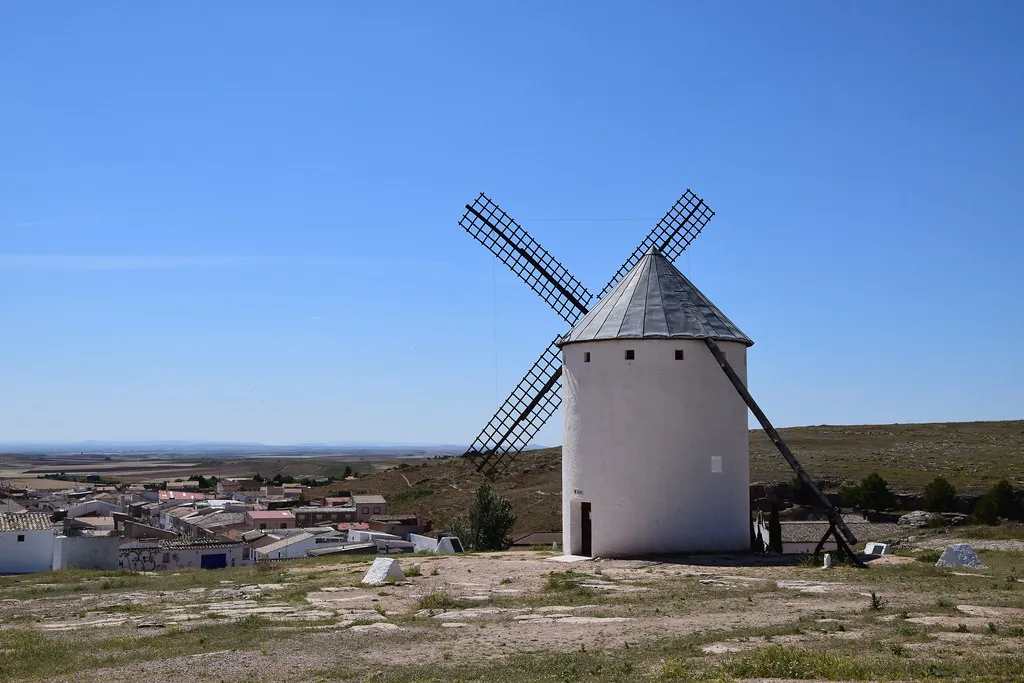
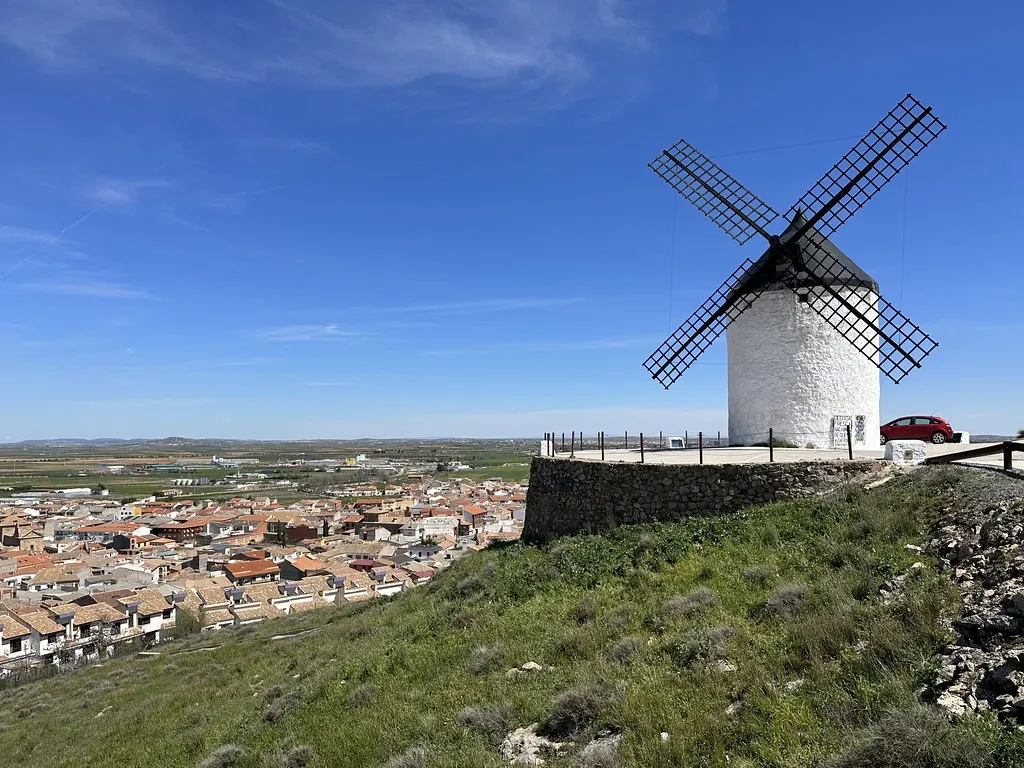
Cañada Juncosa sits in the heart of La Mancha in the province of Cuenca, where the horizon carries more weight than any hill or ridge. This is a landscape of broad cereal fields, gentle undulations and scattered holm oaks breaking up the open ground. The village has just over two hundred residents and retains the compact scale typical of agricultural settlements that took root on this part of the Spanish plateau centuries ago.
The origins of many villages in the area are usually linked to the repopulation processes that followed the Christian conquest of Cuenca at the end of the 12th century. Clear documentation does not always survive for each locality, yet the pattern tends to repeat itself: small communities tied to cereal farming and the use of scrubland. The very word “cañada” refers to the livestock tracks that crossed La Mancha during seasonal transhumance, when herds were moved between grazing grounds. It is likely that Cañada Juncosa developed around one of these traditional routes or on farmland opened up during that period.
Today, the landscape still sets the pace of life. The altitude is around 800 metres above sea level and the climate reflects what is known as the Mancha alta, the higher part of La Mancha. Winters are cold, summers are dry and wind sweeps across the plains with little to slow it down.
The Parish Church and Village Layout
The village centre is straightforward in layout. Short streets, a few small squares and one or two-storey houses built from masonry and finished in whitewash define the scene. These are buildings designed for a continental climate: thick walls, interior courtyards and few openings onto the street help regulate temperature throughout the year.
At the centre stands the parish church of the Asunción. The building follows a rural model common across La Mancha between the 16th and 18th centuries: a single nave, a compact structure and a bell gable rising above the surrounding rooftops. It is not a monumental church, yet it offers insight into how villages like this were organised. Beyond its religious role, the church shaped communal space and structured the annual calendar.
Some houses still preserve features of traditional Manchegan popular architecture. Wrought iron window grilles, large gateways once used for carts and interior patios where tools or animals were kept all point to a farming way of life. These are modest details, but they speak clearly of a community built around agricultural work.
The Open Landscape of the Mancha Alta
Cereal cultivation dominates the surrounding land. In spring the fields turn a uniform green; by early summer they shift to the golden tones of the harvest. Isolated holm oaks and patches of scrub interrupt the continuity of the fields, offering contrast in a terrain that might otherwise seem unbroken.
The absence of major relief features has its own historical logic. For centuries these plains were used for extensive farming and for the passage of livestock. The network of rural tracks that still links nearby villages and former farmland dates from this long history of cultivation and movement.
At night, the lack of intense artificial lighting reveals a clear sky. In many parts of inland La Mancha this remains the case. Step a short distance away from the main streets and the difference is noticeable.
Walking the Agricultural Tracks
The simplest way to explore the surroundings is along the agricultural tracks that radiate from the village. Some lead to working farms, others connect Cañada Juncosa with neighbouring settlements. They are not designed as marked hiking routes and signage is limited, yet they form part of the everyday landscape.
Walking these paths offers a clearer sense of how the territory is organised: broad plots of land, lines of almond trees or holm oaks and small agricultural buildings that appear from time to time. The scale of the fields and the straight horizons reinforce the impression of space that defines this corner of Cuenca.
Traditional Cuisine of Inland La Mancha
Home cooking in Cañada Juncosa follows the established repertoire of inland La Mancha. The dishes are hearty and closely tied to farm work and ingredients that keep well. Migas, made from breadcrumbs and typically served as a substantial meal, are common at gatherings. Stews prepared with small game also feature regularly, as does gazpacho manchego, a regional speciality distinct from the cold tomato soup of southern Spain and instead based on meat and flatbread.
Sheep’s cheese and wines produced in nearby districts usually accompany these meals, particularly during celebrations or meetings between neighbours. The cuisine reflects a rural economy shaped by self-sufficiency and seasonal rhythms.
Festivities and Community Life
The village calendar revolves around celebrations in honour of its patron saint, held in summer. As in many small localities, these dates concentrate much of the year’s social activity. Residents who live elsewhere often return and the streets become livelier than usual.
The festivities combine religious events with communal gatherings. There are no large stages or elaborate set-ups. The focus lies more on reunion and shared ties among those connected to the village. For a place of this size, such moments reinforce a sense of continuity between past and present.
Reaching and Exploring Cañada Juncosa
Access to Cañada Juncosa is via regional roads that cross the plains of La Mancha. Public transport options are limited, so most visitors arrive by car.
The village itself can be explored in a short time. Those interested in rural architecture may want to pay attention to the gateways, iron grilles and interior courtyards that survive on some houses. They are quiet reminders of a way of life that still defines many small villages across La Mancha.
Cañada Juncosa does not revolve around major monuments or dramatic landscapes. Its identity lies in scale, in the open horizon and in the steady rhythm imposed by fields and seasons. For anyone seeking to understand the agricultural heart of inland Castilla La Mancha, this small village offers a clear and unembellished view.