Full Article
about Carrascosa de Haro
Farming village with traces of early settlements; flat farmland and low scrubland.
Hide article Read full article
The first sound you hear is the scrape of a metal chair on stone, someone moving into the shade. It’s mid-morning in Carrascosa de Haro and the light is already flat, bleaching the whitewash on the houses along Calle Real. The air smells dry, a mix of dust and sun-baked rosemary from the pots on a windowsill. You get the feeling things happen in slow motion here, dictated by the sun’s arc and the needs of the fields that start where the pavement ends.
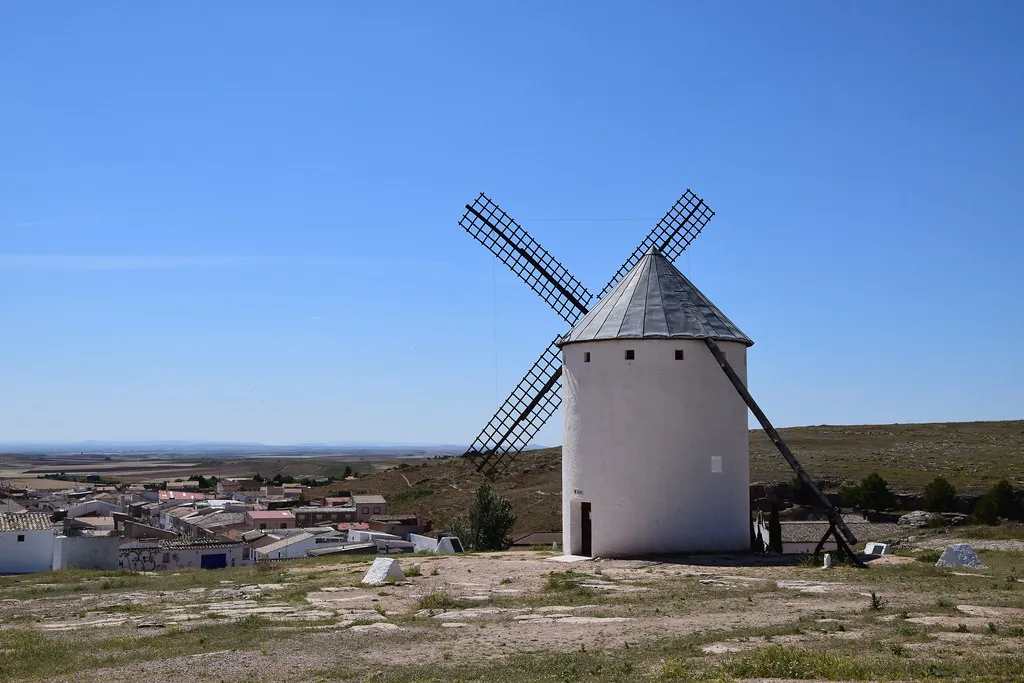
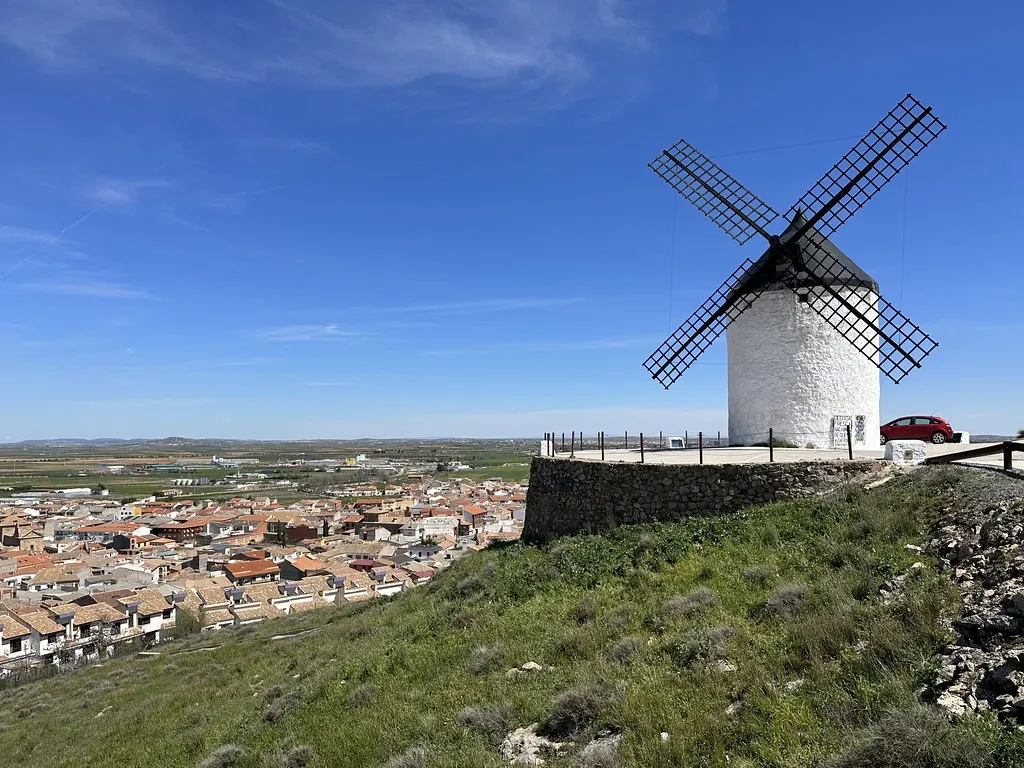
This is a village of eighty-seven people in the Cuenca province of La Mancha. The number isn’t just a statistic. You feel it in the quiet that settles over the streets by ten in the morning, broken only by a distant tractor or the murmur of a radio from an open doorway. The horizon is a straight line, interrupted only by the church tower and the occasional silhouette of a lone tree.
A Church Tower for Orientation
The tower of the Iglesia de San Juan Bautista is your compass. Built from local sandstone, it’s more functional than ornate, its bulk visible from the end of every lane. In the late afternoon, when the sun slants low, that stone glows with a deep, honeyed warmth against the chalky white of the surrounding walls. It’s a solid, reassuring presence.
The church is usually closed unless there’s a service or you ask around for the key. Its real role is communal. In late August, it anchors the fiestas for the patron saint, drawing back families who’ve moved away and filling the plaza with a temporary, noisy life that feels both familiar and strange.
The Logic of Whitewash and Thick Walls
There are no curated corners here. The architecture is pragmatic. You walk past wide portones, wooden gates built for carts now used for modern machinery. Behind them, courtyards hold stacks of cured olive wood or old terracotta tiles. The thick walls and small windows are a direct response to climate: a buffer against winter’s cierzo wind and summer’s relentless heat.
This isn’t a museum. It’s a working layout. The narrow streets funnel any breeze, offering pockets of shade. You notice how many front doors are left ajar, revealing cool, dark interiors.
Walking the Tractor Paths
To understand this place, you leave it. Dirt tracks, packed hard by tires, lead straight from the last house into the fields. The landscape is geometric and vast: waves of cereal that shift from green to a pale, bleached gold, punctuated by darker lines of vineyard and the grey-green smudges of olive groves.
There is no signage, no designated route. You follow a track until you want to turn back. The only sounds are skylarks overhead and the rustle of grain in the wind. In July or August, this walk is for dawn or dusk only; midday sun here is a physical weight.
Sky Full of Stars, Fields Full of Birds
The emptiness that defines the day becomes an asset at night. With no major towns nearby, light pollution is minimal. On a clear night, especially after a winter wind has swept the sky clean, the Milky Way is a visible smear across black velvet.
That same open terrain supports steppe birds. Look for kestrels hovering on thermal currents. With patience and binoculars, you might spot the cryptic shape of a stone-curlew or, with considerable luck, distant great bustards moving like small herds through the crops. They are not guaranteed, but their possibility is part of the texture.
Practicalities and Pace
Food here is straightforward Manchegan fare: gazpacho manchego, a hearty game stew, or simple grilled lamb chops. It’s food born of necessity.
Come in spring for wildflowers and mild temperatures, or in autumn when the light turns soft and golden. Summer is severe and winter can be bitingly cold and windy. Your own vehicle is essential; fuel stations are not.
Carrascosa de Haro asks nothing of you. It doesn’t cater to an itinerary. Its rhythm is agricultural and its beauty is austere, found in long sight lines and quiet so deep you can hear your own footsteps echo off walls that have seen centuries of similar days. You adapt to its pace, or you miss the point entirely.