Full Article
about Casas de Fernando Alonso
Wine-growing town with manor houses; authentic La Mancha atmosphere
Hide article Read full article
A village that gently resets your rhythm
Some places are meant to be quick stops. You pull over, stretch your legs, take a short walk and move on. Casas de Fernando Alonso has a habit of stretching that moment. You arrive along a straight road with open fields on both sides and think a brief stroll will do. Then you start walking, unhurried, and the place quietly asks you to slow down.
Tourism here does not revolve around major landmarks or postcard views. It is more about understanding how a small village in La Mancha, with just over a thousand residents, actually works. The countryside still sets the pace of life, and that shapes everything from daily routines to conversations.
First impressions on arrival
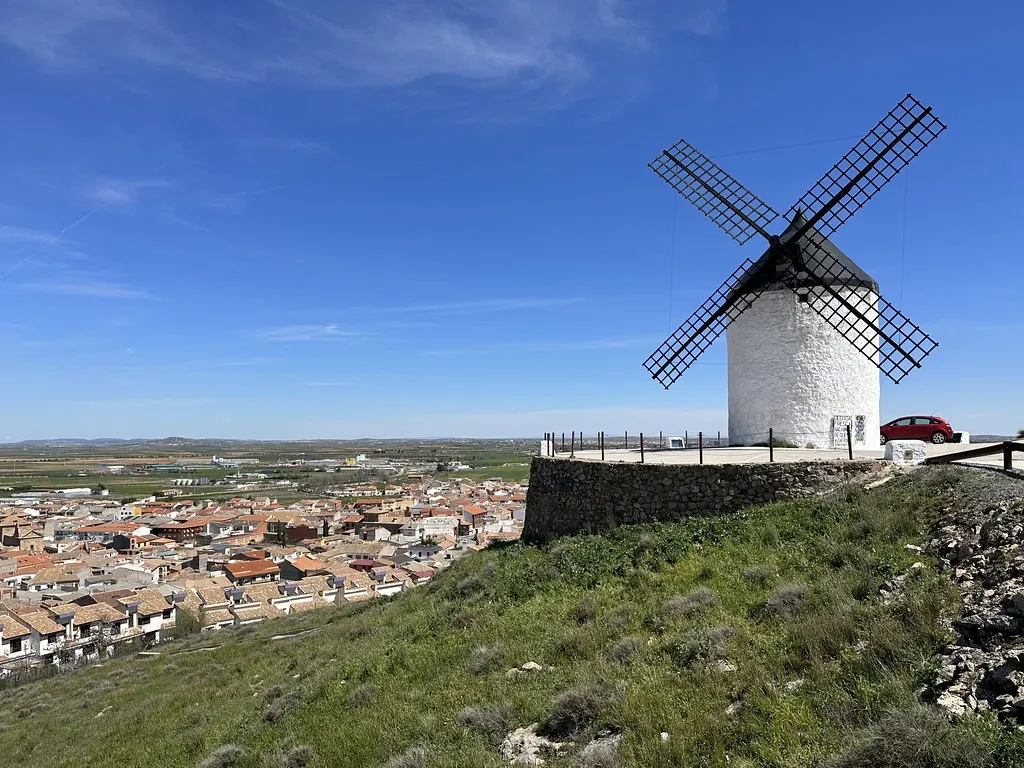
Casas de Fernando Alonso sits in the flatlands of La Mancha, in the province of Cuenca. Driving in, the first thing that stands out is a sense of order. Streets are fairly straight, houses are low, and there is a kind of quiet that comes from minimal traffic. Most of what you see are locals going about everyday errands.
Life here leans towards the practical. Cars are parked beside large gates, agricultural trailers appear here and there, and behind many façades lie interior courtyards that are only hinted at from the street. Mid-morning can still mean neighbours chatting at their doorways if the weather is good.
There is no real need for a map. The centre is compact, and most places are within easy walking distance.
The church and the village core
After a few minutes on foot, the parish church of the Asunción comes into view. It is not a monumental building, but it defines the village skyline. Its tower is visible from different points and works as a useful reference when wandering nearby streets.
Inside, the church has undergone changes over the years, something quite typical in villages where buildings adapt over time rather than remaining fixed. It is less a place designed for quick visits and more a space that continues to serve the local community.
Around it lie some of the oldest streets. Thick wooden doors and simple façades still appear, designed more to protect against heat and cold than to draw attention. The architecture reflects function first, shaped by climate and daily use rather than decoration.
Houses, cellars and adapting to the climate
A closer look at the houses reveals patterns common across La Mancha. Solid walls, small windows and interior courtyards are part of a design that deals with harsh summers and dry winters on the plateau.
It is also quite normal to hear about underground cellars. In this part of Cuenca, using the earth below as storage for wine or food was once widespread, as it provides a more stable temperature throughout the year.
These are small details, easy to overlook at first, yet they offer a clear sense of how people have lived here for generations. The built environment is closely tied to the land and the climate, and that connection is still visible.
Open fields and easy paths
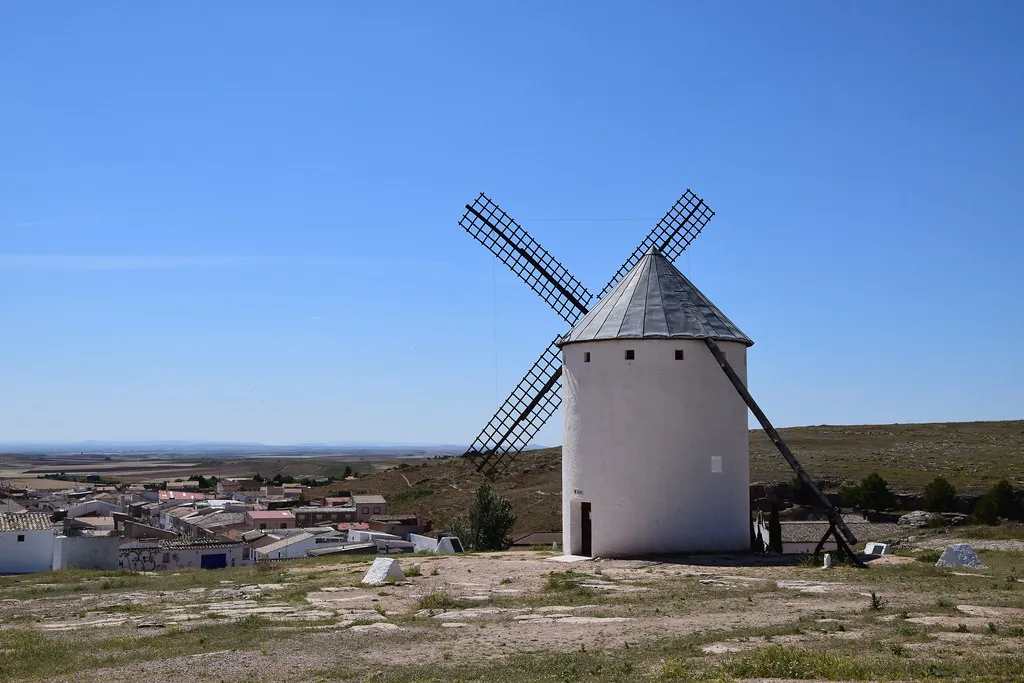
Beyond the village, the landscape follows the familiar pattern of La Mancha: cereal fields, vineyard plots and agricultural tracks stretching out in all directions.
There are no mountains or dramatic viewpoints to seek out. The appeal lies in the long horizon. On clear days, you can walk for quite some time with the same gentle outline of low hills in sight.
Many locals use these paths for walking or cycling. Routes tend to be straightforward thanks to the flat terrain. With a bit of luck, you might spot partridges or birds gathering near small ponds after rainfall.
Nearby villages such as El Provencio or Villarrubia are within reach, and some people link routes between these municipalities for longer outings. Even so, the emphasis remains on simplicity rather than planning elaborate excursions.
Food shaped by the land
The local cuisine follows the logic of the region: filling dishes based on what the land provides. In many homes, traditional recipes from La Mancha still appear during family gatherings or celebrations. Pisto, a vegetable stew, as well as gachas and migas are part of that repertoire.
Lamb and meat stews also have their place. Alongside them, sheep’s or goat’s cheese remains a staple in the local pantry, reflecting long-standing agricultural practices in the area.
Wine is another constant. Conversations often drift towards vineyards or how the harvest has turned out in a given year. The Denominación de Origen La Mancha, a designation of origin that recognises regional wine production, carries weight throughout this part of Spain.
Festivities and everyday calm
Local celebrations revolve around the feast of the Asunción in summer. There are processions, evening music and activities organised by residents themselves. It is not set up as a large-scale spectacle but as a gathering of people who know each other well.
August tends to bring a livelier atmosphere, as family members who live elsewhere return for the holidays. Streets become busier, and squares stay active later into the evening. For a few days, the rhythm shifts, though it never loses its local character.
For the rest of the year, Casas de Fernando Alonso is best approached as a quiet stop. A walk through the centre, a wander along the surrounding paths and a bit of time spent simply looking at the landscape can be enough.
Sometimes that is all it takes to understand a place like this.