Full Article
about Casas de los Pinos
A town surrounded by pine forests and vineyards; quiet rural atmosphere
Ocultar artículo Leer artículo completo
The church clock strikes three. Nobody stirs. A tractor idles in the square, its driver chatting to the woman who has stepped out of the grocer’s with a single paper bag. Above them, swifts wheel across a sky so wide it seems to flatten the land itself. This is Casas de los Pinos, 415 souls scattered across wheat-coloured plains at an altitude higher than Ben Nevis’s summit. You come here for the silence, and for the wine cooperative that opens its doors like a village living room.
A horizon measured in wheat
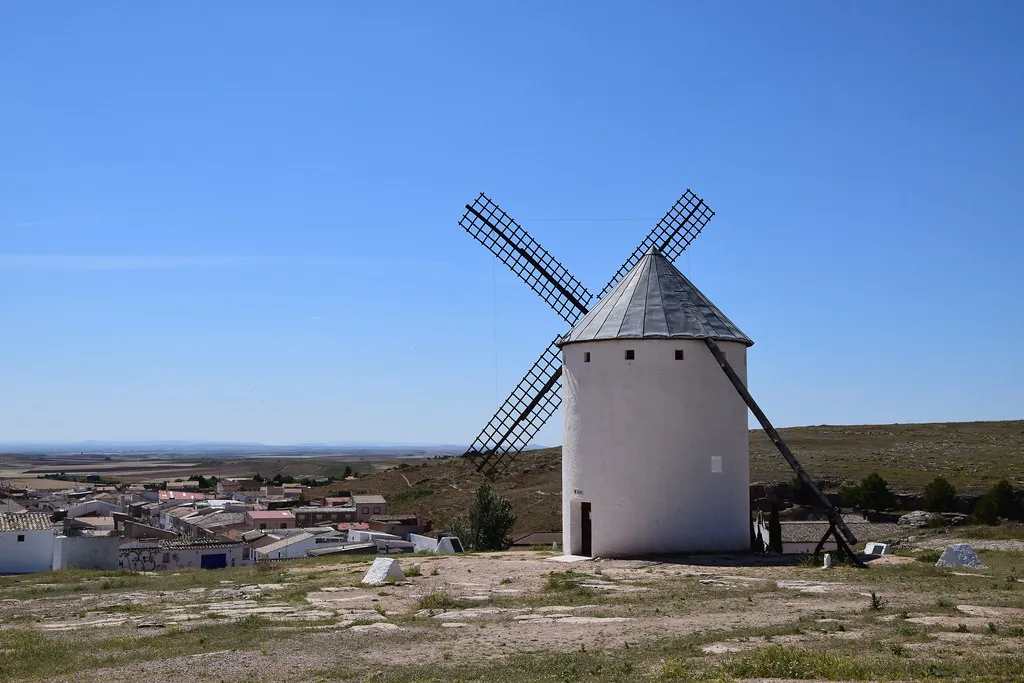
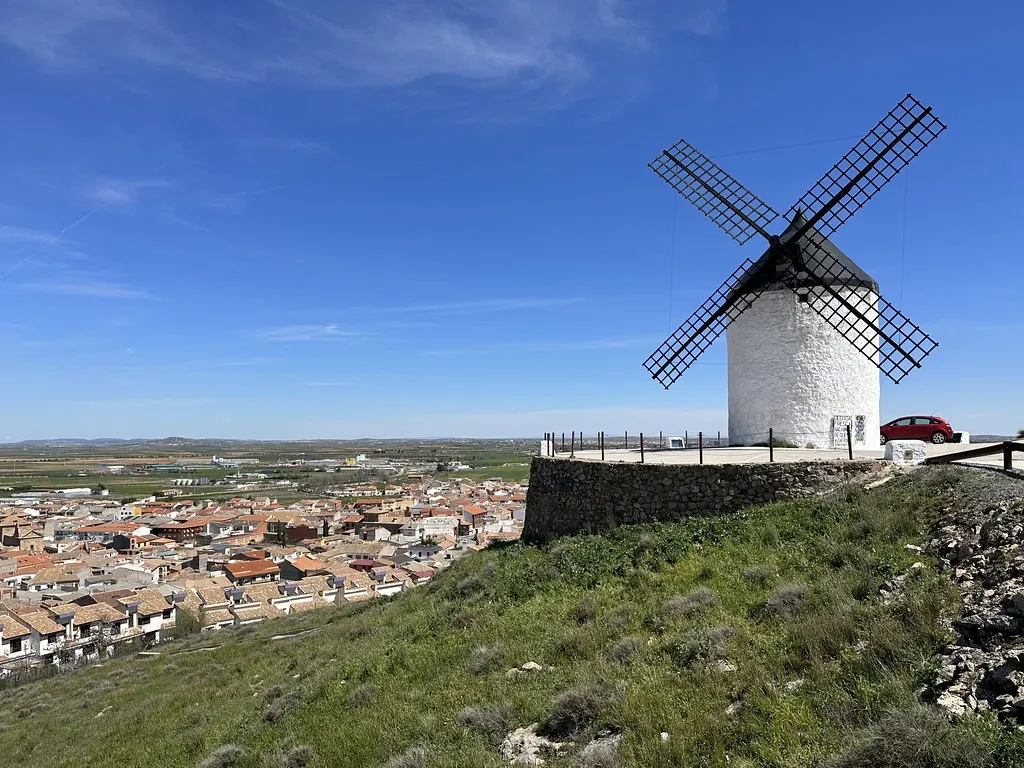
The landscape is a geometry lesson. Fields are pinned to the earth by stone boundary walls; every road runs ruler-straight until it bumps against the next hamlet ten kilometres on. Spring turns the plateau an almost Irish green, but by late June the colour has drained into gold that ripples like cloth in the wind. Walk the farm tracks at dawn and the only footprints are yours and the occasional wild boar’s—bristly neighbours who root along the ditches at night.
There is no dramatic sierra to frame the view, just the slow curve of the meseta. That emptiness is the point. Bring binoculars: you’ll spot calandra larks rising in song flight and, if you’re lucky, a little bustard stalking through the stubble. The altitude keeps temperatures civilised in May and October; mid-summer midday is fierce, so early starts are sensible. Frost can lace the puddles in March—pack layers.
Wine, cheese and the co-operative ritual
The Sociedad Cooperativa Vinícola sits on the western edge of the village, a functional 1960s building that smells of crushed grapes and disinfectant. Locals arrive with battered five-litre demijohns; visitors are handed a tulip glass and invited to taste. The house red—Cencibel, the local name for Tempranillo—costs €3.20 a litre if you bring your own bottle. It is light enough for lunch and tastes of cherries and the iron-rich soil. Buy a kilo of cured manchego from the counter next door (€14, vacuum-packed for the suitcase) and you have an instant picnic.
Food options inside the village are limited to one bar, La Posada, where the menu hinges on whatever María has simmering that day. Pisto manchego, the Spanish cousin of ratatouille, arrives topped with a fried egg and costs €7. If the place is empty by 10 p.m. she simply locks up—don’t count on a late-night brandy. Self-caterers should stock up in San Clemente, fifteen minutes down the CM-412, where the Mercadona stays open until 9.30 p.m. and Tuesday’s market stalls heap up pimientos de padrón for €2 a tray.
Tracks for boots and bikes
Casas de los Pinos is criss-crossed by agricultural lanes that never exceed a 3 % gradient—heaven for flâneurs on bicycles. A pleasant 22-km loop heads south-east to Villalgordo del Marquesado, past an abandoned stone shepherd’s hut that swallows barn owls at dusk. The tarmac is butter-smooth and you’ll meet more harvesters than cars. walkers can follow the signed PR-CU 54 footpath that links the village with the Roman bridge over the Huécar at San Clemente; the return leg skirts a pine plantation whose needles muffle every footfall. Allow four hours and carry water: the only fountain is at kilometre eight.
August reunion, February stars
Fiestas here are family affairs. During the first weekend of August the population triples as émigrés return for El Reencuentro. Brass bands rehearse in the square at nine in the morning; grandparents dance aguardiente-fuelled jotas until the amplifiers blow. Accommodation is impossible unless you booked the previous Christmas—every spare room is pledged to a second cousin. Visit instead in late September for the Fiesta de la Vendimia: one evening, one free-flowing tapas stall, zero tourist coaches.
Winter nights are astronomically dark. Step outside at 1 a.m. and the Milky Way feels close enough to snag on a roof tile. Daytime highs hover around 8 °C, but the sun is sharp and hiking is pleasant in a fleece. Snow falls once or twice a season and melts by lunchtime; the roads are gritted promptly because the bread van must get through.
Getting there, getting cash, getting stuck
Madrid-Barajas to Casas de los Pinos is 175 km of motorway and 15 km of wheat. Collect a hire car from Terminal 1, leave the A-3 at Tarancón, and you’ll be parking beside the church in two hours. There is no petrol station in the village; the nearest pump is in San Clemente and it closes at 10 p.m. Public transport is theoretical: a school bus departs for Cuenca at 7.15 a.m., returns at 2 p.m., and refuses luggage.
Draw euros before you arrive—the cash machine disappeared when the bank branch closed in 2019. Cards are accepted at the cooperative, but María’s bar is cash-only and she will not break a fifty. Mobile coverage is patchy inside thick stone walls; download offline maps and tell your roaming provider you’ll be in Spain’s “empty quadrant”.
What silence costs
Rooms are inexpensive because demand is modest. Casa Rural La Torrecilla, a converted grain store, has beams thick enough to survive a siege and rents for €70 a night (two-night minimum). The owner leaves a bottle of cooperative wine on the table and instructions to feed the patio tortoise lettuce. Alternative: four simple doubles above the grocer’s, €45 with shared bathroom, breakfast of tostada and jamón negotiated separately.
The trade-off for the hush is inconvenience. If you crave nightlife, artisan boutiques, or even a post office, stay in Cuenca. Casas de los Pinos offers instead a lesson in scale: a place where the loudest sound at midnight is the wheat itself, rustling like dry paper in the breeze. Bring a corkscrew, a phrasebook, and an appetite for vast skies. Then set your watch to church-clock time and forget the rest.