Consuegra - Flickr
sergei.gussev · Flickr 4
Castilla-La Mancha · Land of Don Quixote

Consuegra

The A-4 south from Madrid unspools across ochre plains so flat you can watch your hire car disappear into heat shimmer ten kilometres behind. Then,...

9,767 inhabitants · INE 2025
704m Altitude

Why Visit

Windmills Windmill Route

Best Time to Visit

year-round

Saffron Rose Festival (October) octubre

Things to See & Do
in Consuegra

Heritage

  • Windmills
  • La Muela Castle
  • Spain Square

Activities

  • Windmill Route
  • costumed tours
  • Saffron Rose Festival

Festivals
& & Traditions

Fecha octubre

Fiesta de la Rosa del Azafrán (octubre), Virgen de la Blanca (septiembre)

Las fiestas locales son el momento perfecto para vivir la autenticidad de Consuegra.

Full Article
about Consuegra

Icon of La Mancha with its windmills and medieval castle; the quintessential Cervantes setting

Ocultar artículo Leer artículo completo

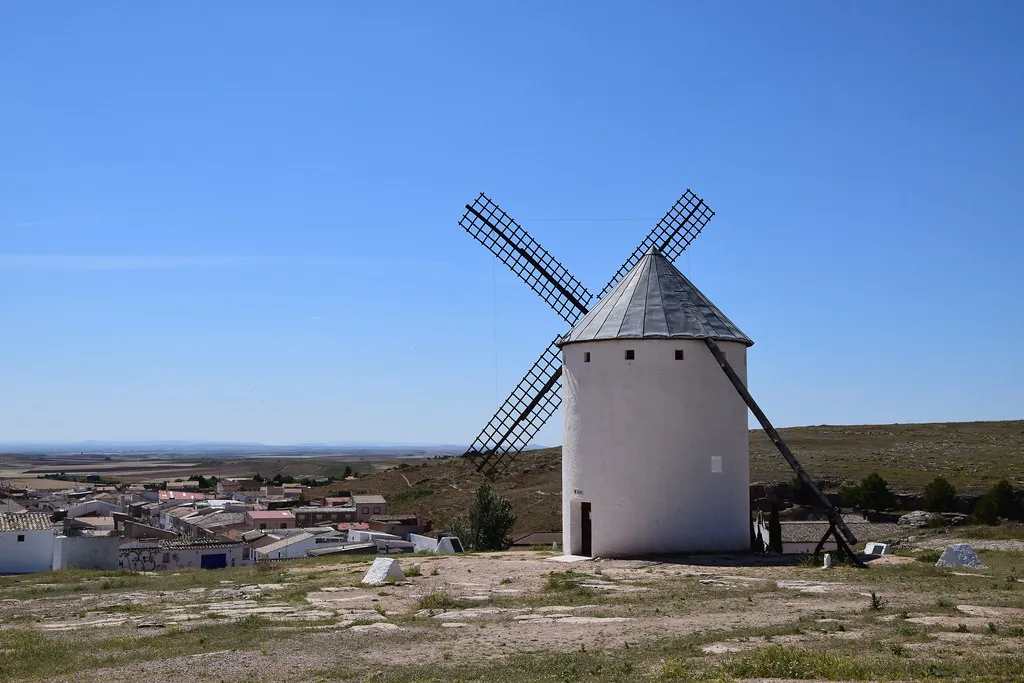
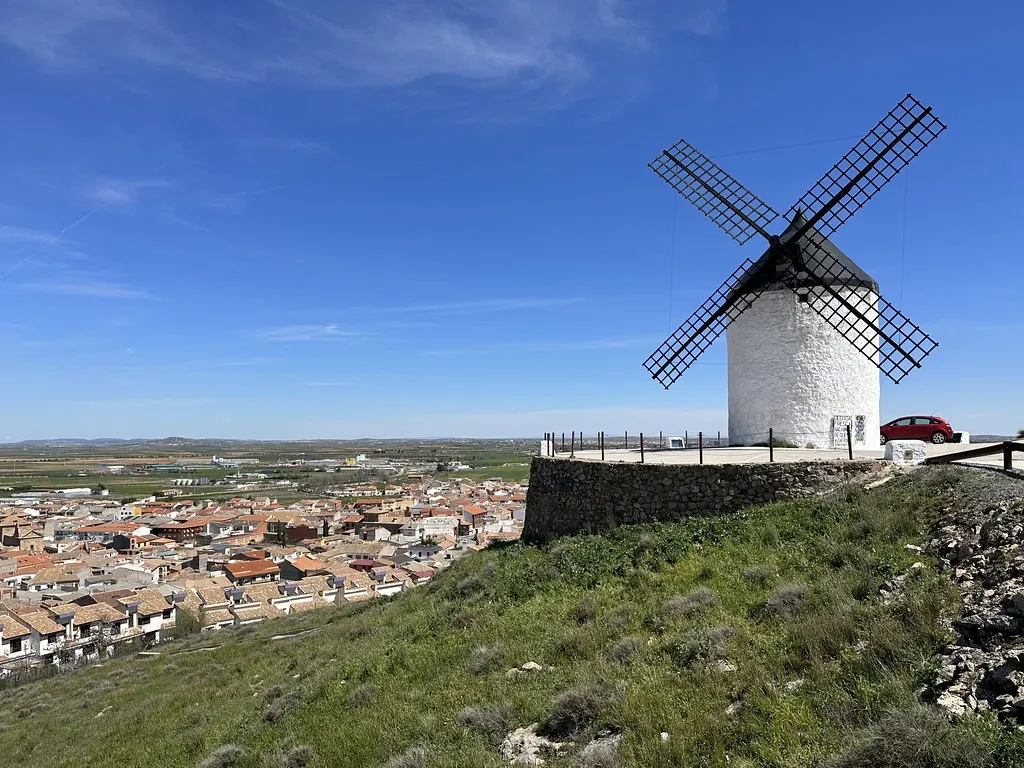
The A-4 south from Madrid unspools across ochre plains so flat you can watch your hire car disappear into heat shimmer ten kilometres behind. Then, sixty miles out, something strange punches the horizon: twelve white towers with dark wooden vanes, lined like soldiers along a knife-edge ridge 200 metres above the plain. This is Consuegra, and the first-time viewer usually swerves onto the hard shoulder for a photograph long before reaching the exit.

At 704 metres above sea level, the town sits in the wind corridor that funnels between the Montes de Toledo and the Cuenca hills. The same relentless breeze that drove Cervantes' deluded knight to tilt at windmills still snaps flags, whips hair and makes even May feel colder than you'd expect for southern Spain. Bring a jacket—summer evenings included.

The Ridge: Reality Check at Twelve O'Clock

Park beside the molinos themselves; the gravel bay is free and rarely full. From here it's a two-minute stroll to the nearest tower, but the gradient is deceptive—what looks like a gentle slope will have you breathing hard if you're pushing a buggy or carrying toddler kit. The stone path is uneven; trainers grip better than holiday sandals.

Eleven windmills survive from the sixteenth to nineteenth centuries, each christened—Bolero, Mambrino, Sancho—names that read like a cast list from the novel Spain pretends foreigners have actually read. Only one, Molino Rucio, keeps its original wooden machinery inside and offers demonstrations at weekends and fiesta days. Turn the massive spindle by hand and you'll understand why millers worked barefoot: one slip meant losing toes to oak cogs the size of cartwheels.

The castle alongside them, Castillo de la Muela, began as a tenth-century Moorish stronghold before the Knights of St John added their own coat of arms and a chapel. Inside, the keep gives a 360-degree lesson in medieval logistics: to the north, the silver ribbon of the motorway; to the south, nothing but wheat and vineyards until the Sierra Morena 80 km away. The audio guide is mercifully short—some panels are missing entirely—so climb, look, leave. The gardens below the walls are weedy and litter-strewn, a reminder that regional budgets stretch only so far.

Siesta closes both castle and mills from roughly 13:30 to 16:00; hours vary by season and mood. Check the website the night before—nothing is more dispiriting than trudging uphill at noon to find iron gates locked.

Down in the Town: Bread, Theatre and Saffron Gin

Leave the ridge to day-trippers clutching selfie sticks and descend into the grid of chalk-white houses that still functions as a working town. Consuegra's population hovers around 5,000; unemployment is higher than the regional average and the young continue to drift towards Toledo or Madrid. Yet the place refuses to become a museum. Delivery vans squeeze past elderly women in housecoats sweeping doorsteps; schoolchildren race along alleyways narrow enough to touch both walls.

On Plaza de España, the seventeenth-century Corral de Comedias sits unexpectedly between the chemist and a butcher. Rediscovered during a 1996 refurbishment, the open-air playhouse survives intact: wooden balconies, stone benches, even the original stage trapdoor. Guided tours run hourly when the red curtain hangs open; if it's shut, the caretaker next door will usually fetch the key for a couple of euros. Performances still happen during summer weekends—mostly Golden-Age classics performed in Spanish so rapid you'd need A-level fluency to follow the jokes.

Two blocks south, the Museo del Azafrán occupies a former hospital. The exhibition is one room, dimly lit to protect pigment, but it explains why local growers call saffron "red gold". Each gram requires 150 flowers picked before sunrise, stigma removed the same day, then toasted over embers. A tiny packet costs €9 in the gift shop; steep until you do the maths on labour. The staff will let you sniff the difference between La Mancha coupe and cheaper Iranian strands—one honeyed, the other metallic.

Café La Antigua, opposite the town hall, has cottoned on to British tastes: saffron-infused gin arrives with the spice frozen inside ice cubes, dissolving into a gentle yellow swirl that tastes more floral than bitter. Pair it with hojaldre—sugared puff-pastry fingers that shatter like a good croissant—then buy an extra bag for the car. They survive motorways better than crisps.

Walking the Plain: Don Quixote's Commute

The official Ruta de Don Quijote passes through Consuegra, but the signed section is an 8 km loop south of town across agricultural tracks. Setting out at 09:00 is essential; by 11:00 the sun ricochets off limestone and shade is non-existent. Stout shoes, two litres of water and a broad hat are minimum kit. The reward is La Mancha in 3-D: purple viper's bugloss between wheat rows, hoopoes flashing black-and-white from telegraph poles, and the occasional farmer on a quad who will raise two fingers in greeting without slowing.

October brings the Fiesta de la Rosa del Azafrán. Tourist brochures promise "authentic harvest participation" but the reality is more prosaic. Pickers start at 05:30 when dew still grips petals; visitors are welcome but there's no transport, no toilets in the fields and no payment—just the chance to squat among purple blooms until your back aches. Arrive late and you'll be handed a plastic basket for photos then directed to the tourist tent for caldo de gallina. Fun if you enjoy volunteering; otherwise watch the afternoon peeling competition in the main square where women race to strip stigmas fastest.

Getting There, Getting Fed, Getting Out

Consuegra sits 60 minutes south of Madrid-Barajas on the A-4, 45 minutes north-east of Toledo. No train line reaches town; buses from Madrid Estación Sur (2 h 15 min, €11.50) run three times daily but the midday service sits squarely during siesta lockdown.

Plan on two hours for the ridge, another ninety minutes for the town and museum. Anything longer means you'll be drinking coffee purely to kill time. Picnic supplies: buy them in Toledo or risk the single kiosk at the windmills which sells lukewarm cans and overpriced crisps. Proper meals cluster along Calle-Cervantes—inevitably named—where La Vida de Antes does a saffron-laced cordero that won't terrify palates used to Sunday roast; expect €16 for a main.

If the wind picks up and dust whips across the plain, head east 25 km to Madridejos where the Quesería La Mancha offers cheese tastings in a cave-cellar and sells Manchego at farm-gate prices. Alternatively, continue south to Ciudad Real and join the AVE high-speed line back to Madrid—Consuegra works better as a comma in a longer journey than a full stop.

Come for the photograph, stay for the theatre, leave before the wind convinces you the giants are real.

Key Facts

Region
Castilla-La Mancha
District
La Mancha
INE Code
45053
Coast
No
Mountain
No
Season
year-round

Livability & Services

Key data for living or remote work

2024
ConnectivityFiber + 5G
HealthcareHealth center
EducationHigh school & elementary
Housing~5€/m² rent · Affordable
January Climate5°C avg
Sources: INE, CNMC, Ministry of Health, AEMET

Official Data

Institutional records and open data (when available).

  • GRABADOS EL ALCOR
    bic Genérico ~4.8 km
  • ESCUDO NOBILIARIO C/ DIEGO RODRIGUEZ DE VIVAR, 3
    bic Genérico ~0.6 km
  • PRESA ROMANA
    bic Monumento ~5.4 km
  • CERRO CALDERICO Y SUS MOLINOS
    bic Sitio histórico ~1 km
  • CASTILLO
    bic Genérico ~1 km

Planning Your Visit?

Discover more villages in the La Mancha.

View full region →

More villages in La Mancha

Traveler Reviews