Full Article
about El Hito
Famous for its salt lagoon
Hide article Read full article
Early in the morning, before a single car passes through, El Hito sounds like gravel under tyres and the slow creak of a door opening. The light arrives low and horizontal, sliding along the whitewashed streets and casting long shadows across the walls. This is how many days begin in El Hito, with the village still half asleep and the surrounding fields carrying the scent of fresh earth.
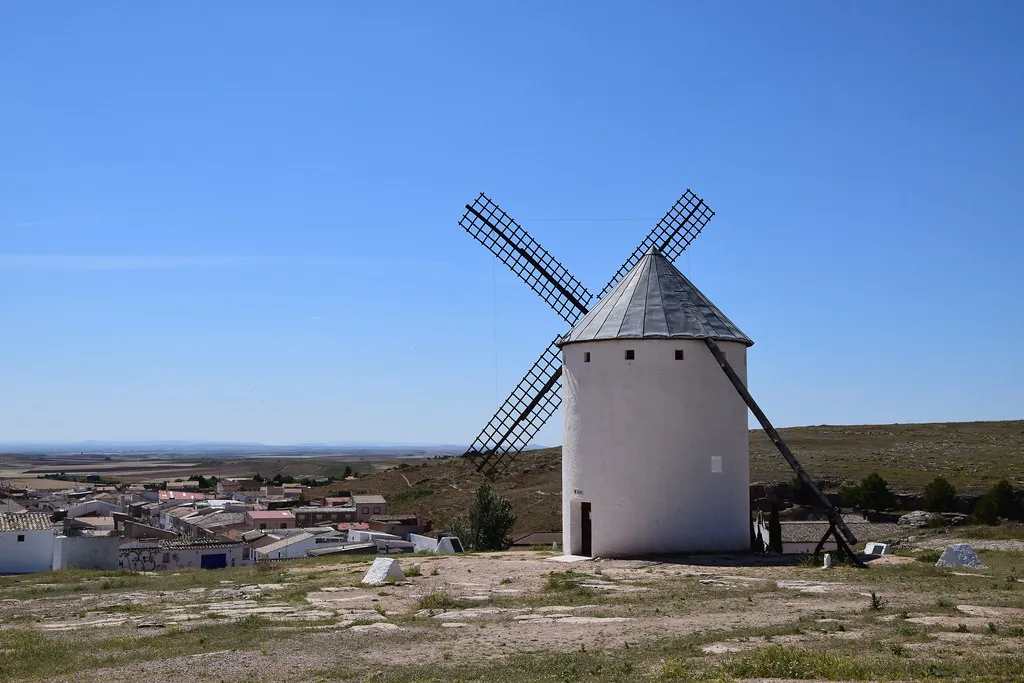
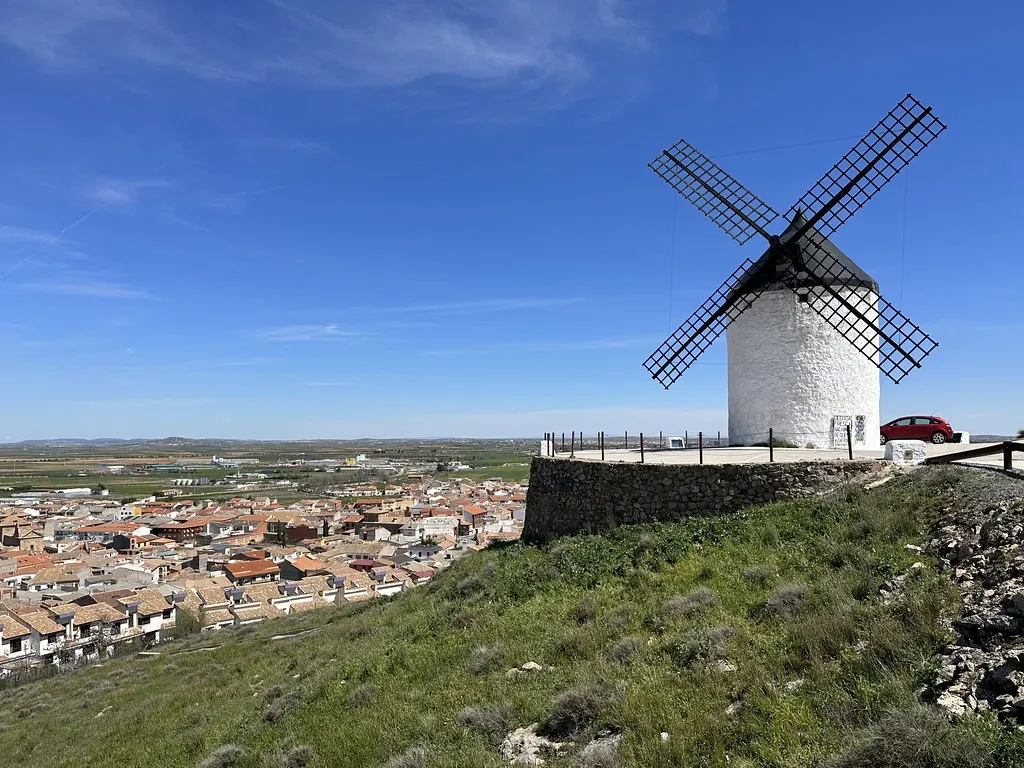
El Hito sits in the open plain of La Mancha, in the province of Cuenca. Just over a hundred people live here. The land is wide and almost flat. The horizon feels distant and the sky takes up far more space than the buildings below it.
Life moves at an unhurried pace. There are no crowds to dodge and no background hum of traffic. What shapes the rhythm of the day is the light, the wind and the agricultural cycle that defines this part of inland Spain.
The Square and the Church of San Juan Bautista
The village square is small and quiet. Facing it stands the church of San Juan Bautista, built in pale stone and marking the centre of El Hito for centuries. Like many churches in the area it has undergone alterations over time, yet it retains a sober, restrained appearance that suits the surrounding landscape.
When the bell rings, the sound carries a long way. There is little to block it. Beyond the rooftops, cereal fields begin almost immediately.
Inside, it is usually cool even in the height of summer. Thick walls, wooden pews and a soft half light create the calm atmosphere common to many rural churches in Spain. There is nothing grand or ornate here. The building feels closely tied to everyday village life, a place woven into routines rather than set apart from them.
Step back into the square and the sense of space returns. The streets leading away are short, and within a few minutes most of the village can be covered on foot.
Whitewashed Streets and Working Houses
El Hito’s streets are compact and easy to navigate. Whitewashed houses line the way, their large wooden gates and iron grilles throwing sharp shadows when the sun stands high. The layout reflects its agricultural roots. These are homes built for living and working.
Some properties still preserve interior courtyards that were once used to store tools or shelter animals. Tractors can be seen parked beside old walls, and trailers rest in corners where the street widens slightly. The marks of daily farm life are visible rather than hidden.
There are no shop windows and no steady flow of vehicles. By mid morning, the most common sight is a neighbour heading out on an errand or returning from the fields. Conversation often begins with the weather or the state of the harvest, subjects that matter here in a direct and practical way.
The scale of the village shapes the experience. In around an hour, it is possible to see it all. That brevity is part of its character. El Hito is not about ticking off sights but about observing small details: how the light changes the tone of a façade, how a door left ajar hints at the cool interior beyond, how silence settles between one sound and the next.
Tracks Through Cereal Fields and Wind
Leave the built up area and agricultural tracks begin almost at once. These compacted dirt paths cut through plots of cereal and, in some stretches, scattered vineyards. They are straightforward routes, suitable for walking or cycling, with barely any change in elevation.
The landscape shifts dramatically with the seasons. In spring, the fields turn a soft green that seems to glow under the low sun. Summer brings gold. The air carries the smell of warm straw and the ground radiates heat. In autumn, colours fade into more muted tones and some terraces lie bare, the soil exposed after harvest.
There is very little shade in this part of La Mancha. The openness that makes the horizon so striking also means there is little shelter from the sun. Anyone heading out around midday would be wise to carry water and protect themselves from the heat. Wind can rise without warning, sweeping across the plain and rippling through the crops.
The sense of scale becomes clearer along these tracks. Buildings quickly shrink behind you, and the sky expands even further. The land is largely flat, so views stretch uninterrupted in every direction. It is easy to understand why the weather dominates conversation in El Hito. Here, it shapes not just comfort but livelihood.
After Dark Under a Wide Sky
Once night falls, the village grows very quiet. Street lighting is limited, and on clear evenings the sky fills with stars.
A short walk beyond the last houses is enough to reveal the milky band of the Vía Láctea in summer. Away from urban light pollution, the night sky feels close and detailed. The silence of the countryside settles in fully. Occasionally a dog barks in the distance or the wind stirs dry stubble left in the fields.
Darkness in El Hito is not dramatic. It is simple and complete. The outlines of buildings soften and the flat land merges with the horizon. Above, the stars take centre stage.
When to Visit
Spring and early autumn are generally the most pleasant times to explore the surroundings on foot. Temperatures are milder and the fields change colour almost week by week, offering a shifting backdrop to even the shortest walk.
Summer can be intense, particularly between two and six in the afternoon when the heat presses down on the plain. In those months, early starts or late outings, when the sun is beginning to drop, make for a more comfortable experience.
El Hito is not a destination of grand itineraries. Its appeal lies in staying a while, listening to the wind move across the fields and watching how the light alters the white façades over the course of a day. There is space here, and plenty of sky. Life unfolds without hurry, shaped by the land that surrounds it.