Full Article
about Romeral (El)
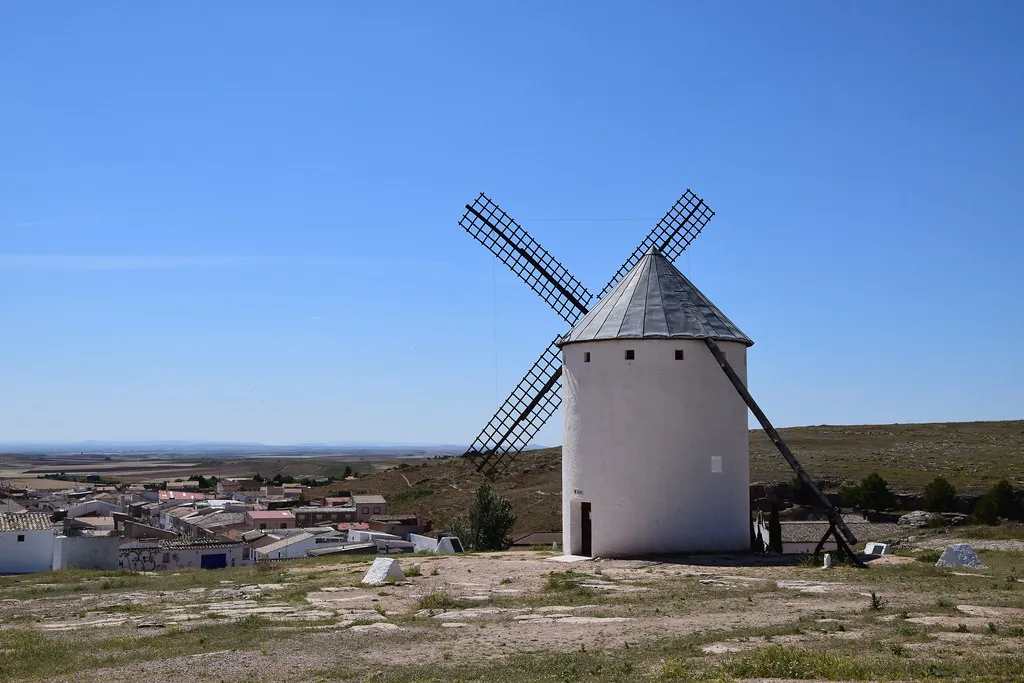
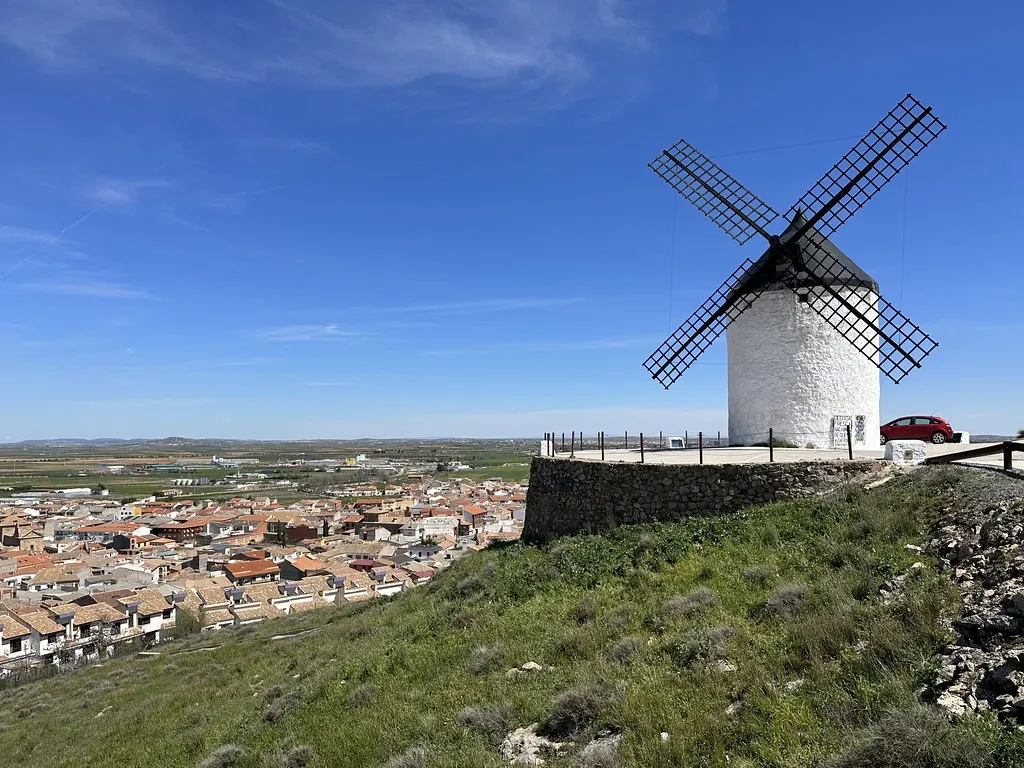
Manchego village with windmills and an esparto-grass museum; traditions kept alive.
Ocultar artículo Leer artículo completo
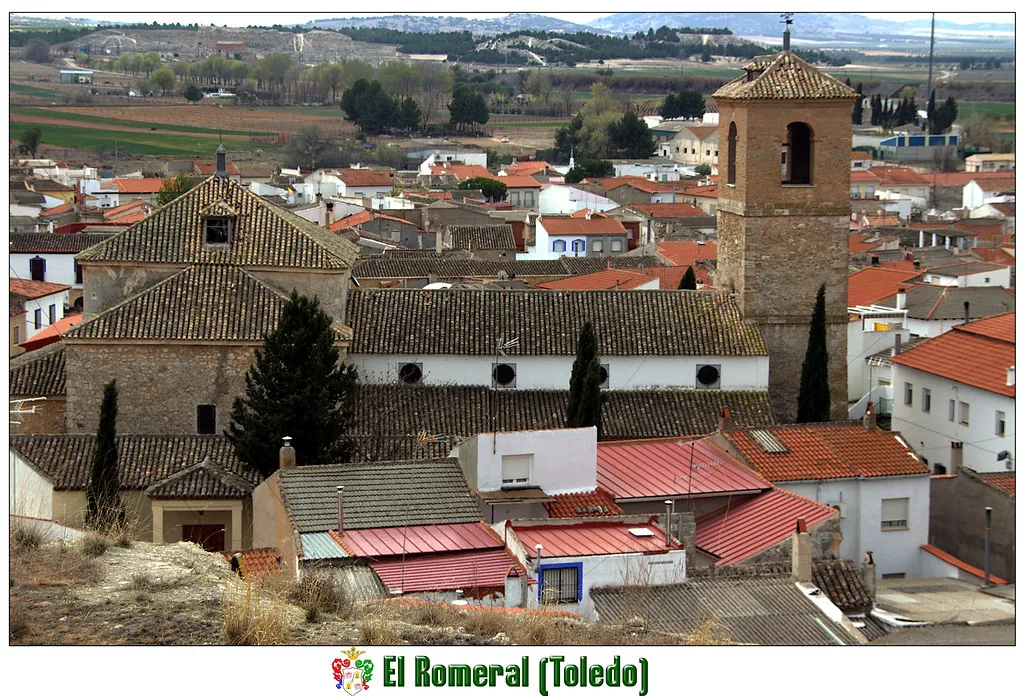
The grain silos appear first, rising like concrete rockets above the plain. Then the church tower, square and unadorned, pokes through the heat shimmer. By the time the car crests the final ridge, El Romeral reveals itself: a single patch of white cubes dropped onto a biscuit-coloured canvas that stretches, uninterrupted, to every horizon. At 622 m above sea level the air is thin enough to make the town bell carry half a kilometre on a still day, yet the place feels lower than it is because the land around it refuses to fold or buckle.
Inside the village the clock slows. Elderly men park themselves on stone benches that have absorbed decades of afternoon sun; women swap newspapers and courgettes at the doorway of the only grocery still trading six mornings a week. The population hovers around 568, a figure that has been shrinking since the 1950s when the cooperatives mechanised and sons followed the wheat lorries to Madrid or Valencia. What remains is a settlement that fits, comfortably, inside a twenty-minute stroll end to end, and that is the entire point of coming.
A horizon measured in wheat
The landscape is the event. From late April the cereal fields glow an almost lurid green, the colour you imagine AstroTurf would like to be. By late June the stalks have turned honey-gold and the heads hang heavy; combine harvesters work through the night to catch the grain before it sheds. Autumn drains the colour further, leaving stubble that rustles like brown paper underfoot, while winter strips everything back to soil the shade of builder’s tea. The sky, huge and rarely interrupted by electricity pylons, performs its own slow theatre: white heat haze in August, bruised purple storms in October, crystalline frost fog in January that can glue car doors shut.
Walking tracks, really just farm access lanes, radiate out for four or five kilometres. They are flat, unsigned and edged with wild fennel that smells of aniseed when you brush past. Take water—there are no cafés on the perimeter and the lone drinking fountain on the eastern track only runs from March to June. An hour and a half out and back at sunrise gives you crested larks, the occasional hoopoe and, if you are lucky, a boot print left by the village’s last remaining shepherd; nobody else will be abroad.
Food that remembers the fields
El Romeral does not do tasting menus. What it does is fill the middle of the table with bowls that once kept fieldworkers upright from dawn to dusk. Pisto—Spain’s answer to ratatouille—arrives thick with olive oil, the aubergine reduced to velvet. Gachas, a savoury porridge of flour and water, sounds Spartan until you discover it enriched with chorza (local chorizo crumbs) and served alongside a glass of chilled La Mancha white that costs €2.20. The cheese is, inevitably, manchego curado; ask for it “semicurado” if you prefer a gentler bite. The one restaurant attached to the Complejo El Romeral bungalows will grill lamb chops over holm-oak embers if you phone before noon; otherwise you eat what the owner’s mother decided to cook at 6 a.m.—usually a stew thick enough to support a spoon upright.
Supplies arrive in the back of a white van on Tuesdays and Fridays. If you are self-catering, stock up early; by Saturday afternoon the shop’s chill cabinet contains two yoghurts and a stick of morcilla. Bring cash—contactless readers are viewed with deep suspicion and the nearest ATM is 18 km away in Madridejos.
When the village throws a party
Fiestas here are not choreographed for visitors; they simply happen and you may watch if you behave. The patronal week, held around the third weekend of August, involves a procession that starts at the church, pauses for the priest to bless a tractor draped in tinsel, then ambles to the sports ground where a foam machine turns the basketball court into a disco for under-14s. Adults drink beer from plastic tumblers at €1.50 a pop until the generator cuts out at 3 a.m. Fireworks are modest—think three rockets and a catherine wheel nailed to a telegraph pole—but the noise ricochets across the plain like rifle shot.
Semana Santa is quieter: thirty people following a shoulder-borne Virgin along streets barely wider than the float itself. The brass band consists of two trumpets and a helicon; they play with the solemnity of men who know every cobble by heart. If you arrive expecting Seville-style pageantry you will be disappointed; if you stay for the potato and cod salad handed out afterwards you will understand why no one leaves the village during Holy Week.
The practical grind
Getting in means flying to Madrid—two and a half hours from Gatwick, Manchester or Edinburgh—then collecting a hire car. The fastest route is the A-42 south-west towards Toledo; after 70 km you peel onto the CM-410 and drive past wind turbines until the exit for El Romeral appears with no advance warning. Total driving time from the airport is roughly 75 minutes, but allow longer if mist settles in the valley; the road is single carriageway and Spaniards still overtake on blind bends.
Accommodation is limited. The three-star Hotel El Romeral in Cuenca province is actually 140 km away—another village entirely—so double-check bookings. Within the Toledo municipality itself you have two choices: the wooden bungalows of Complejo El Romeral (€70 a night for a two-bedroom cabin, breakfast €7 extra) or a single rural house advertised on a hand-painted board nailed to the church railings. Mobile signal switches between one bar and none, so reserve before you arrive.
Weather is a question of altitude. Summer afternoons can touch 38 °C, but the moment the sun drops the thermometer slides to 18 °C; bring a jumper even in July. Winter nights regularly dip below freezing and the houses, built to shed heat, hold onto the cold. Spring and early autumn are the sweet spots: mid-twenties by day, cool enough for proper sleep, and the wheat either green or golden depending on the month.
Leaving the plain
Stay longer than two nights and the village starts to ask questions. Why are you here? Why aren’t you in Toledo looking at Gothic arches? The honest answer—that you came to do nothing much in a place that demands nothing much—usually satisfies. El Romeral will not change your life; it has no Michelin stars, no selfie-frame monuments, no souvenir shop. What it offers is the rare sensation of standing in the centre of a circle so wide that your own breathing becomes audible. When the bell tolls for evening mass and the swifts reel overhead, you realise the village has given you a brief loan of its horizon. Return the keys, drive back towards the motorway, and the silos shrink in the mirror until they look like toy blocks left behind on a child’s bedroom floor.