Full Article
about Toboso (El)
Home of Dulcinea; a town steeped in Cervantes, its streets steeped in history and literature
Ocultar artículo Leer artículo completo
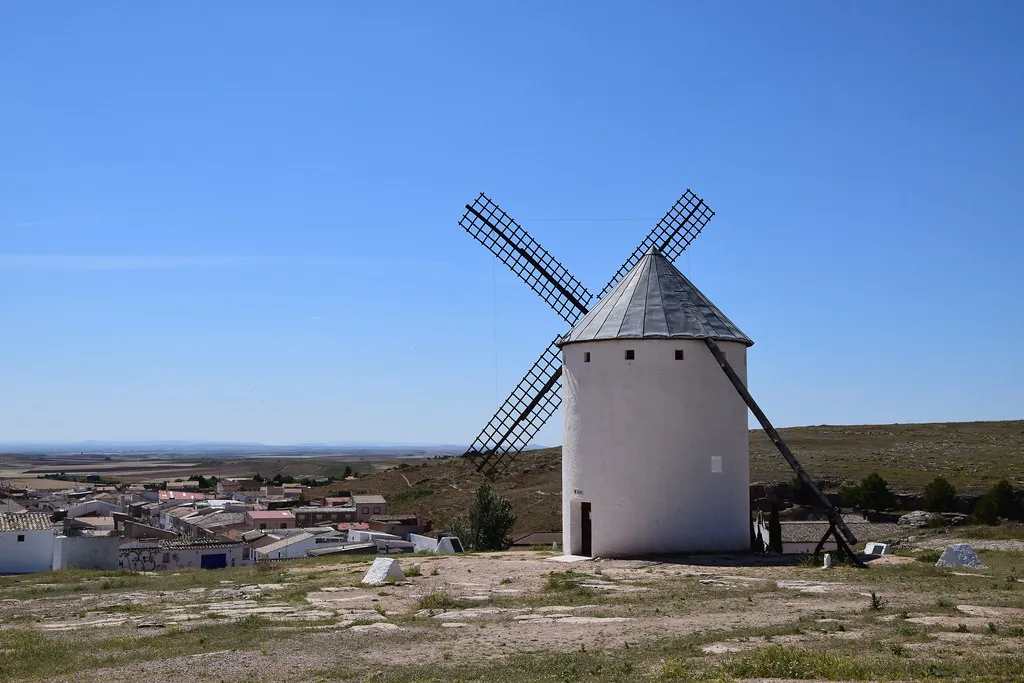
The morning sun hits the white walls at such intensity that the blue trim appears almost violet. At 635 metres above the flat La Mancha plateau, El Toboso's altitude gives the light a clarity that makes everything look stage-lit—even the petrol station on the ring road seems somehow theatrical. This is appropriate for a village whose entire tourism industry rests on a fictional woman who never existed.
The Woman Who Wasn't There
Dulcinea del Toboso exists only in Cervantes' pages, yet her non-presence shapes every street. The Casa-Museo dedicated to her occupies a 16th-century manor house that supposedly belonged to Ana Martínez Zarco de Morales, the woman who might have inspired Cervantes' idealised peasant girl. The museum keeps proper Spanish hours: open 10-2, closed for lunch until 4:30, then open again until 7. Entry costs €3, cash only, and the woman at the desk will apologise for having no English leaflets left.
Inside, it's all heavy wooden furniture and dusty tapestries arranged around a central courtyard with a working well. The kitchen displays copper pots that would give a food historian palpitations, while upstairs bedrooms feature beds shorter than modern ten-year-olds. It's not spectacular, but it does what Spanish regional museums do best: shows how ordinary people actually lived when Don Quixote was contemporary fiction.
Next door, the Museo Cervantino houses 600 editions of Don Quixote in 60 languages, including a 1950s Penguin paperback that looks exactly like the one you read for A-level. The collection feels like the world's most specialised charity shop, but there's something oddly moving about seeing your own language's translation sitting beside Hebrew, Japanese and Braille versions.
Lunch and Other Practicalities
By 2:15 pm, the village belongs to cats and the occasional lost tourist. Everything shuts—bars, shops, even the municipal tourist office. This isn't tourist-trap performance; it's agricultural La Mancha following rhythms established when these fields grew wheat for the Spanish Empire.
When places reopen at 4:30, head for Bar Dulcinea on Plaza de España. Their pisto manchego arrives topped with a fried egg, the yolk providing sauce for what's essentially Spanish ratatouille. It costs €8 including bread and a glass of La Mancha wine that punches well above its weight. The wine list offers bottles you'd pay £18 for in Britain at €4 retail—several British visitors were seen filling car boots with sturdy reds from the co-operative bodega on Calle Sancho Panza.
The plaza itself hosts the 16th-century church of San Antonio Abad, whose Gothic-Renaissance interior provides cool relief from the plateau's extreme temperatures. Summer hits 40°C regularly; winter drops to -5°C at night. The altitude means El Toboso escapes La Mancha's brutal summer heat, but also that January mornings can start with frost on the cobbles.
Walking the Non-Existent Knight's Route
From the church, ceramic plaques quote Don Quixote at strategic intervals. Following them creates a literary scavenger hunt: find the plaque about Dulcinea's imagined beauty, then locate the one where Sancho Panza admits he's never actually seen her. The route takes 45 minutes if you stop to read everything, fifteen if you're just photographing blue-and-white ceramics for Instagram.
The convent of Las Trinitarias sometimes opens its chapel—ring the bell and a nun will appear behind a grille to discuss their biscuit-making operation. The biscuits, sold in plain white boxes, taste of aniseed and almond; they're £12 per kilo and keep for weeks, making decent edible souvenirs.
Outside the historic core, El Toboso reveals its working reality: functional 1970s apartment blocks, a Dia supermarket, teenagers on scooters wearing tracksuits. It's refreshingly un-picturesque, proof that Spanish villages aren't museum pieces but places where people live and work and argue about parking.
Beyond the Books
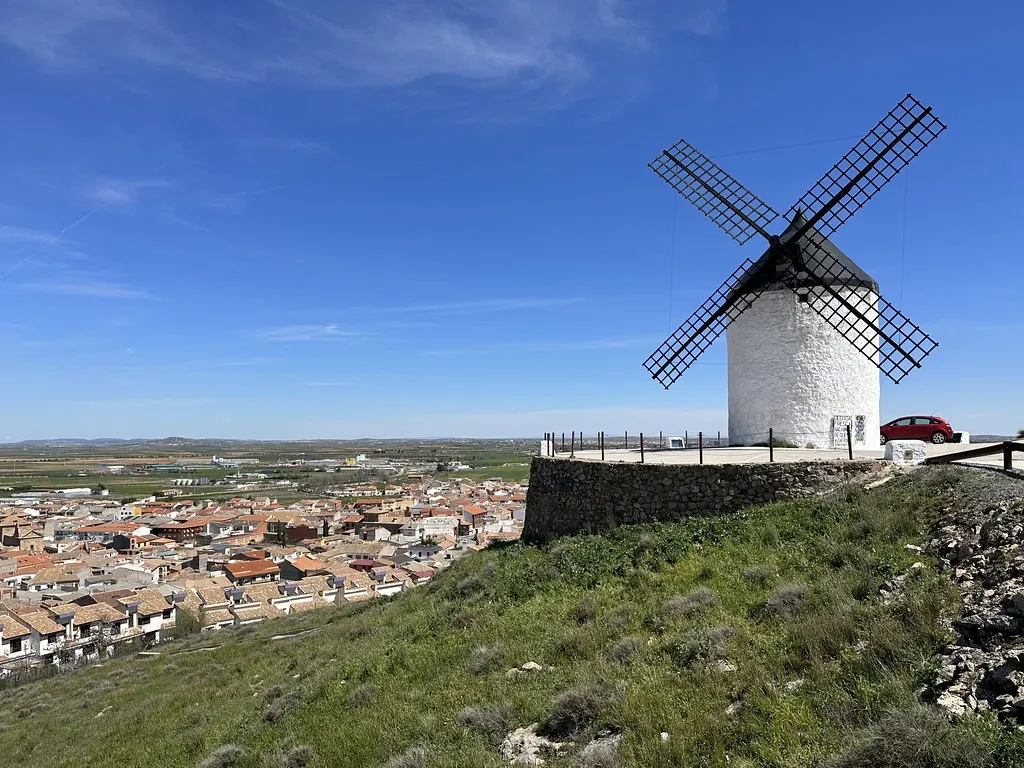
The surrounding landscape offers flat walking through vineyards and olive groves. The GR-160 long-distance path passes through town, following routes Don Quixote might have taken if he'd been real and considerably less deluded. Marked trails range from 4km loops to 20km hikes ending at windmill sites near Mota del Cuervo. Take water—there's no café culture once you leave town, just agricultural tracks and the occasional dog that definitely hasn't read the chapter about courtesy.
Serious hikers should note: this is high plateau walking, exposed and windy. Spring brings wildflowers but also 50km/h winds that'll sandblast your legs. Autumn offers mild temperatures and harvest activity, with tractors hauling grapes to local cooperatives. Summer walking starts at dawn or doesn't happen; winter requires proper layers as the continental climate delivers sharp frosts and occasional snow.
When to Visit, When to Avoid
August's Cervantino festival sees the village double its population. Locals dress in 17th-century costume, perform Quixote scenes in the plaza, and stage a medieval market selling everything from leather belts to overpriced chorizo. It's fun but crowded, and accommodation books out months ahead.
January's San Antonio fiesta involves blessing animals in the plaza—farmers bring tractors, pets, even the occasional sheep for sprinkling with holy water. It's authentically agricultural, slightly chaotic, and coincides with the coldest weather.
May and October offer the best balance: mild weather, open museums, functioning restaurants, and hotel doubles at Casa de los Mesones for €65 including breakfast. The British-owned posada on Calle Cervantes does proper tea with milk if you're suffering caffeine withdrawal.
The Honest Verdict
El Toboso isn't Spain's most beautiful village. Parts are frankly ugly, the museums are small, and you'll see everything in half a day. But it offers something increasingly rare: a place where literary tourism hasn't entirely displaced real life. The woman serving your coffee isn't wearing period costume; she's discussing her daughter's university plans. The man filling your wine glass grows the grapes himself and wants to know if British supermarkets really charge £8 for La Mancha bottles.
Come for the Quixote connection, stay for the wine, leave before you start expecting Dulcinea to appear around the next corner. She won't—she never did—but the village that invented her keeps stubbornly existing, blue doors and white walls gleaming under that extraordinary high-plateau light.