Full Article
about Fuente de Pedro Naharro
Agricultural municipality bordering Toledo; monumental church and olive-oil activity
Hide article Read full article
A village shaped by the plains of Cuenca
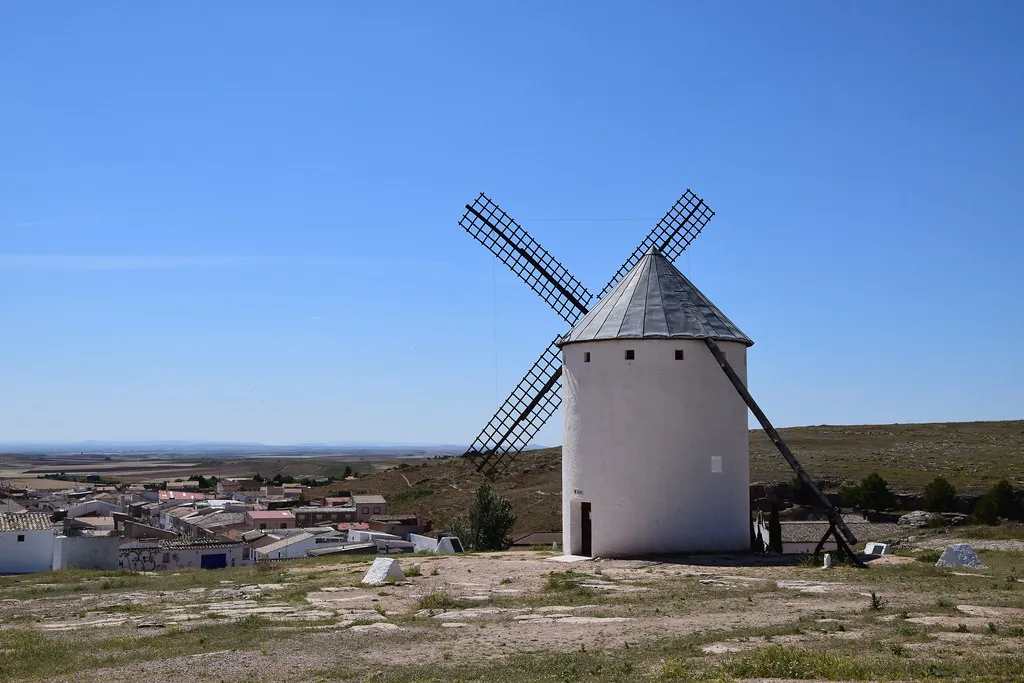
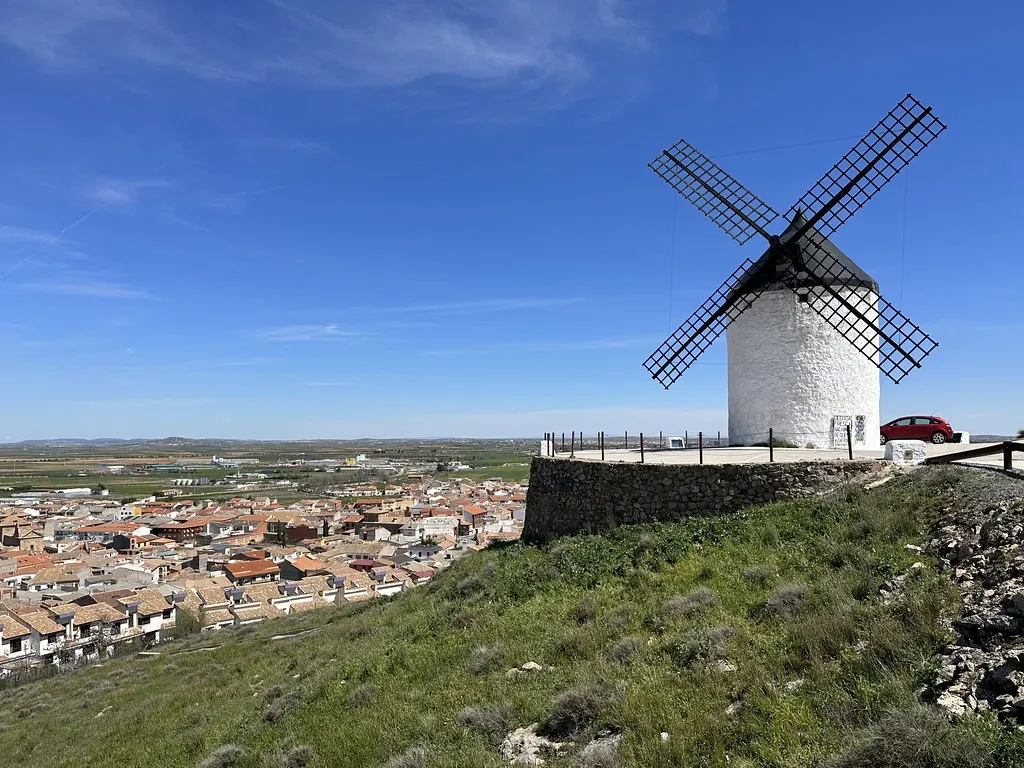
Fuente de Pedro Naharro lies in the south of the province of Cuenca, set within the wide, open plains of La Mancha. With around 1,300 inhabitants, it forms part of a broad agricultural corridor where cereal fields define both the landscape and the pace of life. This is a territory of long horizons and cultivated land, where straight roads cut across large plots and patches of low scrub interrupt the expanse.
The setting feels unmistakably Manchego. The terrain stretches out in every direction, and the sky appears vast above the flat ground. Agriculture dominates the scene, and the structure of the village reflects that connection to the surrounding fields.
Medieval roots and the parish church
The origins of Fuente de Pedro Naharro are usually linked to the medieval repopulation processes that followed the consolidation of Castilian control over these lands. Like other settlements in the area, the village grew in direct relation to the agricultural use of the territory. Farming was not simply an occupation but the organising principle of daily life.
The main historic building is the parish church of Nuestra Señora de la Asunción. Its construction is generally dated to the 16th century, with later alterations. The structure combines features of late Gothic design with Renaissance elements, a blend that was common in churches built during that transitional period. The tower rises clearly above the surrounding rooftops and remains the most visible landmark when approaching the village along the access roads.
The church stands close to the centre and anchors the modest urban layout. Around it, the streets extend without dramatic changes in level, reflecting the flatness of the terrain itself.
Streets, houses and everyday architecture
The urban centre is simple and largely level, organised around a handful of main streets that structure the village. There are no grand monumental ensembles, yet there are many details that speak of traditional domestic architecture in La Mancha.
Whitewashed façades line the streets. Large gateways recall a time when carts needed access to interior spaces. Behind the street-facing walls, interior courtyards once helped residents cope with the dry summers typical of inland La Mancha.
On Calle Mayor and nearby streets, traditional houses still survive. They show the close link between home and agricultural work that was common until only a few decades ago. Living quarters and working spaces formed a single unit, adapted to the rhythms of farming life.
At the edges of the built-up area, corrals, small vegetable plots and auxiliary constructions connected to fieldwork can still be seen. These peripheral spaces blur the boundary between village and countryside. The transition from street to open land happens quickly, without suburban expansion or industrial zones interrupting the view.
The changing face of the cereal fields
Any road leading out of Fuente de Pedro Naharro soon becomes an agricultural track that crosses the surrounding crops. These routes are typically long and straight, characteristic of this part of Cuenca, where the eye travels across the plain without obstruction.
The appearance of the landscape shifts noticeably with the seasons. Spring brings an intense green across the cereal fields. As the grain ripens, golden tones take over. After the harvest, the land appears more bare, with stubble and exposed soil emphasising the flatness of the terrain.
In certain areas, patches of steppe vegetation break up the cultivated land. With patience and quiet, it is sometimes possible to observe bird species associated with this type of environment. Traditionally, birds such as the great bustard, known in Spanish as avutarda, and the little bustard, or sisón, are mentioned in connection with these plains. Their presence depends greatly on the time of year and the level of disturbance in the surroundings.
The landscape does not rely on dramatic contrasts. Its character comes from repetition, scale and the subtle variations brought by light and season. For those unfamiliar with the interior of Castilla-La Mancha, it offers a clear example of how much of the region is organised around large-scale cereal cultivation.
Festive traditions and local rhythms
The festive calendar in Fuente de Pedro Naharro follows patterns common to many villages in La Mancha. The feast of Nuestra Señora de la Asunción, held in mid-August, marks the most important days of the year. Religious events, open-air dances known as verbenas and family gatherings fill the village during this period.
In winter, the tradition of San Antón continues. Bonfires are lit and animals are blessed, a custom linked to the former importance of domestic livestock. The ritual reflects a time when animals formed an essential part of household economies.
Semana Santa, or Holy Week, is observed in a sober manner. Processions move through the central streets, maintaining a tone of restraint that fits the scale of the village. These celebrations do not transform Fuente de Pedro Naharro into a tourist centre. They remain rooted in local participation and continuity.
Walking through the village
Fuente de Pedro Naharro can be explored at an unhurried pace in less than an hour. The parish church is the most evident point of interest and provides a natural starting place. Nearby stand the town hall and several larger houses, often dated between the 18th and 19th centuries, built by families who once held greater economic weight in the community.
The main square functions as an everyday meeting place. It is not monumental in design, yet it conveys the scale of the village clearly. Benches offer spaces to sit, neighbours stop to talk and the rhythm of an agricultural municipality unfolds without haste.
Beyond the centre, short walks lead quickly to open country. The surrounding tracks allow visitors to experience the defining feature of this part of Cuenca: the uninterrupted plain.
When to visit
Spring and autumn are usually the most pleasant times to walk along the surrounding paths. Temperatures tend to be more moderate, and the fields show either fresh growth or the muted tones that follow harvest.
Summer brings intense daytime heat, typical of inland La Mancha. Outdoor activity often shifts towards the early morning or later in the evening. Winter is marked by dry cold and frequent frosts, although clear days still allow for walks in the surrounding countryside.
Fuente de Pedro Naharro does not revolve around tourism. It is, rather, one of many Manchego villages where agricultural landscape continues to shape daily life. That continuity gives it interest. The village offers a direct way to understand how this wide plain of Castilla-La Mancha is organised and inhabited, far from urban centres and defined above all by the steady presence of the fields.