Full Article
about Fuentelespino de Haro
Historic town with castle and old inn; crossroads
Ocultar artículo Leer artículo completo
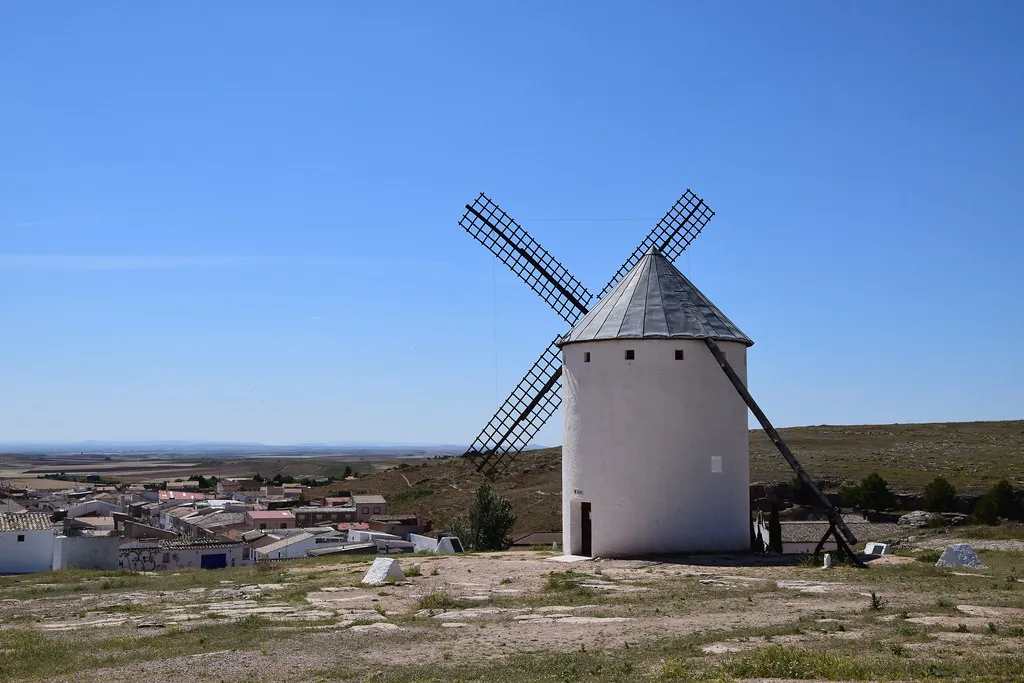
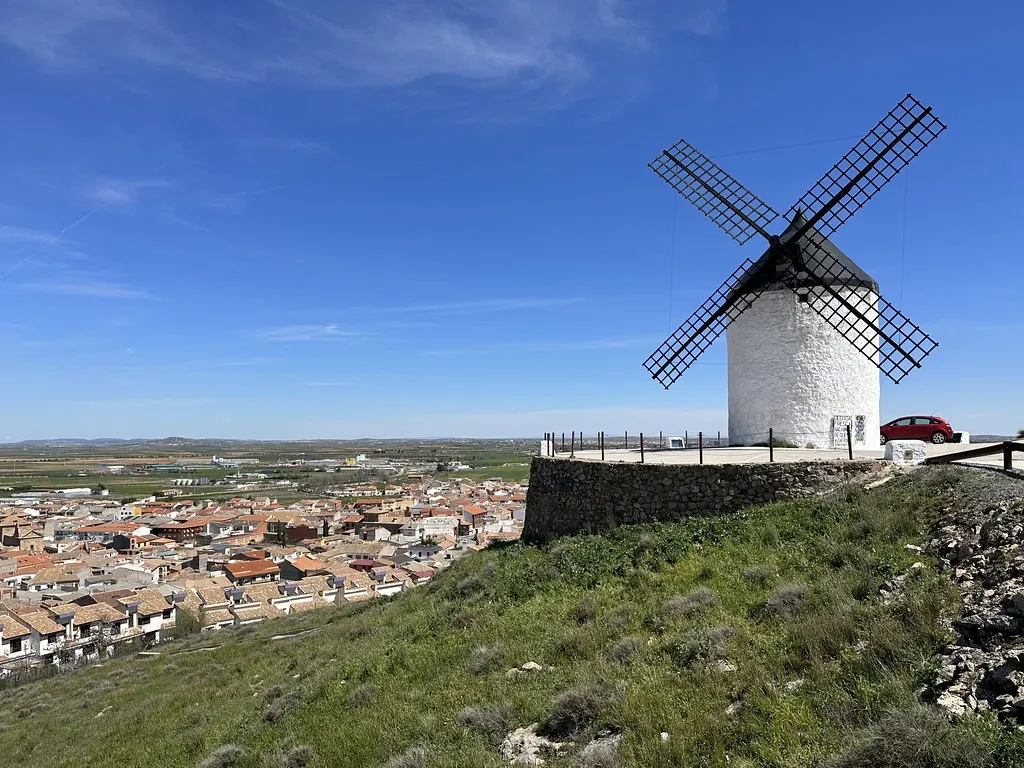
The thermometer outside the bakery reads 38 °C at eleven o’clock, yet the old men on the plastic chairs are wearing jackets. Fuentelespino de Haro sits at 920 m on the high plateau of La Mancha, high enough for the air to carry a blade even when the sun is trying to melt the asphalt. It is the kind of place where altitude matters more than distance; Madrid lies only 160 km away, but the drive climbs steadily after Tarancón until the land unrolls like a pale-yellow sea and the village appears—one church tower, 235 souls, and a horizon that never quite arrives.
A Map Drawn by Tractors
There are no sign-posted footpaths, simply the lattice of farm tracks that link wheat fields to vineyards. Walk south past the last house and the tarmac turns to pale grit; five minutes later the only sound is the wind rattling the barley. The tracks are wide enough for a combine harvester, so walkers, cyclists and the occasional ageing Seat Ibiza share them without quarrelling. In April the soil smells of iron; in July it smells of toast. Early mornings bring calandra larks, hoopoes and the thin cry of a harrier quartering the stubble. Carry water—shade is as scarce as traffic.
The village itself can be crossed in four minutes, yet the plan makes sense once you realise it was laid out for shade, not photographs. Streets run east–west, narrow enough for one side to borrow the other’s shadow. Walls are whitewashed annually, not for postcard prettiness but because lime reflects heat and discourages ants. Doors are painted the traditional ox-blood red, a colour that hides both dust and blood from the slaughter season. The church of San Pedro keeps 18th-century bones beneath a 20th-century roof; the bell still rings at noon to tell field hands it is time for a sandwich. If the door is locked, ask in the bakery opposite—someone’s cousin has the key.
Wine Underground, Cheese at Eye Level
Beneath several houses are family bodegas: rough-hewn cellars dug three metres into the clay where the temperature refuses to rise above 14 °C even when the street melts tar. Most are private, but the Herrero family will open theirs if you phone the day before (€5, tasting of two wines included). The red is Tempranillo aged in American oak that smells of coconut and dust; the white is crisp, almost sharp, designed to cut through lamb fat at Sunday lunch. Ask to see the fermenting vat—an clay tinaja big enough to bathe in, still in use since 1932.
Food is served in two bars, both on the same square. Neither has a menu in English; neither needs one. Order gazpacho manchego and you receive a clay bowl of game stew thickened with flat-bread, not the cold tomato soup Brits expect. Atascaburras is mashed potato, salt cod and enough garlic to keep Dracula north of Calais. A plate feeds two; ask for half portions unless you are harvest-hungry. Manchego cheese arrives in wedges the size of a paperback; the olive oil is local, peppery, and costs €8 a litre if you bring your own bottle. House wine is decanted from a plastic barrel and costs €1.50 a glass—trust it, it is the same liquid that fills the underground tinajas.
When the Thermometer Becomes a Judge
Summer here is a jury that meets at midday. From late June to early September temperatures flirt with 40 °C; metal door handles burn and the village empties between 14:00 and 18:00. Plan like the locals: walk at dawn, siesta after lunch, re-emerge at seven when the shadows grow longer than the streets. Evenings smell of charcoal and thyme; someone is always roasting rabbit on a patio. Winter is the reverse—nights drop to –8 °C, the wind whips across open steppe, and the occasional dusting of snow turns the fields white for a morning before the sun reclaims the colour brown. Spring and autumn are the forgiving seasons: mid-20s by day, cool enough for a jumper at night, and the wheat green-waves like the sea Brighton wishes it had.
Getting There Without a Donkey
Fuentelespino has no railway station, and the weekday bus from Cuenca is more rumour than reality. A hire car is the practical choice: take the A-40 from Madrid towards Ciudad Real, exit at Tarancón, then follow the CM-412 south for 45 km of almost traffic-free road. Petrol stations are scarce after Horcajo de Santiago—fill up while you can. The last 6 km twist through vineyards; mind the tractors that indicate only with hand signals. Parking is wherever you can squeeze a wheel without blocking a gate; fines are issued by the mayor, who also runs the tobacconist and prefers apologies to euros.
Accommodation inside the village is limited to three rural houses grouped under the name El Cerrete de Haro (doubles from €65, two-night minimum at weekends). Each house is a converted 19th-century grain store with foot-thick walls that keep heat out better than any air-conditioning unit. Kitchens are equipped with the Spanish trinity: coffee pot, garlic grater and orange squeezer. There is no swimming pool; instead you get a tin bath for plants that the owners cheekily call a pilón. If they are full, the nearest hotels are 25 km away in Campillo de Altobuey—fine for beds, less fine for late-night wine walks home.
Fiestas Measured by Gunpowder and Grapes
Festivity is rationed. The big day is 15 August: the Virgen de la Asunción is carried around the square at a pace designed for elderly knees, followed by a communal paella cooked in a pan two metres wide. Visitors are welcome to stir—arrive at 10:00 with your own wooden paddle or you will be handed a plank last used to mend a roof. In September the Fiesta de la Vendimia is more utilitarian: grapes are blessed, someone sings, everyone gets drunk on mosto still fermenting in plastic jugs. Fireworks are modest; the council budget is €600, so expect three rockets and a box of sparklers that a British child would demolish in five minutes. Noise curfew is 01:00—farmers need their sleep.
Leave the Compact at Home
Mobile signal flickers; 4G appears on the northern side of the church square if you stand on the bench next to the pomegranate tree. Wi-Fi exists in the rural houses but vanishes when the microwave is on. The village is therefore unsuitable for anyone who needs to upload reels in real time; perfect for travellers who remember what guidebooks were like before they talked back. Bring binoculars, not selfie sticks: the birds do not wait for filters, and the light at dusk turns the stone gold in a way no app has yet faked.
If you leave after breakfast you can be in Cuenca for lunch, but most people stay for one more coffee, then another, until the day has slipped sideways and the car looks reproachful. Fuentelespino will not give you stories to shout over dinner; it gives you the slower, quieter version that creeps up months later when you smell olive oil on hot brick and remember how wide the sky can be.