Full Article
about Herencia
A Manchegan town famous for its Carnaval de Interés Turístico Nacional; it has rich religious heritage and natural spots in the sierra.
Ocultar artículo Leer artículo completo
The thermometer reads 38°C at half past ten in the morning, and the baker at Hornos de la Villa is already wiping flour from his forehead. He's been up since four, firing the wood oven that produces Herencia's daily bread—crusty loaves that crackle when broken, the kind that makes supermarket baguettes seem like cardboard. This is La Mancha at 642 metres above sea level, where summer doesn't mess about and the siesta isn't a holiday indulgence but survival strategy.
Herencia sits in Ciudad Real province, roughly halfway between Madrid and Granada, where the A-4 motorway slices through endless plains of wheat and vineyards. Five thousand people call it home, though numbers swell during August festivals when descendants return from Madrid and Barcelona. The town hall clock strikes the hour, echoing across Plaza de España where elderly men in flat caps gather on metal benches, discussing rainfall and football with equal gravity.
The Church that Watches Everything
La Inmaculada Concepción rises above terracotta rooftops like a stone lighthouse surveying a sea of cereal fields. Its tower, visible from kilometres away, serves as both spiritual anchor and practical landmark for anyone who's taken a wrong turn down the agricultural tracks criss-crossing the municipality. Inside, the church blends baroque excess with neoclassical restraint—gold leaf glimmers alongside whitewashed walls, while local women light candles beneath a polychrome Virgin, murmuring prayers that mix Castilian Spanish with fragments of dialect their grandchildren no longer understand.
The adjacent Museo Municipal occupies what was once a wealthy landowner's house, its courtyard now displaying agricultural implements that explain how families coaxed life from this demanding soil for centuries. A wooden wine press dominates one room, its screws worn smooth by generations of hands. Another exhibits photographs from the 1950s: harvest festivals where everyone wore their Sunday best, standing stiffly beside threshing machines that represented modernity. The curator, when present, speaks passionately about the transition from mule to tractor, though opening hours remain politely flexible—ring the bell at the town hall if the museum's locked.
Wine, Cheese and Other Essentials
Herencia's economy pivots on agriculture, specifically vines and cereals. Unlike Rioja's grand bodegas or Jerez's sherry houses, wine production here remains resolutely small-scale. Cooperativa San Isidro, founded in 1954, processes grapes from local smallholders who might own two hectares or twenty. Their basic red—sold in five-litre plastic containers for €8—won't win Decanter awards but accompanies migas (fried breadcrumbs with garlic and chorizo) perfectly. More serious bottles labelled 'Vino de la Tierra de Castilla' start around €4, demonstrating why Spanish supermarket wine puts British equivalents to shame.
Manchego cheese arrives weekly from a dairy in Tembleque, twenty minutes drive north. The good stuff, cured for twelve months, costs €14 per kilo at the weekly Friday market. Don't expect artisanal presentations—cheese arrives wrapped in white paper, cut from wheels behind glass counters. The vendor will ask how much you want, then hack off a wedge with a knife that's seen sharper days. Pair it with quince paste made by someone's aunt, sold in recycled jam jars for €3.
Restaurants reflect local tastes and budgets. Casa Toribio, on Calle Granada, serves proper pisto manchego—Spain's superior answer to ratatouille—alongside grilled lamb cutlets that cost €12 for a substantial portion. Their wine list extends to house red or house white, both drinkable, both €2.50 per glass. Service starts at 1.30pm for lunch, 9pm for dinner. Arrive early and you'll wait outside with the staff while they finish their own meal.
Walking Through History and Heat
Morning walks prove essential for understanding Herencia's layout. The old town radiates from Plaza de España in narrow streets named after trades—Calle Zapateros (shoemakers), Calle Herreros (blacksmiths)—though metalworkers departed decades ago. Houses present blank walls to the street, their wooden doors opening onto interior patios where geraniums bloom and washing hangs above tiled fountains. Numbering follows no discernible logic; Calle Real jumps from 17 to 23 bis, reflecting extensions and subdivisions across centuries.
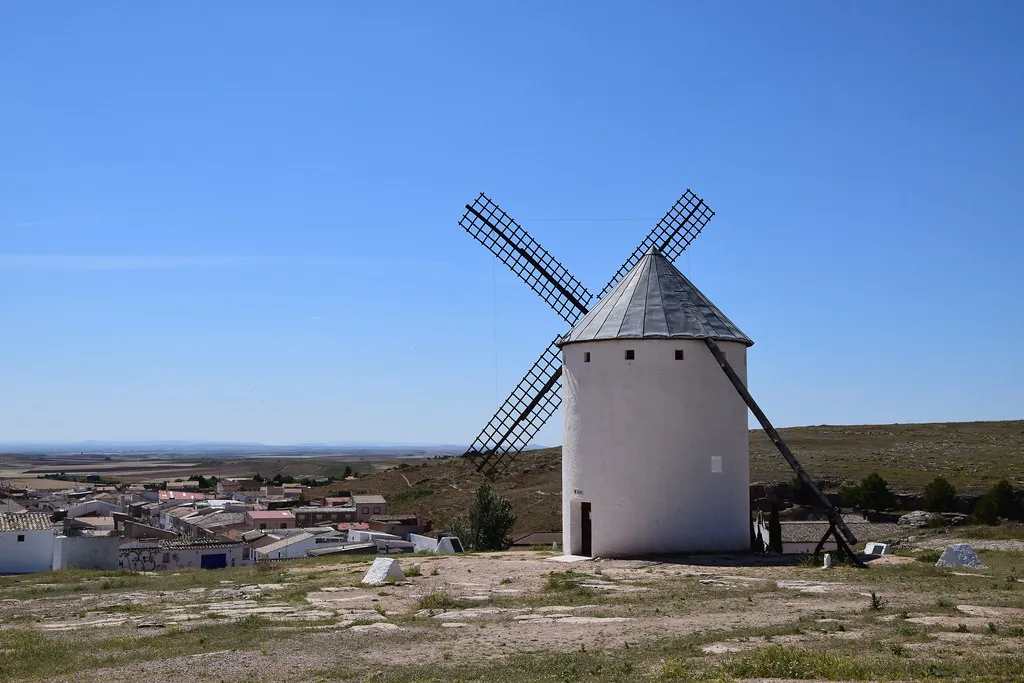
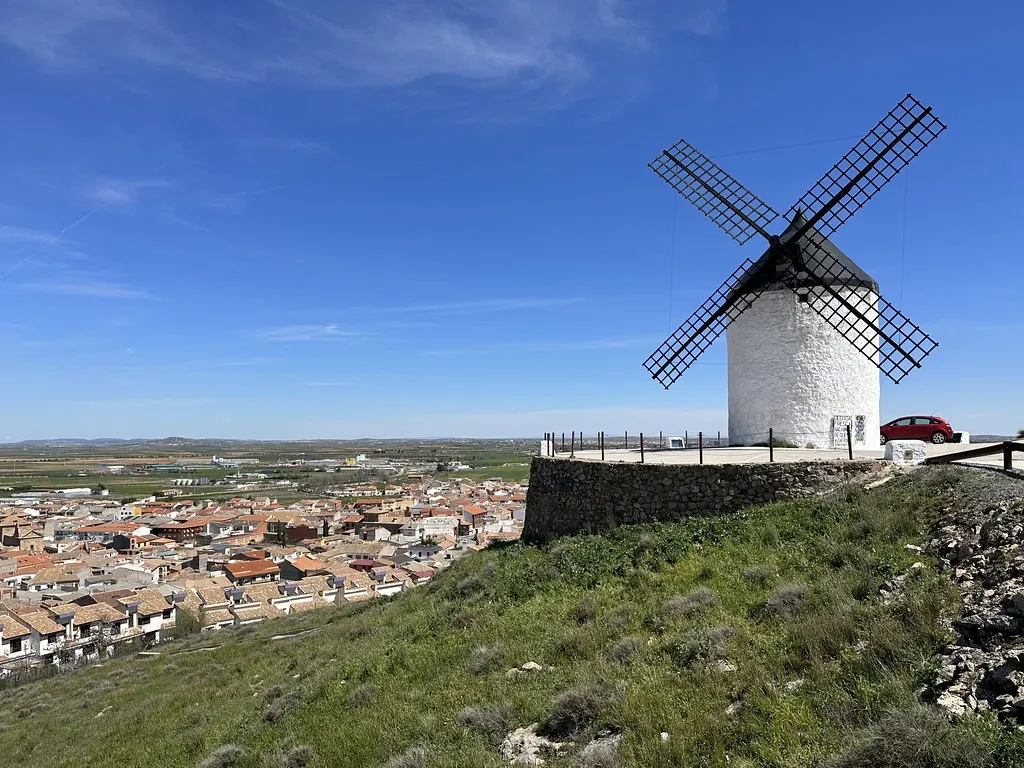
Outside the urban centre, agricultural tracks lead through vineyards where tempranillo grapes ripen under intense sun. A circular walk of eight kilometres passes the ruins of Molino de Viento, one of the windmills that inspired Cervantes. Its sails vanished long ago, but the stone tower remains, home to nesting storks whose clattering beaks provide percussion against the plains' silence. Spring brings wild asparagus between the vines—locals collect it for tortilla-making—while autumn sees mushrooms appearing after rain, though identifying edible varieties requires knowledge passed down through families.
Summer hiking demands serious preparation. Temperatures regularly exceed 40°C in July and August; paths offer zero shade and water sources are non-existent. Start before seven, carry three litres minimum, wear a hat that actually covers your neck. Winter conversely brings sharp frosts; night temperatures drop below freezing from November to March. The faithful claim this extreme continental climate—hot days, cold nights—explains the wine's robust character. Everyone else just dresses accordingly.
Festivals, Fireworks and Family Reunions
Herencia's calendar revolves around agricultural rhythms and religious observance. December's fiestas patronales honour the Immaculate Conception with processions, brass bands and enough fireworks to trigger PTSD in veterans. Streets fill with temporary bars serving calamari sandwiches and cheap beer; teenagers flirt, grandparents gossip, babies sleep through explosions in prams. The town hall spends €40,000 on pyrotechnics—money locals argue could repair the municipal pool, but tradition trumps practicality.
Easter week maintains more solemnity. Thursday night's procession features hooded penitents carrying candles, creating shadows that dance across medieval walls. The crowd falls silent except for the shuffle of feet and occasional cough. Friday afternoon brings the crucifixion procession, temperatures often inappropriate for heavy robes and religious devotion. By Saturday, bars overflow again; resurrection apparently requires celebrating with brandy and anise.
August transforms everything. The population doubles as herencianos working elsewhere return with Madrid accents and city habits. Daily bull-running events—proper ones with real bulls, not the soft versions some towns now favour—start at 7am, continuing until the heat becomes unbearable. Evenings feature concerts ranging from flamenco to covers bands murdering British rock classics. The fairground occupies the polígono industrial; its lights visible from the A-4, tempting lorry drivers to abandon schedules for dodgy kebabs and questionable attractions.
Getting There, Getting Around, Getting Fed
Public transport connections reflect Herencia's position beyond mainstream tourism. Two daily buses connect to Ciudad Real (45 minutes, €4.20), from where high-speed trains reach Madrid in 55 minutes. Having a car transforms possibilities; Toledo lies 90 minutes north, Granada three hours south. The nearest airport is Madrid-Barajas, two hours via the A-4—straightforward driving unless encountering August holiday traffic, when journey times double.
Accommodation options remain limited. Hostal El Parque offers twelve rooms above a bar on Avenida de la Constitución; doubles cost €35 including breakfast that's basically coffee and toast. Cleaner than expected, quieter than feared. Alternatively, Casa Rural La Viña sleeps six in a converted farmhouse two kilometres outside town—perfect for families, less ideal for solo travellers without transport. Prices fluctuate wildly; €60 per night in February becomes €120 during August festivals.
The honest truth? Herencia won't change your life. It offers no Instagram moments to make followers weep with envy, no boutique hotels serving deconstructed tortilla. What it provides instead is Spain before tourism, where old women still sweep their doorsteps at dawn, where lunch costs less than a London coffee, where the church bell still calls people to mass though fewer attend. Come for the wine, stay for the authenticity, leave before the summer heat melts your shoes.