Full Article
about La Almarcha
Historic crossroads with manor-house architecture; well-known local spring.
Hide article Read full article
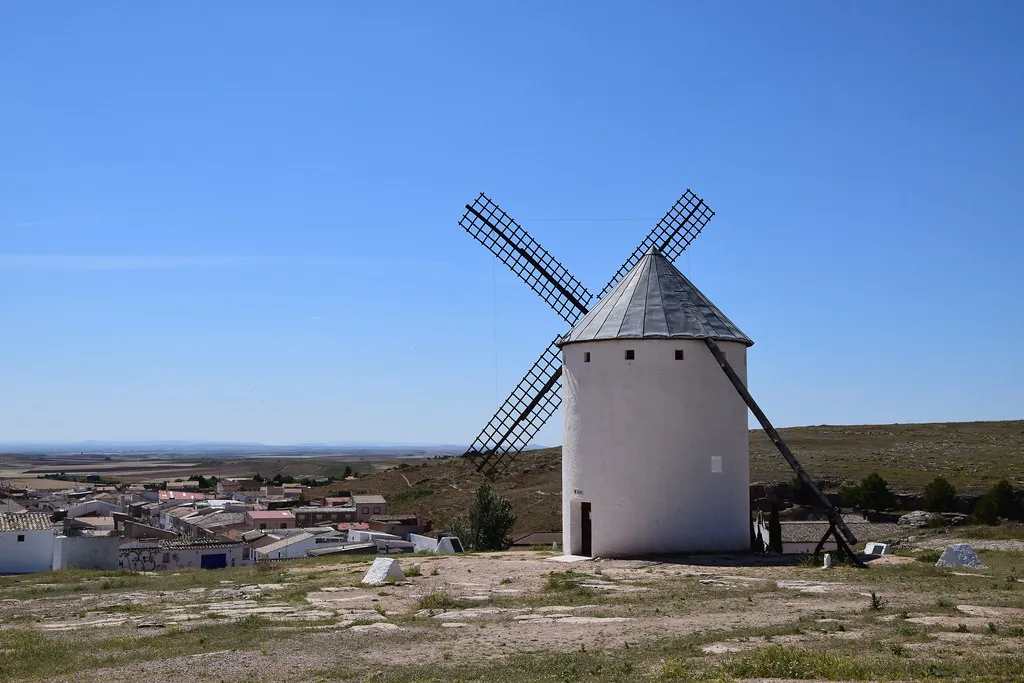
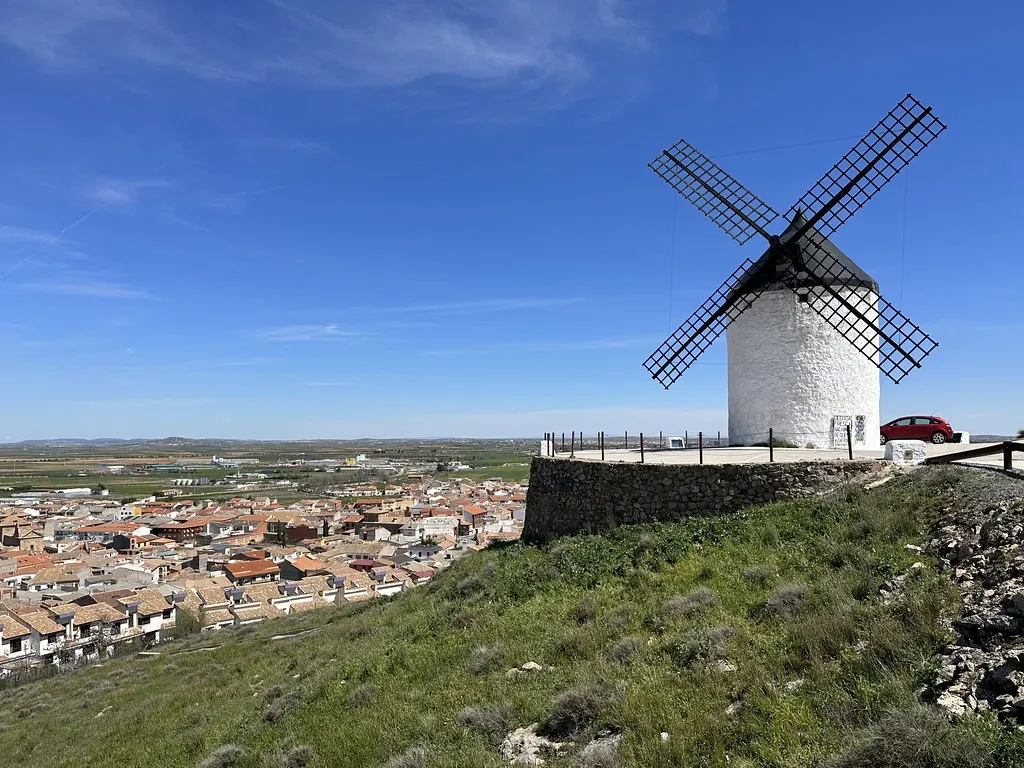
To talk about tourism in La Almarcha, it helps to begin with where you actually are. The village sits in the Mancha of Cuenca, on an open plain where cereal crops shape both the landscape and the rhythm of daily life. Here, the horizon carries more weight than monuments. The wind, frequent in this part of the province, and an altitude close to 900 metres complete the picture and give the place its particular character.
La Almarcha has fewer than five hundred inhabitants. The scale becomes clear straight away. The streets are quiet, buildings rarely rise high, and there is a direct, practical relationship with the surrounding countryside. The fields do not frame the village from a distance. They begin almost at the edge of the urban area.
A Village Rooted in Agriculture
Local history is not told through major historical episodes. It is written in agricultural continuity. For centuries the economy revolved around cereal farming, with vineyards scattered across different plots. That pattern is still visible today in the fields around the village.
The layout of the built-up area reflects this rural logic. Streets tend to be straight. Houses are whitewashed, with wide gates originally designed for carts and, later, agricultural machinery. In the older parts of the village, many homes retain traditional features such as iron window grilles, heavy door knockers and sections of stone wall.
There is little sense of architectural display. Instead, the focus has always been on usefulness. Buildings were designed to serve the needs of farming families, and that practical approach continues to shape the appearance of the streets.
The Parish Church at the Centre
At the heart of La Almarcha stands the parish church. Its origins date back to the sixteenth century, with later reforms carried out in the eighteenth. It is not a monumental building. Its interest lies less in decoration and more in the role it has played within the community.
The church acts as a reference point in the urban layout. Several of the main streets are organised around its surroundings. This central position reinforces its importance in daily and social life, even if the architecture itself is sober.
Inside, the design follows the restrained style common to many parish churches in La Mancha built during that period. There is no elaborate ornamentation. The atmosphere is defined by simplicity and proportion rather than visual drama.
Streets That Still Work
A walk through La Almarcha shows how recent renovations coexist with older elements. Some interior courtyards continue to function as workspaces or family meeting areas. On quiet days it is common to see neighbours talking at their doorsteps or carrying out small domestic tasks.
This is not a village transformed into a decorative backdrop. The architecture still fulfils everyday purposes. That reality can be seen in simple details such as open garages, tools resting against a wall or tractors moving in and out of the urban area. Agricultural life does not happen somewhere else. It crosses through the streets.
The atmosphere remains unhurried. With a small population and limited traffic, the pace of daily life follows familiar routines. There are no grand attractions competing for attention. The interest lies in observing how space is used and how older forms continue to adapt to present needs.
The Open Landscape of Eastern La Mancha
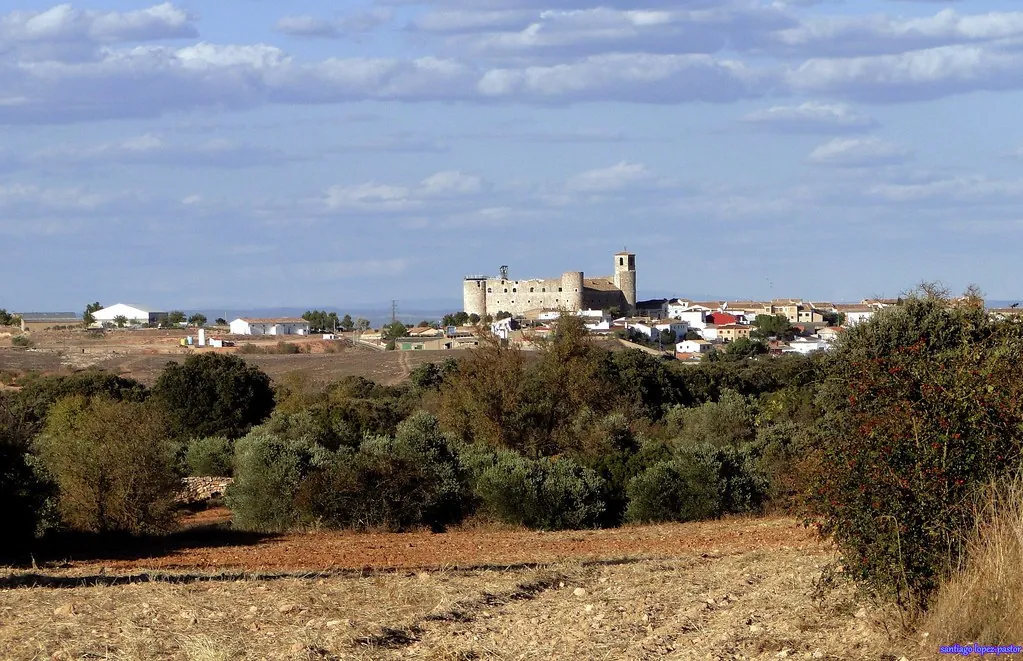
Beyond the last houses, the typical cereal-growing landscape of eastern La Mancha takes over. Large plots stretch out in all directions. Agricultural tracks cut through the fields, and the relief is very gentle.
Over the course of the year, the colours of the land change noticeably. Spring brings greens across the plain. As summer arrives, the tones shift towards straw and gold. After the harvest, darker earth reappears. These seasonal transformations give the same terrain a different character depending on when it is seen.
The rural paths around La Almarcha can be walked without facing significant slopes. They are working routes used by farmers, yet they also offer a way to explore the surroundings at a calm pace. In certain seasons, steppe birds or birds of prey can be seen taking advantage of the air currents that move across the plain.
The experience of this landscape is tied to scale. Distances feel broader, and the sky occupies much of the visual field. The relationship between land and settlement becomes clearer when walking a few kilometres along these tracks rather than viewing the area from a map.
Local Festivals and the Social Calendar
The main celebrations are usually concentrated in the summer months. This is when many residents who live elsewhere return to the village. The population temporarily grows, and the social rhythm intensifies.
The structure of the festivities remains fairly traditional. Religious events form part of the programme, alongside neighbourhood gatherings and activities that fill the squares and streets. These occasions are not designed primarily to attract visitors. They are part of the municipality’s own social calendar.
As in many small communities in Spain, the return of families during the summer strengthens ties between those who stayed and those who left for work or study. The village becomes a meeting point, and public space regains a central role.
Reaching and Exploring La Almarcha
La Almarcha is located in the province of Cuenca, within the wider region of La Mancha. Access is via regional roads that cross broad agricultural areas with low population density. The journey itself reinforces the sense of openness that defines this part of Castilla La Mancha.
The village can be explored in a short amount of time. Its size makes long itineraries unnecessary. The most rewarding approach is to observe the domestic architecture closely and then head out along one of the rural tracks that surround the urban area.
In this part of La Mancha, the landscape is better understood on foot. Walking a few kilometres across the plain offers a clearer sense of place than any summary description. La Almarcha does not rely on headline sights. Its appeal lies in the continuity between village and field, in the steady presence of wind and sky, and in a way of life that remains closely tied to the land.