Full Article
about La Hinojosa
Small farming town with rural charm, set in the Mancha Alta.
Ocultar artículo Leer artículo completo
The church bell strikes noon and the only other sound is wheat stalks brushing against each other in the breeze. At 900 metres above sea level, La Hinojosa sits high enough that the midday sun feels sharper, the air thinner, the horizon wider. This is Castilla-La Mancha without the tour buses, a village of 191 souls where the plain stretches so far that locals claim they can watch their dogs run away for three days.
The altitude changes everything. Summer temperatures still hit 38°C, but nights drop to 20°C, making sleep possible without air conditioning. Winter brings proper cold—frost whitewashes the cereal fields from November through March, and the wind that scours the plateau can make a five-minute walk to the bakery feel like an Arctic expedition. Spring arrives late but decisive; by late April, green shoots push through the red clay soil, transforming the landscape from sepia to emerald in a matter of days.
Getting here requires commitment. From Cuenca, the N-420 highway cuts across 90 kilometres of rolling plateau, past villages that appear as pale smudges against the wheat. The final turn-off snakes through agricultural tracks; hire cars bottom out on the rutted surface if the driver hasn't mastered the art of straddling potholes. Public transport doesn't bother with places this small. The upside is that once you've arrived, nobody else has either.
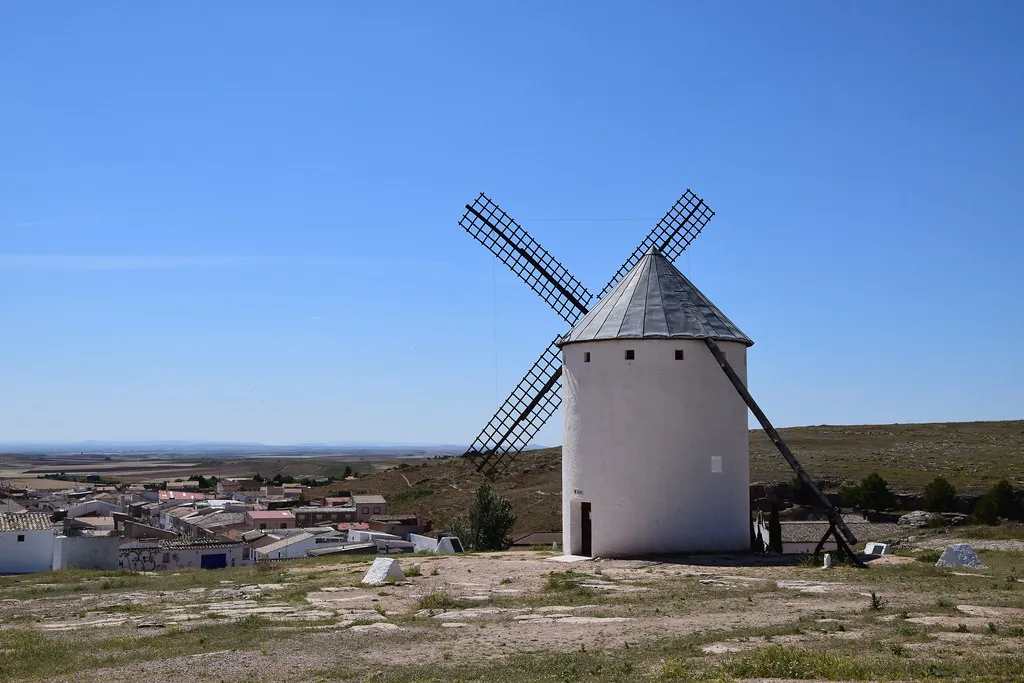
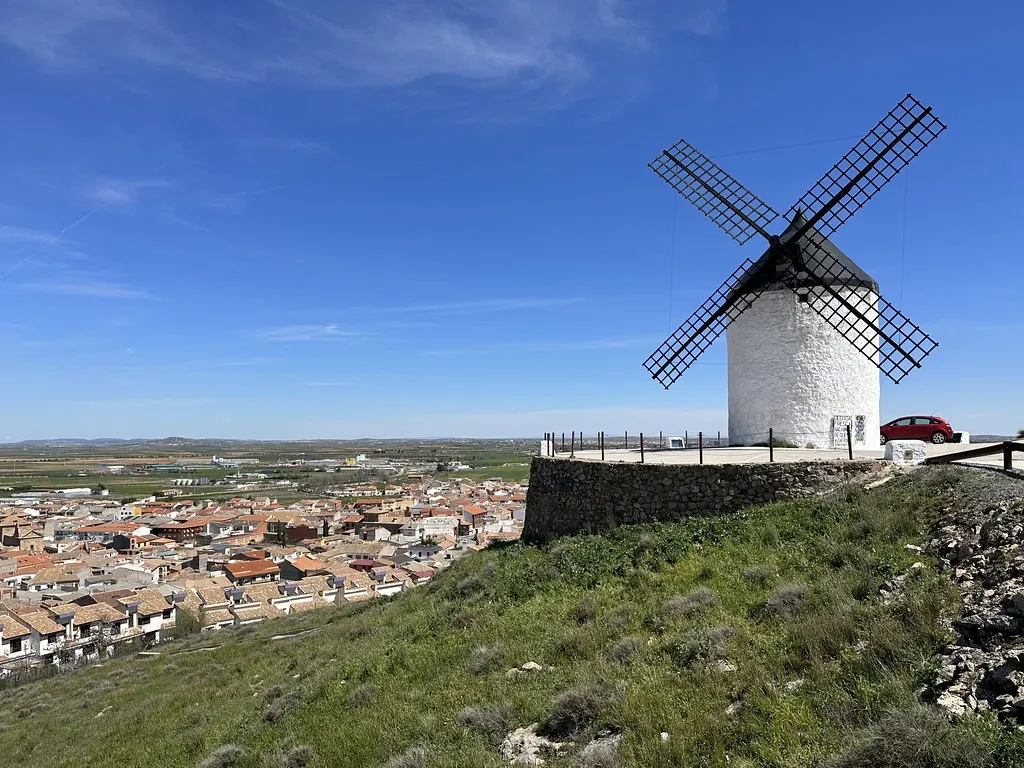
The village centre takes precisely four minutes to cross. Houses stand one or two storeys high, their whitewashed walls reflecting the harsh light, roofs tiled in curved Arabic terracotta that collects the scarce rainfall. Doors painted cobalt blue or deep green provide the only colour variation in a landscape where nature works in monochrome nine months of the year. The parish church of San Pedro Apóstol dominates the main square, its 16th-century bell tower repaired so many times that the original stone only survives in the lower third. Inside, the air smells of incense and centuries-old timber; the priest still conducts mass in Castilian Spanish so pure that linguists visit to record the accent.
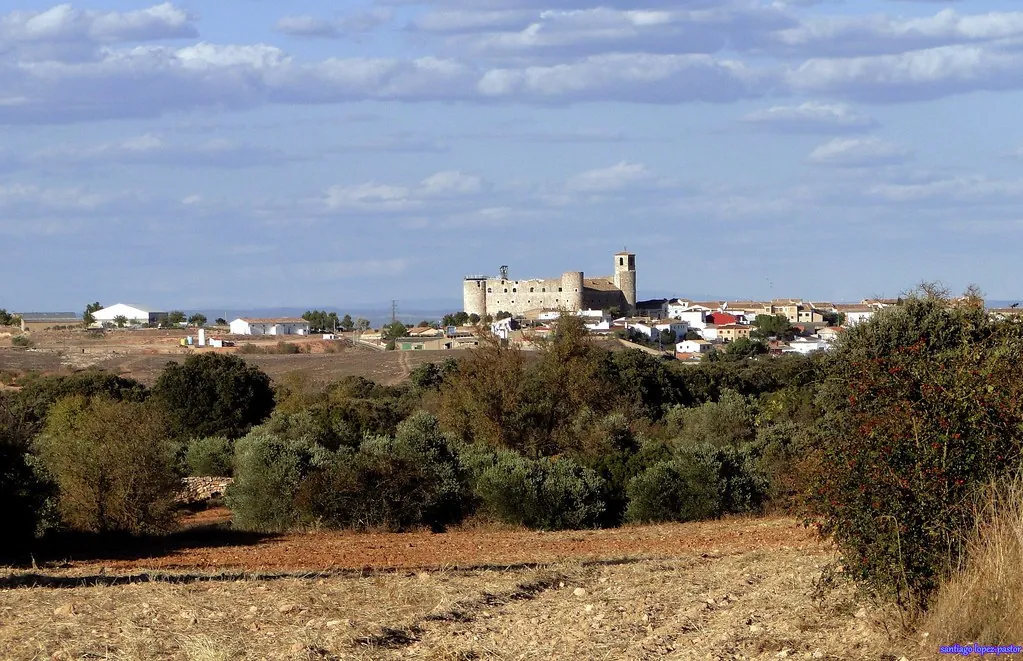
Beyond the houses, the land reclaims ownership. Wheat fields radiate outward in perfect rectangles, interrupted only by the occasional vineyard or olive grove. The soil here grows some of Spain's highest-quality saffron; during October's brief flowering season, locals rise before dawn to harvest crocus stigmas by hand, a process requiring 150 flowers to produce a single gram of the precious spice. Walk the unmarked tracks between fields and you'll spot crested larks and calandra larks performing their territorial songs, while overhead, Spanish imperial eagles ride thermals rising from the hot earth.
Walking becomes the primary activity, though "hiking" feels too grand a term for these gentle undulations. The old drove road to Villalgordo del Marquesado runs eight kilometres south-east, following an ancient livestock route marked by centuries of hoof prints worn into the limestone. Setting out at 7 am brings the reward of watching the sun lift above the plain, turning morning dew into thousands of tiny prisms. The return journey requires timing; by 11 am, the heat becomes oppressive, shade non-existent, water sources non-existent. Carry more than you think necessary—altitude dehydration sneaks up fast.
Food presents the biggest challenge for visitors expecting tapas bars on every corner. La Hinojosa has one café that opens sporadically, usually when the owner's daughter visits from Cuenca and can mind the counter. Otherwise, it's self-catering or a 25-kilometre drive to San Clemente, where Mesón La Mancha serves proper migas—fried breadcrumbs with chorizo and grapes—at €9 a plate. Stock up at the Dia supermarket in San Clemente before arriving; village shops closed years ago when the last proprietor retired and nobody replaced her. The local culinary tradition survives in private kitchens: gazpacho manchego made with game birds, pisto topped with farm eggs, gachas—a thick porridge of flour, water, and olive oil that sustained shepherds through long winters. Knock on the right door at the right time and you might score an invitation; bring a bottle of La Mancha wine as currency.
Festivals punctuate the agricultural calendar. San Pedro's feast day on 29 June transforms the village; population swells to 400 as former residents return from Madrid and Valencia. Temporary bars appear in garages, serving beer chilled in dustbins filled with ice. The highlight is the evening paella, cooked outdoors in a pan two metres wide, requiring 40 kilos of rice and stirring paddles like rowing oars. Semana Holy Week passes more soberly; the Thursday night procession involves thirty villagers carrying a 17th-century Virgin Mary statue through streets lit only by candles. The temperature often dips to 5°C, making the experience as much about endurance as devotion.
Accommodation options remain limited. Two houses offer rural rentals through word-of-mouth arrangements—ask at the town hall, where the secretary speaks fluent English learned during a decade working in London. Expect stone floors, thick walls, and wood-burning stoves. Nights are silent enough to hear your own heartbeat; the nearest traffic moves on the N-420, six kilometres away. Bring slippers—traditional Spanish houses keep floors cold year-round as natural air conditioning.
The village faces genuine threats. Young people leave for university and never return. The primary school closed when pupil numbers dropped to three. Fields that once supported families now belong to agribusiness corporations whose combine harvesters work 24-hour shifts during harvest. Yet there's resilience here too. A British couple recently bought a ruined farmhouse on the outskirts, spending three years rebuilding it using traditional techniques. Their presence has inspired three other foreign purchases, creating a tiny international community that organises monthly language exchanges in the church hall. Whether this represents revitalisation or gentrification remains to be seen.
Visit between mid-April and mid-May when the wheat creates a green ocean rippling in the wind. September works too—harvest brings the smell of fresh-cut grain, and temperatures moderate to comfortable levels. Avoid August unless you enjoy solitude and 40°C heat; even the swallows abandon La Hinojosa for cooler northern latitudes. Winter visits demand a four-wheel-drive vehicle and emergency supplies; when snow falls, the village can be cut off for days.
La Hinojosa offers no Instagram moments, no souvenir shops, no curated experiences. Instead, it provides something increasingly rare: the chance to stand on a high plateau and feel very small against a very large sky, to understand how landscape shapes character, to witness a way of life that technology hasn't yet rendered obsolete. The village doesn't need saving; it needs visitors who appreciate silence, who can entertain themselves, who won't complain when the café stays shut and the nearest bar serves wine in plastic glasses. Come prepared, come respectful, and La Hinojosa might just share its secrets—though probably not all at once.