Full Article
about Puebla de Almoradiel (La)
Major wine-producing hub in La Mancha; endless vineyard landscape
Hide article Read full article
Wheat heads brush against your knees before the sun has fully risen. Early in the morning, when there is still a trace of chill in the air, La Puebla de Almoradiel smells of fresh bread and damp soil. The countryside begins almost where the pavement ends. A cat crosses the Quintanar road with the unhurried confidence of a place where most cars are familiar.
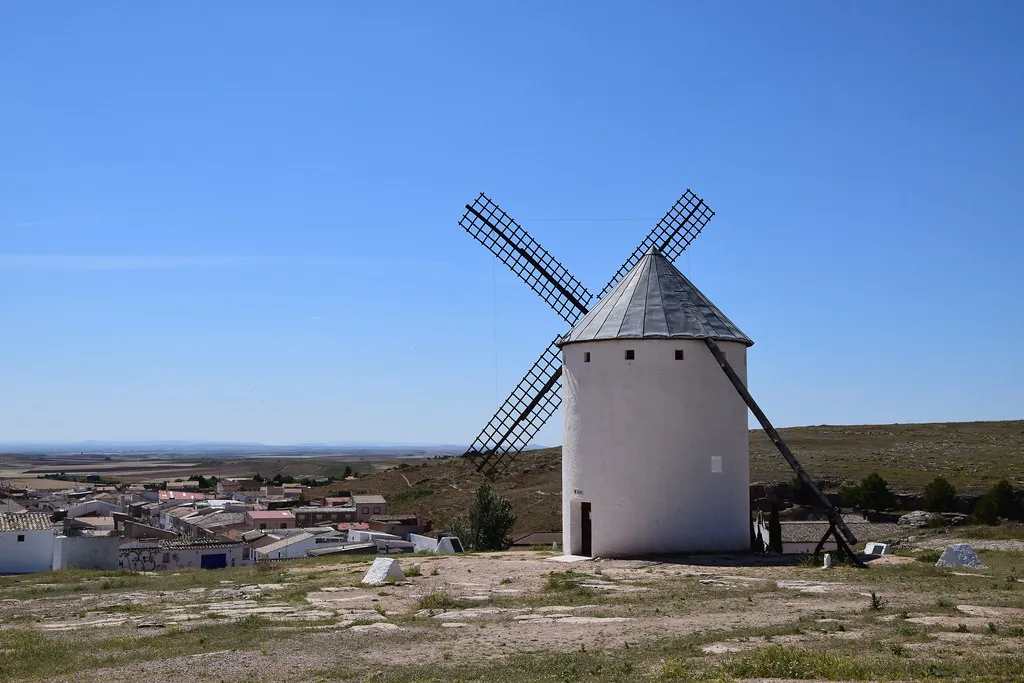
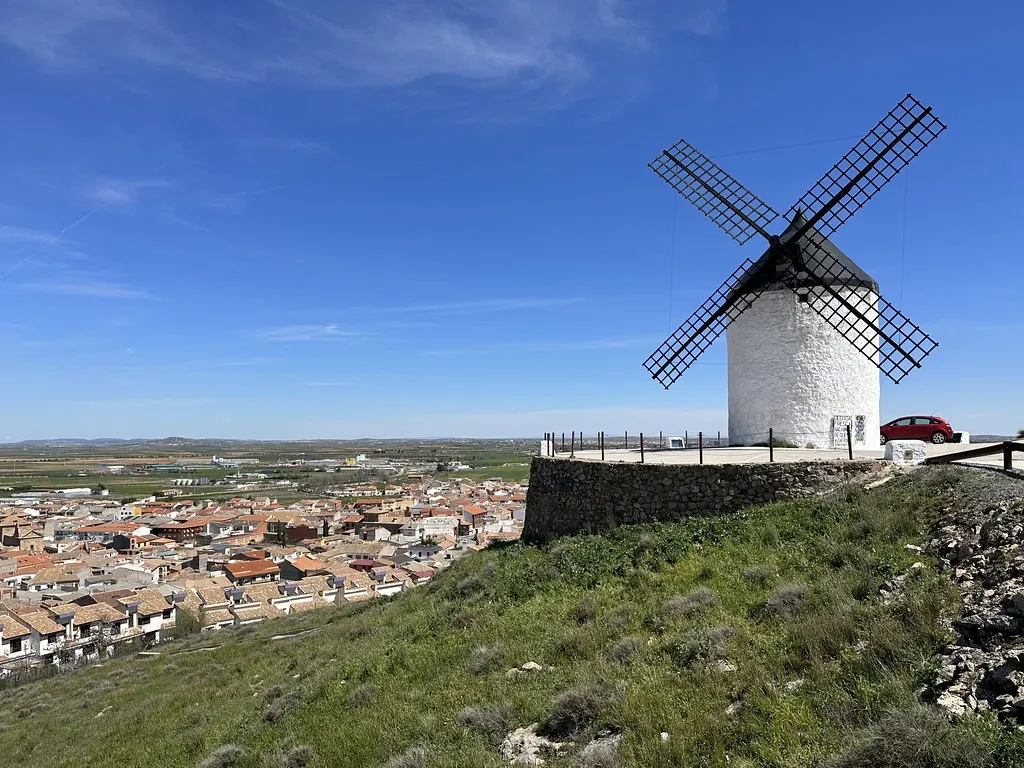
From the hill of San Cristóbal the whole town lies in view. Red-tiled roofs, the church tower rising above the low houses, and beyond them the agricultural warehouses that make it clear that work here is still closely tied to the land. At around 700 metres above sea level, the landscape opens into straight-edged plots where green cereal crops meet the ochre earth left resting between growing seasons. On clear days the horizon forms a sharp line and the clouds seem to hover without urgency.
Santa María la Mayor and enduring traditions
Inside the church of Santa María la Mayor the scent shifts to wax, cool stone and old wood. Light slips in cautiously through high windows, catching gilded altarpieces that have passed through many hands and many eras.
The image of the Virgen de Palomares, deeply connected to the town, is linked to a story repeated here for generations: a farmer is said to have found the figure while working the fields. Whether legend or a memory reshaped over time, devotion remains strong. The church continues to serve as a meeting point on feast days and special occasions.
Outside, daily life revolves more around homes and kitchens. Slow-cooked stews still appear on many tables at weekends. Lamb prepared with a hint of sweetness, sometimes with honey, is often served when families gather. Local wine, poured without ceremony, accompanies conversations that drift towards harvests, relatives and shared memories.
When celebrations reshape the streets
At the end of summer, the fiestas of the Santísimo Cristo de la Salud change the pace of La Puebla de Almoradiel. Streets fill more than usual, balconies are decorated and marching bands pass through the centre while neighbours greet one another from opposite pavements.
Spring brings something similar with the romerías, traditional pilgrimage gatherings common in rural Spain. The Virgen de Palomares is carried to her hermitage along paths scented with crushed rosemary and the fine dust of the plain. San Isidro, the patron saint of farmers, also draws residents together. People bring flowers or small bunches cut from the fields, gestures that reflect the town’s agricultural roots.
These are not celebrations designed as spectacle for outsiders. They are moments when the town turns towards itself and gathers again.
Paths leading to the Cigüela
To the south of the municipality the land slopes gently towards the river Cigüela. Footpaths reach it through cultivated fields and small stretches of poplars and riverside vegetation. When there is water in the river, the sound moves softly beneath reeds and rushes. In dry summers it is reduced to scattered stretches where frogs and the occasional crayfish still stir.
Near the riverbed stand the remains of old mills, little more than stone walls. They recall a time when the flow of water set the rhythm of milling and much of the surrounding life.
The former railway line that once crossed this part of La Mancha has gradually become a long, straight path used by walkers and cyclists. It cuts through open fields and passes over a metal bridge from which the town can be seen at a distance, the church tower rising above the rooftops.
If you plan to follow it, spring is the kindest season, or early in the day during summer. At midday the sun falls hard, with no shade for shelter.
Wide skies and changing light
Nightfall in this part of La Mancha brings real darkness. Beyond the built-up area there are few lights, and the sky appears crowded with stars. There are facilities nearby dedicated to astronomical observation, yet on many evenings it is enough simply to step away from the street lamps and look up.
Winter mornings are often foggy. The town wakes wrapped in a white layer that takes time to lift, leaving the streets hushed for a while. Gradually the familiar sounds return: garage doors opening, conversations carried across the street, tractors heading out towards the fields.
For those considering a visit to La Puebla de Almoradiel, spring is generally the most rewarding time. Between April and May the wheat stands tall and green, and poppies appear along the edges of the roads. August, by contrast, presses down with intensity. Heat gathers in the asphalt and the central hours of the day are better suited to shelter than to walking.
As evening falls and the sun drops behind the fields, the air begins to move again. The town settles back into its steady rhythm. It is then that the workings of this place become clearest: unhurried, attentive to the sky, watching for signs of whether the year ahead will be a good one.