Full Article
about Villa de Don Fadrique (La)
A Manchego town with a rich history and architecture; known as La Villa.
Hide article Read full article
The chimneys of the old alcohol distilleries cut into the Manchego sky like four red-brick exclamation marks. It is Tuesday, close to midday, and in La Villa de Don Fadrique the loudest sound is the wind moving through the wheat and the creak of a door closing somewhere along a sunlit street. The quiet is not a lack of life. It is the usual pause in flat, open country when the sun stands high and the streets empty for a while.
The scent of bread and wild herbs
Cross Plaza de España and someone emerges carrying a tray of still-warm loaves. The smell of fresh bread drifts into the fine dust of the road and blends with something harder to place at first: artemisa growing between the paving stones. In this part of La Mancha, the palette is rarely green. It is ochre, pale grey, almost white when the light is at its brightest.
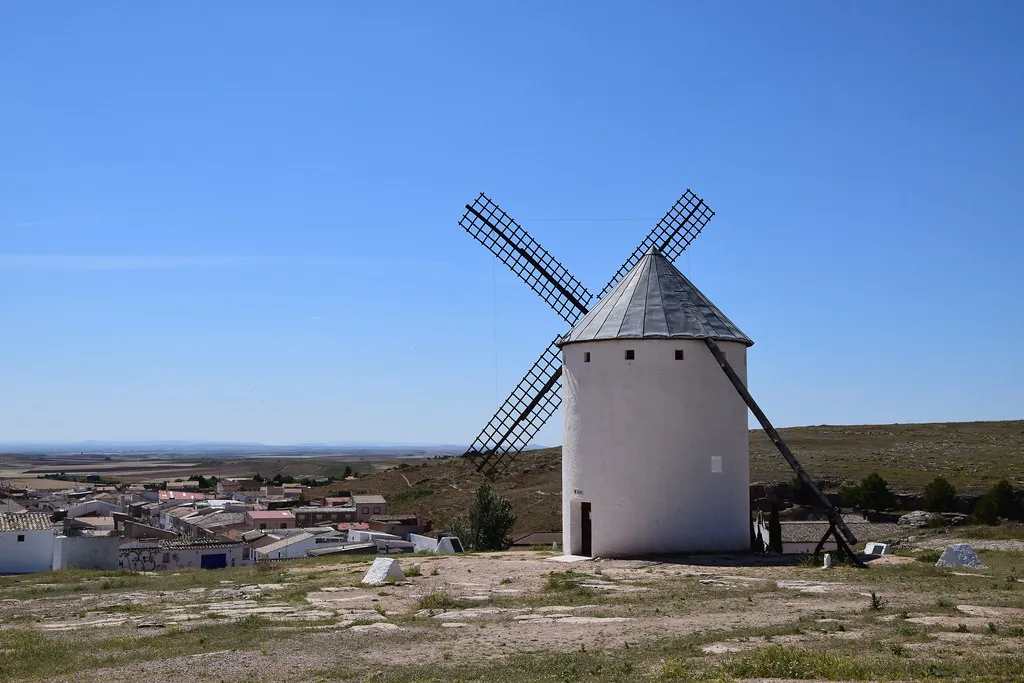
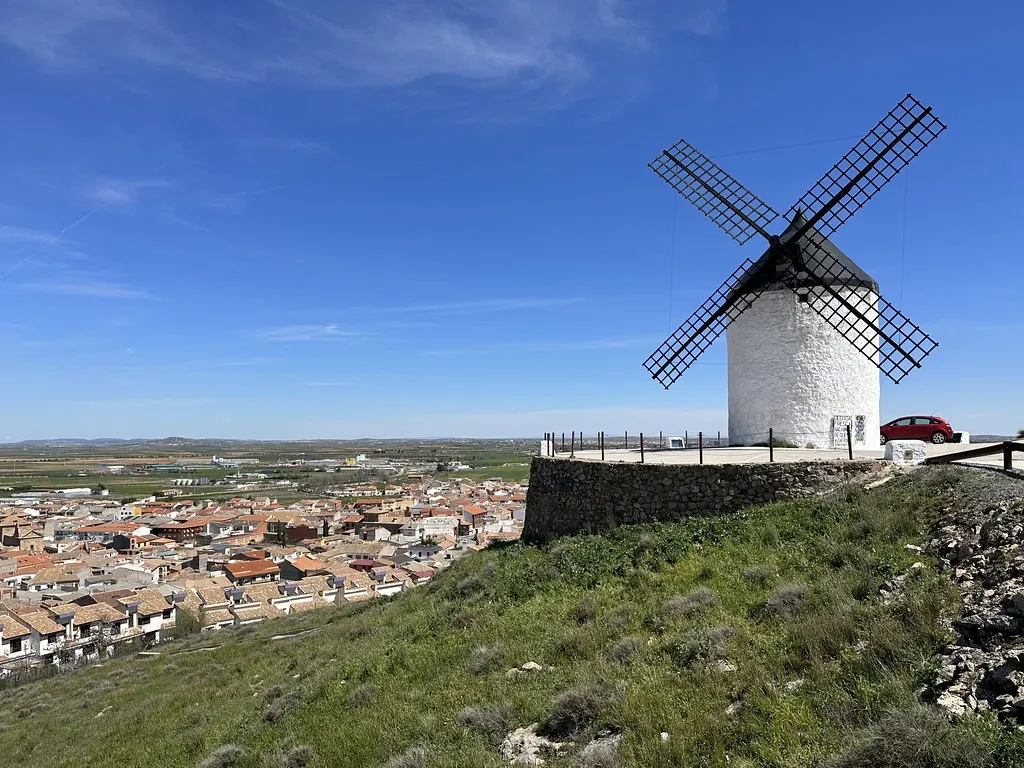
Cereal fields surround the town centre like a still sea. In spring, before the harvest, the heads of grain ripple in the wind and the town feels like a ship paused in the middle of wheat.
Casa de la Tercia, with its stone façade and the coat of arms of the Orden de Santiago above the door, has looked out over this same landscape since the early 16th century. For many years it served as a storehouse for tithes paid in grain, a reminder of the agricultural economy that shaped the region. Today the building has other municipal uses, yet the stone walls still hold the coolness typical of spaces designed to preserve harvests. On the lintel there is a roughly carved mark resembling a compass and square. It could be the signature of a master builder who passed through when La Mancha was still a crossroads territory.
From Puebla to La Villa de Don Fadrique
The origins of La Villa de Don Fadrique are usually traced back to the 14th century and to Fadrique, Master of the Orden de Santiago and half-brother of King Pedro I of Castile. His story ended badly, he was executed in Seville, yet his name remained attached to the town.
At the centre stands the Iglesia de San Juan Bautista, with its restrained tower of brick and stone. From above, if access is possible when the church is open, the view is La Mancha in its most characteristic form: straight lines of rural tracks, long rectangular plots, and the slow turn of a modern wind turbine in the distance. To the west lies the route of the former railway that once carried alcohol and grain. That track is now used as a vía verde, a greenway created from disused railway lines, popular with walkers and cyclists. Water and a hat are advisable, as shade is scarce in this part of the province of Toledo.
A town shaped by political memory
La Villa de Don Fadrique often appears in accounts of Spain’s rural labour movement. In the early years of the Second Republic, established in 1931, the town elected a communist mayor, something that drew attention across the country at the time. Those years saw agrarian conflicts, land occupations and a constant presence of the Guardia Civil.
That memory still surfaces in after-lunch conversations. Someone may point towards the town hall or the old lavadero, the public washhouse, and recall how women gathered there while men discussed politics in the square. These stories continue to circulate by word of mouth, shifting slightly depending on who tells them and what they remember.
Walking without hurry
May is often a good time to come. Paths between vineyards and cereal fields fill with red poppies, and the air carries the scent of rosemary and freshly turned earth. Closed shoes are sensible, as artemisa and other dry plants prick more than expected.
If arriving by car, it is easiest to leave it on the edge of the town centre and continue on foot. The streets are flat and lend themselves to an unhurried walk. Sounds change subtly from one street to the next: a radio playing behind a half-open window, a tractor returning along the local road, the metallic rattle of a shutter being pulled down.
At the beginning of June, during the romería de la Palomarilla, many residents walk out to the ermita de la Virgen de Palomares. A romería is a traditional pilgrimage, often festive in character, that combines devotion with music and shared food. The path here is reddish earth and loose stone. Guitars can be heard, along with low conversations and, in the background, the distant hum of agricultural machinery.
On the way back, towards sunset, the chimneys once again stand out against the sky. The town smells of warm bread and burnt rosemary. The same elements return: wheat fields, brick, wind, and the steady rhythm of a place that has learned to live with long stretches of silence and a past that still echoes in its streets.