Full Article
about Las Mesas
Manchego town known for its wine and cheese; notable Baroque church
Ocultar artículo Leer artículo completo
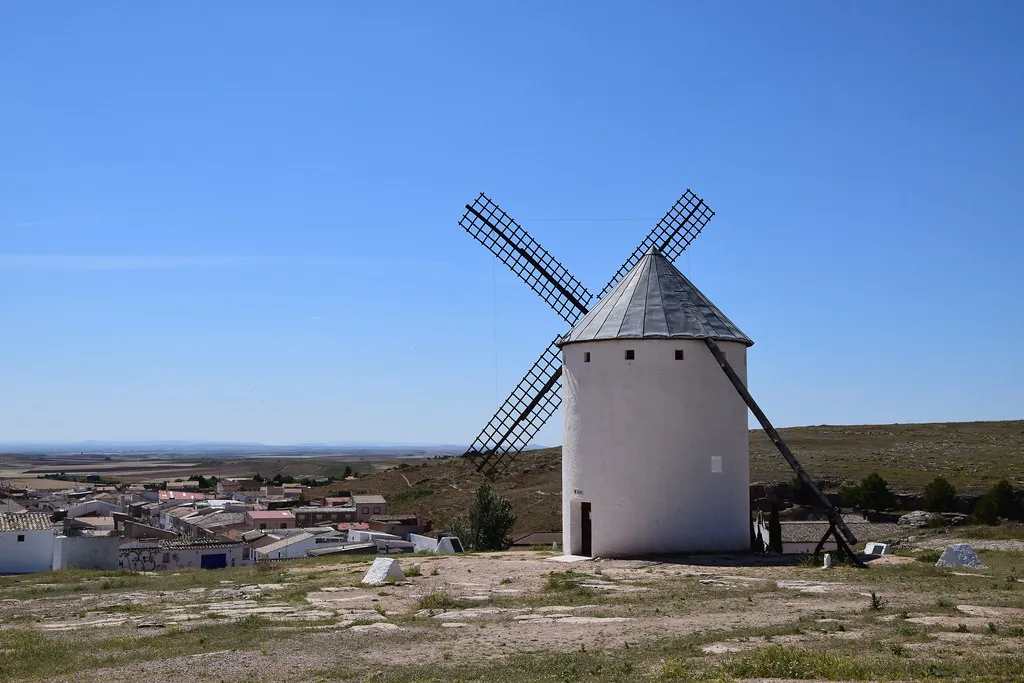
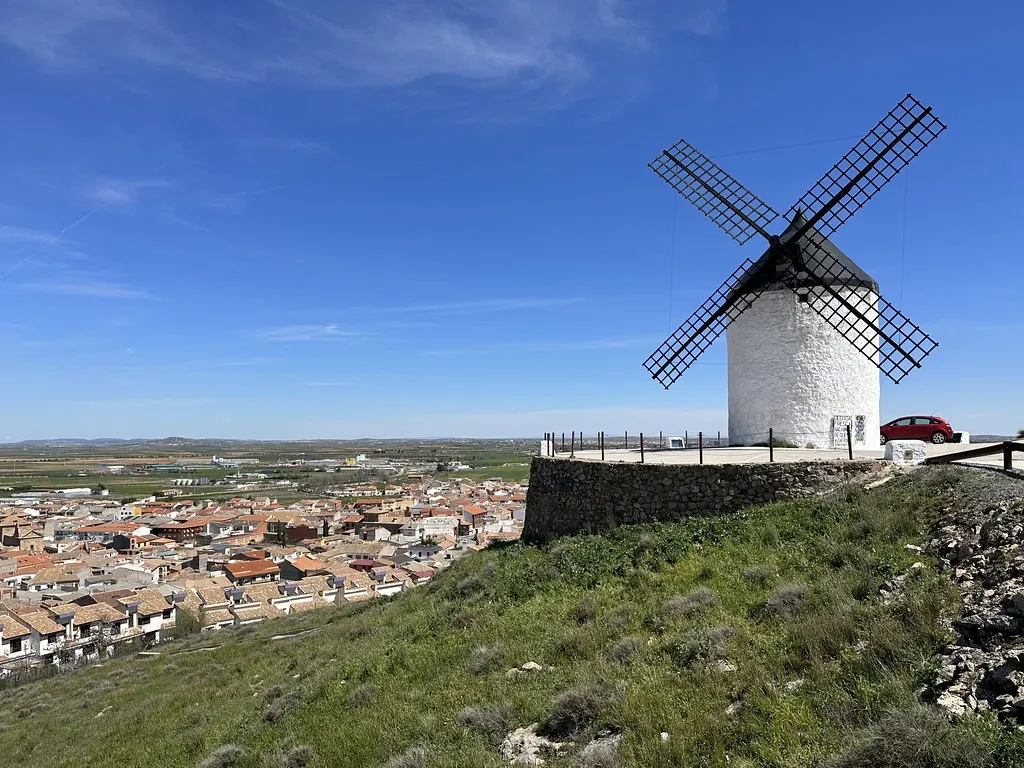
The church bells ring at 770 metres above sea level, their sound carrying across wheat fields that roll like a terrestrial ocean towards the horizon. From the uppermost streets of Las Mesas you can watch weather systems form 30 kilometres away—something to do with the altitude and the absence of anything taller than a two-storey house between here and the provincial boundary.
This is La Mancha at its most concentrated: a grid of whitewashed walls, green shutters and wrought-iron balconies dropped onto a plateau where the thermometer can swing 20 °C between dawn and mid-afternoon. At first glance the village appears to be holding its breath. Then you notice the movement—grandmothers balancing shopping on the uphill walk from the bakery, tractors appearing as yellow dots in the middle distance, swifts diving between the church tower and the single bar that keeps the plaza alive from 7 a.m. until the last domino is slammed down after midnight.
The Horizontal Cathedral
A five-minute stroll covers the historic core, yet the geography feels larger. Every street ends in sky. The parish church, rebuilt in the eighteenth century after a lightning strike, anchors the western edge; from its steps you can trace the original Moorish outline in the way lanes kink and narrow. Houses are built from the same calcareous stone that lies just beneath the topsoil, so walls seem to grow out of the ground rather than sit on it. Paintwork fades quickly at this height—ultraviolet is relentless—giving the place a bleached, salt-flat appearance that photographers either love or delete.
Inside, the church is refreshingly plain: no gilded excess, just thick walls designed to keep worshippers cool in July and less cold in January. The priest still unlocks the doors at 6:30 each evening; visitors are welcome to sit at the back, provided they can tolerate the smell of beeswax and centuries of dust. Donations go towards replacing roof tiles claimed by the gales that rip through the gap between the Iberian and Central Sierras.
Calories and Conversation
Las Mesas does not do delicate cuisine. The day’s main meal, served from 2 p.m. sharp, starts with migas—fried breadcrumbs riddled with garlic, chorizo and grapes that pop like hot jam—followed by cordero al horno, lamb that has spent six slow hours absorbing rosemary and oak smoke. A half-portion is usually enough for two; asking for a doggy bag will earn a puzzled look, then a plastic ice-cream tub pressed into your hand with ceremony.
The only place offering this menu is Bar La Plaza, half café, half village noticeboard. Lunch for two, including a carafe of local tempranillo, costs about €32. If the terrace is full, locals will shuffle along the bench to make room—conversation is part of the service. English is limited; a phrase-book and a willingness to mispronounce usually secure an invitation to the evening card game.
Vegetarians survive on gazpacho manchego (a stew of tomatoes, peppers and flatbread, no relation to the chilled Andalusian soup) and pisto, the Spanish cousin of ratatouille. Vegans should bring emergency almonds. Mealtimes are fixed: breakfast 7–9, lunch 14–16, supper 21–23. Arrive outside these windows and the kitchen is closed, no exceptions, no crisps behind the bar.
Walking Without Waymarks
There are no signed trails, which suits walkers who prefer not to share a path with mountain bikes and Bluetooth speakers. Instead, farm tracks radiate from the village like spokes. A favourite circuit heads south-east towards the abandoned hamlet of El Ballestero—three kilometres across ploughed land, then a gentle climb onto a limestone ridge where imperial eagles ride the thermals. Take water; there is no fountain and summer shade is theoretical.
Spring and autumn deliver the kindest conditions: daytime highs around 22 °C, nights cool enough to justify a jumper. In July and August the mercury can touch 38 °C by 11 a.m.; walking is restricted to the two hours after sunrise, when the wheat glows like polished brass and every footstep releases a puff of dust. Winter is short but sharp—night frosts are common, and the N-420 can close briefly if snow drifts across the plateau.
Cyclists appreciate the almost total absence of traffic. A 40-kilometre loop north through Villar de la Encina and back via the cherry orchards of Huerta del Marquesado gives 300 metres of climbing, all of it gradual. Road surfaces vary: freshly laid tarmac one kilometre, cratered cement the next. A gravel bike is ideal; skinny racing tyres will curse the agricultural debris.
Fiestas That Belong to Residents First
The calendar starts with San Antón on 17 January. At dusk the village builds a bonfire from vine prunings and old pallets in the small square behind the church. The queue for chorizo cooked over the flames is strictly local; visitors are welcomed but not prioritised. Bring your own wineglass—plastic cups run out fast.
Holy Week processions are low-key: thirty neighbours in hooded robes carry a single paso (the Virgin flanked by white lilies) along the main street while a trumpet plays a mournful march. There are no seats, no tickets, no photographers jostling for position. If you find yourself in the way, someone will tap your shoulder and move you to the shady side of the street with the gentle efficiency of an usher at the Proms.
The summer fiestas, around the feast of Santiago on 25 July, last three nights. Temporary bars sell warm beer and plates of migas for €2; a cover band from Cuenca plays Spanish indie hits from 1998. Earplugs recommended unless you enjoy Otis Redding sung with a Castilian accent at maximum volume. Accommodation within the village does not exist—plan accordingly.
Getting There, Staying Sane
Las Mesas sits 90 kilometres west of Cuenca and 140 kilometres south-east of Madrid. From the UK the simplest route is a flight to Madrid-Barajas, then a two-hour drive down the A-3 and the CM-412. Car hire is essential; public transport involves a train to Cuenca, a bus to San Clemente, and a taxi for the final 25 kilometres—doable only if you enjoy logistical Sudoku.
The nearest hotel is in San Clemente, a 20-minute drive: Hotel Don Manuel, functional, €65 a night with breakfast. Closer options are rural casas rurales (self-catering cottages) scattered across the plateau; most require a three-night minimum and advance booking. Wild camping is tolerated provided you ask at the ayuntamiento (town hall) first, and depart at sunrise before the tractors start work.
Fill the petrol tank before leaving the motorway—village pumps close at 8 p.m. and all day Sunday. Phone signal is patchy; download offline maps. Bring cash: Bar La Plaza accepts cards reluctantly, the bakery not at all.
The Honest Verdict
Las Mesas will not change your life. It offers no souvenir shops, no Michelin stars, no ancient ruins to tick off. What it does provide is a working demonstration of how half of Spain still lives—at the pace of the land, with the horizon as decoration and conversation as entertainment. Come prepared for silence after midnight, for bread that is baked once daily and sells out by 10, for landscapes that reward patience rather than selfies. If that sounds like hard work, book the coast instead. If it sounds like breathing space, set the alarm early: the first lark starts at 5:30, and the sky is already turning the colour of pale sherry.