Full Article
about Los Hinojosos
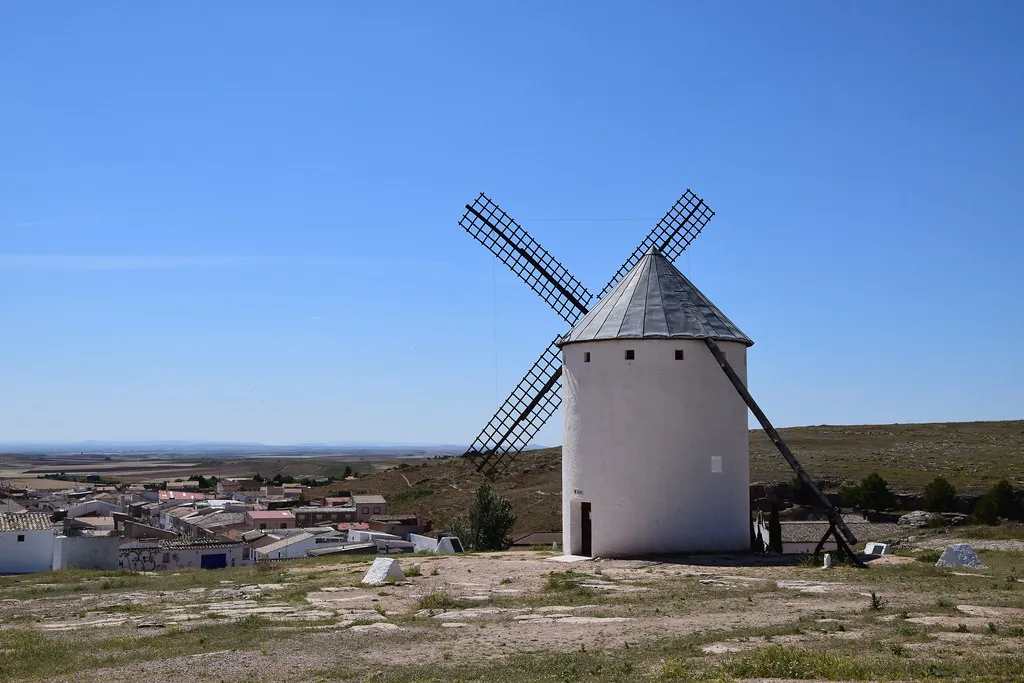
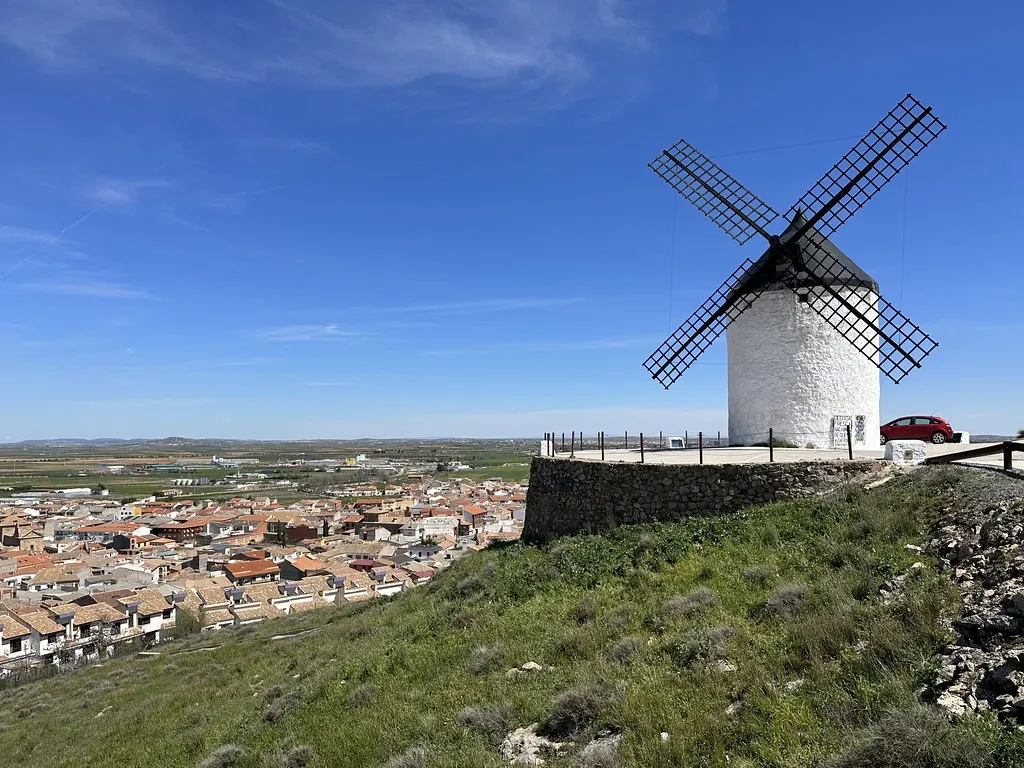
Manchego town with typical architecture and nearby windmills; cheese-making tradition
Ocultar artículo Leer artículo completo
The wheat fields stretch so far that the horizon curves. Standing at the edge of Los Hinojosos, you'd swear you can see the Earth's bend—except there's nothing to interrupt the view. Just golden stubble, red soil, and a sky so vast it makes the village's 750 residents seem like a rounding error in an equation of space.
This is Spain's agricultural heartland, where the phrase "middle of nowhere" feels almost cosmopolitan. Cuenca province unfurls around Los Hinojosos like a beige carpet, interrupted only by the occasional vineyard or the distant silhouette of farm machinery. The village itself clusters around a single church tower, the only vertical punctuation for miles.
The Rhythm of Agricultural Time
Santiago Apóstol church squats at the village centre, its bell tower visible from any approach road. Built in stages over centuries, the stone structure bears architectural scars of every era—Romanesque bones, Gothic additions, Baroque flourishes tacked on by builders who understood that in a place this flat, the only way was up. Inside, the air smells of incense and centuries of candle smoke, mixed with the faint sweetness of wheat that drifts in every time someone opens the door.
The streets radiate outward in no particular pattern, following livestock paths that predated asphalt. Houses wear their original limestone whitewash like old makeup—patchy in places, stubbornly clinging in others. Wooden doors hang heavy on iron hinges, some dating back to when this land belonged to the Knights Hospitaller. Peer through the wrought-iron gates and you'll catch glimpses of interior patios where grapevines create pools of shade, and elderly women shell peas in the morning cool.
There's no centre exactly, just a gradual thickening of buildings around the church. The bar opens at seven for coffee and industrial-strength toast, fills with farmers discussing rainfall statistics, then empties by nine when the fields call. By eleven it's filling again, this time with workers on their mid-morning break. The cycle repeats at lunch, merienda, and finally the evening session that stretches past midnight in summer when temperatures finally drop below 30°C.
What the Land Gives
The surrounding landscape changes character with the agricultural calendar. April brings bright green wheat shoots that ripple like water in the constant wind. July transforms everything to gold, harvesters working from dawn to dusk while the grain trucks rumble through village streets, leaving chaff swirling in their wake. October's sunflower stubble creates a patchwork of ochre and rust, while February's bare vines stand like black lightning against red earth.
Walking tracks head north towards the Cerro de San Pedro, a modest 1,050-metre hill that qualifies as local mountainous terrain. The path follows farm tracks between parcels of land, past stone wells built by families who've worked these fields for generations. You'll share the route with the occasional tractor, dogs that belong to everyone and no one, and the constant accompaniment of skylarks. Bring water—shade is theoretical here.
Birdwatchers arrive with binoculars and patience. The steppe-like conditions support species that have vanished from more developed parts of Europe. Rollers flash electric blue from telephone wires, while great bustards perform their absurd mating dances in spring. The best viewing happens at day's edges, when the sun sits low and long shadows provide the only relief from exposure.
Eating What's Local, When It's Local
Food here follows the agricultural calendar with religious devotion. Winter means gachas, a thick porridge of flour and pork fat that fueled field workers for centuries. Spring brings wild asparagus gathered from roadside ditches, scrambled with eggs from village hens. Summer's glut of tomatoes becomes salmorejo, served thick enough to hold a spoon upright. Autumn's game season sees morteruelo appearing on tables—a pâté of rabbit, pork and liver pounded with spices until it resembles coarse velvet.
The village's two restaurants serve what's available, when it's available. Don't expect menus in English or vegetarian options beyond tortilla. Do expect to eat whatever the cook's husband shot yesterday, accompanied by wine that cost less than the glass it's served in. The cheese arrives from a man who keeps twenty goats and makes Manchego the way his grandmother did—raw milk, natural rind, aged in a cave that stays cool year-round.
When the Village Returns to Life
Los Hinojosos empties in winter. Young people leave for Madrid or Valencia, returning only for major festivals. The population swells briefly each August when emigrants return for the fiesta, transforming quiet streets into something approaching animation. Processions wind through streets hung with paper decorations, brass bands play until three in the morning, and elderly residents sit in plastic chairs outside their houses, finally having enough audience for their stories.
The Santiago Apóstol celebrations in late July mark the height of summer activity. The church fills for morning mass, empties for the midday meal, then refills as temperatures drop and street parties begin. Fireworks echo across the plain, sounding oddly close despite being launched from the fairground on the village edge. For three days, tractors stay parked and fieldwork waits. Even the wheat seems to pause its relentless ripening.
Practicalities in the Plain
Getting here requires commitment. From Cuenca, the CM-310 winds through 95 kilometres of landscape that varies only in the colour of whatever's growing. The drive takes ninety minutes if you're lucky, longer if you get stuck behind harvest machinery. Public transport exists in theory—a bus three times weekly that connects with Cuenca's Saturday market. Hiring a car isn't optional, it's essential.
Accommodation options fit on one hand. Casa Rural El Arriero offers three rooms in a converted stable, thick stone walls keeping interiors cool even during August's inferno. Cantarranas provides self-catering for those who prefer buying local ingredients to restaurant roulette. Both require advance booking—there aren't enough visitors to justify keeping rooms empty on spec.
Bring walking boots for the farm tracks, a hat with actual coverage (baseball caps don't cut it here), and enough water to survive if your car breaks down. Phone signal vanishes in hollows between fields. The nearest petrol station sits twenty kilometres away, and it closes for siesta. This isn't dangerous wilderness, just landscape scaled for people who know it intimately. Visitors navigate by church towers and the occasional windmill, learning quickly that "just over there" can mean anything up to five kilometres.
Los Hinojosos won't change your life. It offers something more valuable: the chance to see rural Spain as it actually functions, not as theme park but as working landscape where people grow your breakfast cereal and press your cooking oil. Stay long enough and the vastness stops feeling empty, starts feeling honest. The plain isn't barren—it's full of everything we usually choose not to notice.