Full Article
about Membrilla
Known as the melon capital; a farming town with deep-rooted traditions like the Desposorios de la Virgen.
Hide article Read full article
A las siete de la mañana, las campanas de la iglesia de San Juan repican sobre Membrilla. El aire huele a pan recién hecho y a algo más seco y antiguo, al polvo de La Mancha que se levanta con la primera brisa. El sol sube rápido sobre la llanura y las calles guardan aún el fresco de la noche. En algunas terrazas, aparecen vasitos de anís junto a conversaciones pausadas sobre la sequía, el campo y la última cosecha de melón.
Membrilla está al sur de la provincia de Ciudad Real, cerca de Manzanares. El paisaje es abierto y horizontal, con cielos anchos que marcan el día tanto como cualquier monumento. Lo que trae a la gente aquí no es un espectáculo, sino un ritmo: el de la agricultura, las estaciones y unas tradiciones que continúan sin aspavientos.
Vino, trabajo y el camino a Madrid
Membrilla ha sabido a vino durante siglos. Tras la conquista cristiana en el siglo XIII, el cultivo de la vid ganó peso. Ya en la Edad Moderna hay referencias a vino del pueblo viajando a Madrid, una muestra de cómo este lugar ya estaba ligado a mercados mayores.
Esa conexión sobrevive hoy en las cooperativas y bodegas de la zona, dentro de la denominación de origen La Mancha. El paisaje alrededor del pueblo lo cuenta: campos que se estiran hasta el horizonte, conversaciones que suelen derivar hacia la vendimia.
Aquí el vino suele llegar a la mesa sin ceremonia: un vaso estrecho, algo de queso manchego, pan para acompañar. Si te quedas el tiempo suficiente, alguien recordará vendimiar antes del amanecer, los remolques cargados o los años en los que casi todo el trabajo se hacía a mano. Las historias salen a su paso. El tempo del campo aún marca el tono de las conversaciones.
El Azuer y el Molino del Rezuelo
A poco más de un kilómetro del centro, el río Azuer traza una línea estrecha de vegetación que rompe la uniformidad de los cultivos. En sus orillas hubo varios molinos harineros. Hoy uno está restaurado, el Molino del Rezuelo; otros quedan como vestigios entre piedras y matorral.
El paseo hasta el molino sigue un camino sencillo entre chopos y tarays. El agua no siempre baja con fuerza aquí. En La Mancha, los ríos son discretos, aparecen y se desvanecen con las estaciones. Aun así, el lugar da sombra y una calma que se agradece cuando aprieta el calor. Las cigarras llenan el aire, las ramas crujen bajo los pies y, de vez en cuando, una lagartija escapa entre las rocas.
Los domingos por la mañana se ven familias paseando con lentitud por la ribera. No hay grandes instalaciones, solo el camino, el molino y el río que durante siglos movió piedras para moler grano. Es una escena sin adornos, hecha de necesidades prácticas más que de diseño.
Los Albardinales y el campo abierto
Al sur del término municipal está la microrreserva de los Albardinales, una zona protegida de matorral mediterráneo. Romero, tomillo y esparto dominan el terreno. La tierra está abierta, cruzada por pistas de tierra y senderos que se pierden entre lomas bajas.
A veces se menciona la zona como área de dispersión del águila imperial ibérica, aunque los avistamientos no son frecuentes. Lo más habitual es ver milanos planeando sobre los campos cercanos o escuchar el sonido de las alondras levantándose súbitamente del suelo.
En primavera, el romero pisado suelta su aroma. En verano, la tierra se vuelve dura y pálida, casi blanca al mediodía. Conviene llevar agua; no hay fuentes ni donde comprar nada en varios kilómetros.
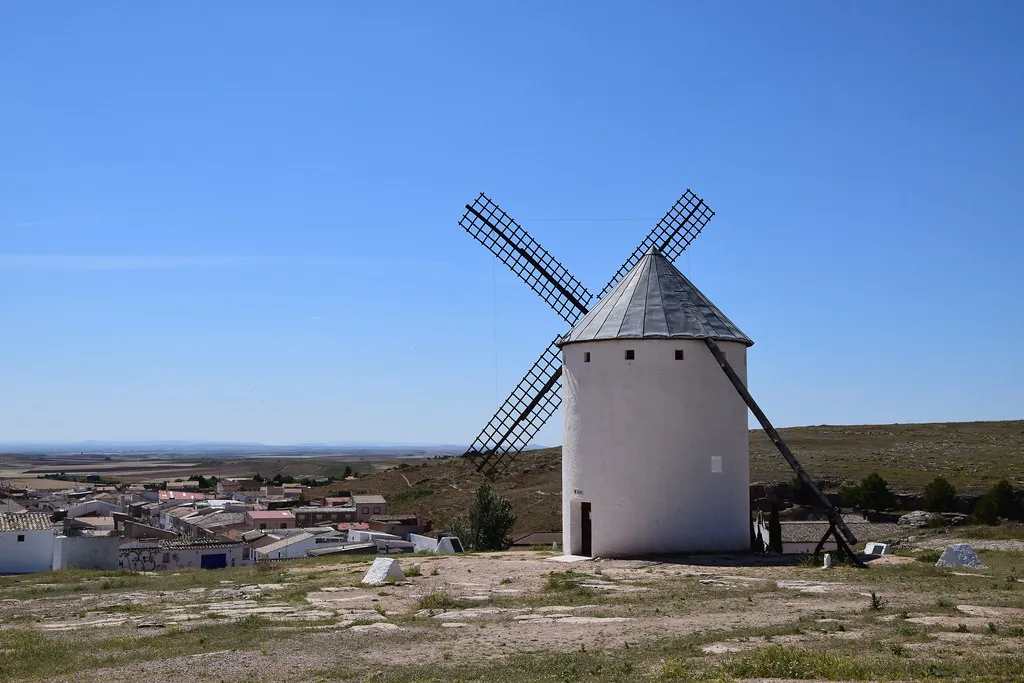
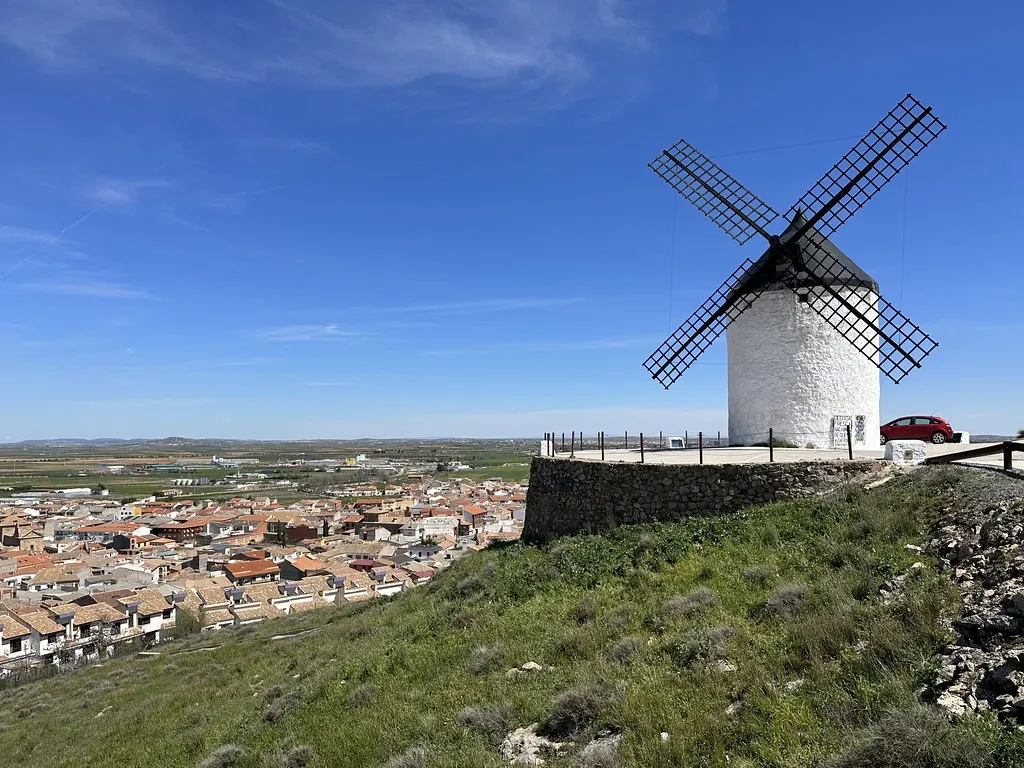
Hacia el atardecer, la línea lejana de la Sierra de Alcaraz al oeste toma un tono violáceo. Desde algunos puntos altos, Membrilla se ve como un grupo bajo de tejados claros en mitad de la llanura. La sensación es de espacio más que de altura, de anchura más que de cerco.
La Virgen del Espino y el sabor de las gachas
Entre las celebraciones más arraigadas del pueblo están los desposorios de la Virgen del Espino, que suelen ser en mayo. La ermita está en el cerro donde antes se alzaba el castillo de El Tocón. Ese día hay flores, música de banda y vecinos acompañando a la imagen bajando hacia la plaza.
El Carnaval trae otro momento distinto: el Jueves de Comadre. Ese día se preparan y comparten gachas blancas. El plato se hace con harina, agua, ajo y trozos de panceta. Es contundente y directo, la clase de comida que se toma de pie mientras se habla con quien haya cerca. Las cazuelas pasan de mano en mano, y la memoria toma una forma práctica atada a recetas que se repiten año tras año.
Estas ocasiones no buscan espectáculo. Giran en torno a la participación, la comida y unos rituales familiares que conectan a quienes viven ahora con generaciones anteriores.
Cuándo ir
Llegar a Membrilla es más práctico en coche. Hay transporte público desde pueblos cercanos pero los servicios suelen ser limitados. Las carreteras llegan atravesando la llanura con poca variación en altura.
El verano trae calor serio. En julio y agosto desde media tarde el asfalto devuelve todo lo que ha absorbido durante el día y en muchas calles falta sombra. Si puedes elegir septiembre suele ser más llevadero: está en marcha la vendimia y el aire del campo huele a mosto.
Cuando llega lluvia algo no garantizado los alrededores cambian de color en pocos días: aparece verde donde solo había tierra pálida. El silencio manchego roto por viento o un tractor lejano se hace aún más evidente.
Membrilla no busca impresionar por tamaño ni por grandes hitos monumentales. Su interés está en las mañanas tempranas bajo un cielo ancho en la presencia constante de viñas y cereal en un río que movió molinos y ahora marca un paseo tranquilo. Es un lugar que se entiende poco a poco en conversación y en los espacios entre una cosecha y otra