Full Article
about Monreal del Llano
Small town near Belmonte; it keeps its traditional rural feel.
Hide article Read full article
A village shaped by the plain
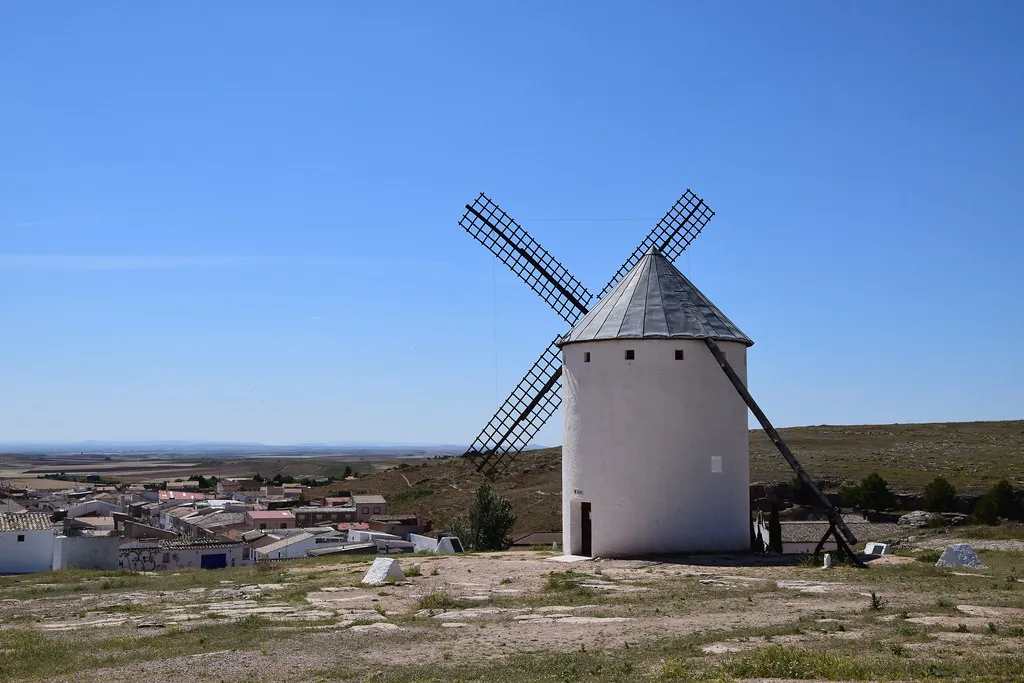
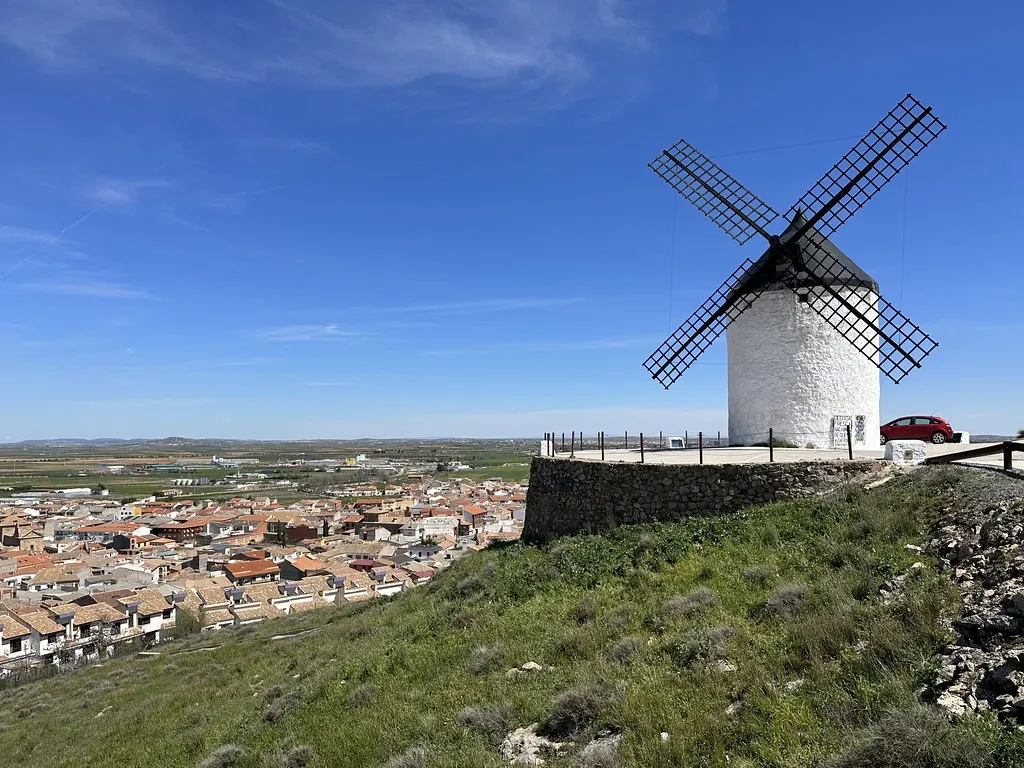
Monreal del Llano sits in the middle of the Manchegan plain, in the south of the province of Cuenca. The landscape barely rises or falls. Fields stretch out in all directions, and the horizon feels wide and uninterrupted. Today, just over forty people live here.
This has not always been the case. For centuries, Monreal del Llano formed part of a network of small agricultural settlements that organised cereal farming across eastern La Mancha. Its name reflects both history and geography. “Monreal” is often linked to medieval foundations or repopulations connected to the Crown, while “del Llano” describes the flat land on which the village stands.
The area became part of the Christian repopulation zone after the Castilian advance in the 12th and 13th centuries. As control shifted, the plain was reorganised into farming hamlets dependent on larger nearby towns. Monreal del Llano was one of these small rural communities.
Its scale has changed very little over time. The village was always modest in size, tied to cereal cultivation with some supporting livestock. The sharp population decline that affected much of inland La Mancha during the 20th century is clear here. Short streets, houses closed for much of the year and old animal pens recall a busier past.
The parish church and the village layout
At the centre of Monreal del Llano stands the parish church of the Asunción. Its origins are usually placed in the 16th century, when many villages in La Mancha consolidated permanent churches after the earlier repopulation period. The building seen today is sober in style. Later alterations, probably in the 18th century, softened its original structure.
As in many settlements across the plain, the church tower also acts as a visual reference point. From the paths that approach through the fields, it rises above the low houses and signals the village’s location long before the first walls come into view.
The houses cluster around the church. Streets are short and open, adapted to completely flat terrain. Whitewashed masonry houses remain, some with wide gates once designed for carts and farming tools. A number of interior courtyards still contain corrals and small agricultural outbuildings.
Depopulation is evident. Some homes are shut up, others open only at certain times of year. Even so, the structure of the village remains easy to read: a small agricultural community organised around its parish church and a handful of connecting routes.
Beyond the last houses, the landscape explains almost everything about Monreal del Llano. Cereal fields shift in colour with the seasons. There are fallow plots and straight tracks linking parcels of land. Spring brings green tones. Summer turns the ground golden and sharpens the horizon. With no significant relief, the sky takes on a strong visual presence.
At night, when the surroundings fall almost completely dark, the sky becomes particularly clear. There are no dedicated astronomical facilities, yet the limited artificial light makes it easier to pick out constellations.
Exploring the surrounding countryside
Monreal del Llano can be walked in a short time. The real interest lies in following the agricultural tracks that lead out from the village. Many of these routes trace older paths used for decades to reach fields and animal enclosures.
Walking or cycling along these tracks offers insight into how this land has been worked. Low stone walls appear, along with isolated farm buildings and the occasional small field shelter. Signage is minimal. Maps or navigation apps are useful, especially in summer when the heat presses down on the open plain.
The surrounding comarca, or district, still reflects the traditional cuisine of La Mancha. The dishes are substantial and rooted in rural life, created to sustain long working days in the fields. Within Monreal del Llano itself, options are very limited. Visitors often head to nearby towns for food.
Time moves differently here. The long horizons, tracks fading into the distance, silos and power lines cutting across the plain all form part of the scene. Inland La Mancha can feel repetitive, yet that repetition reveals its agricultural logic. Fields follow fields, and the pattern itself explains how the territory functions.
Traditions in a small community
Local celebrations are usually concentrated in the summer months. That is when former residents return, keeping ties with houses they still own even if they now live elsewhere. For a few days, the village recovers some of the movement it must once have had.
The patron saint festivities revolve around the church and collective gatherings in the street. Shared meals, popular music and simple events organised by the neighbours themselves shape the programme. In a village of this size, celebration is less about spectacle and more about meeting one another.
Monreal del Llano does not rely on major monuments or a packed calendar. Its identity rests on continuity: fields that change colour with the seasons, a church that anchors the settlement, and streets that still follow the logic set down centuries ago. In the middle of the plain, scale and silence define the experience.