Full Article
about Mora
Olive oil capital; known for its Fiesta del Olivo and its industrial oil heritage.
Hide article Read full article
An Afternoon Light Over La Mancha
By mid-afternoon, when the sun begins to ease, the olive groves around Mora turn silver. Climb one of the slopes in the old quarter and look outwards: rows upon rows of low, twisted trees stretching until the eye loses patience. The wind shifts the leaves and the landscape changes tone with every gust. During the milling days, the air carries a dense green scent, a blend of crushed grass and fresh oil.
Mora sits in the heart of the Mancha toledana and has lived alongside the olive tree for generations. This is not a decorative feature of the countryside. It is the town’s economy and part of its daily conversation.
A Town Shaped by Olive Oil
Life gathers in the Plaza Mayor, as it does in many towns across La Mancha. Beneath the tower of the Ayuntamiento, crowned with its rounded dome clad in tiles, benches are occupied for much of the day. The topics rarely shift far from the harvest, the weather and the price of oil when the season proves weak.
On Thursdays, a market usually sets up. Crates of vegetables appear, jars of preserves, clothes hanging from improvised rails. It is not large, but it brings a brief movement that breaks the week’s rhythm.
In Mora, the olive tree is everywhere. It is often said that there are dozens of trees for every inhabitant, a figure that helps explain why the surrounding landscape feels like an endless tapestry.
In an old house in the centre, the Museo del Aceite was established some years ago. The building retains worn tiled floors and dark wooden beams. Inside are old presses, farming tools and panels explaining how olive groves have been worked in this area. Some of the iron pieces weigh more than they first appear, making it easier to imagine the physical effort that milling required before modern machinery.
Peñas Negras and the Open Sky
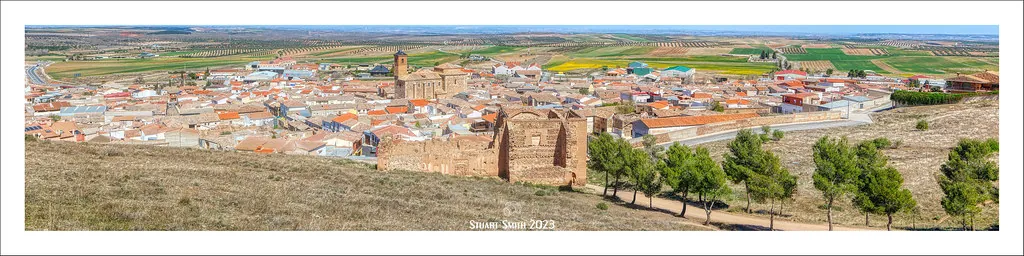
The terrain around Mora is generally gentle, with one clear exception: the hill of Peñas Negras. From the town, the outline of its ruins is easy to pick out.
The climb can be done on foot from the edge of the urban area if you enjoy walking. The path begins on the outskirts and crosses dry ground scented with thyme and rosemary. Limestone stones crunch underfoot. Depending on pace, the walk usually takes a little over an hour.
At the top are the remains of the castle: scattered walls, the base of a tower and a staircase that now ends abruptly in mid-air. This is not a restored monument but an open place where the wind blows without obstruction.
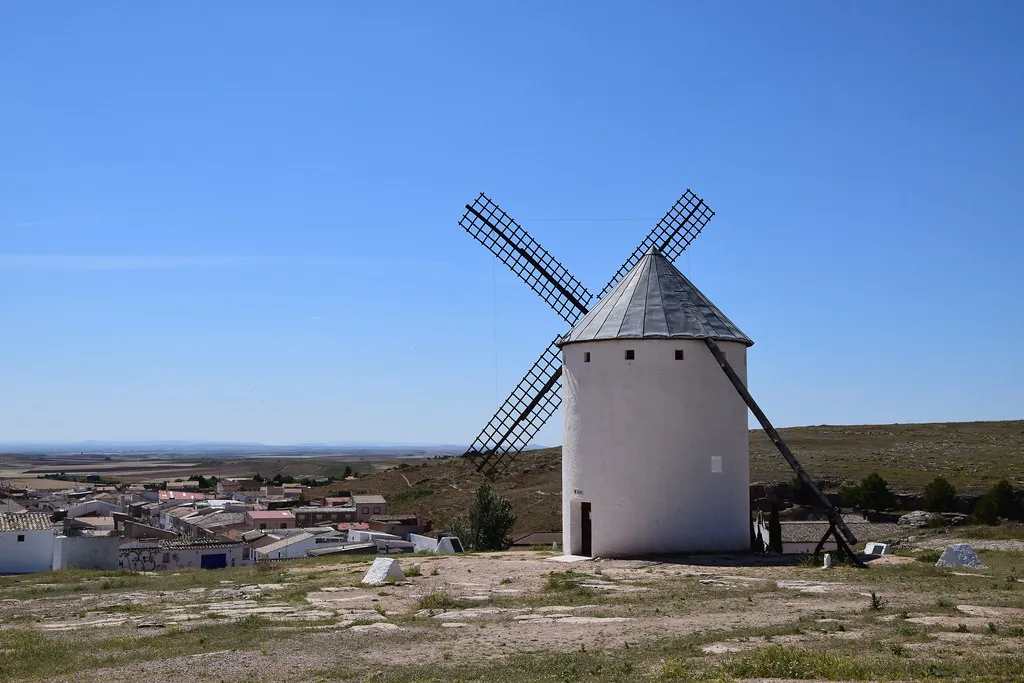
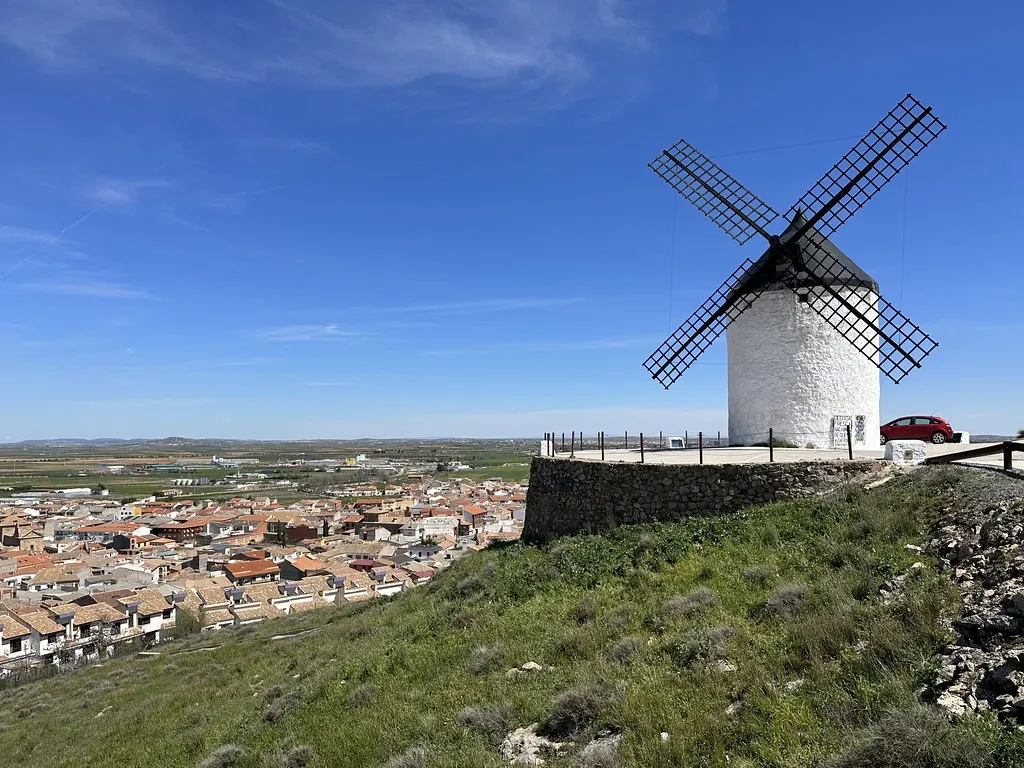
The reward is in the views. The olive groves spread in every direction like a wrinkled skin of grey-green. On clear days, the hills crowned by the windmills of Consuegra can be seen in the distance.
It is wise to avoid the central hours of summer. The ascent offers very little shade and there are no fountains along the way, so water and a hat are close to essential.
Firelight and Devotion
Mora’s festive calendar also revolves around the olive. Each spring, the well-known Fiesta del Olivo fills the streets with branches and the smell of wood-fired cooking. Local producers present their oils and tastings are organised where varieties and harvests are discussed much as wine would be.
Large metal pots are often set over open flames to prepare gazpacho manchego, a hot stew made with game meat and pieces of flatbread broken into the broth. The smoke from olive wood has a distinctive aroma that lingers in the streets.
In early autumn, the romería of the Virgen de la Antigua usually takes place, climbing in procession to the hill. From a distance, a line of people can be seen advancing along the pale track between olive trees and dust. It is both a religious act and a shared walk through the landscape that defines the town.
Supper After the Harvest
When the picking season arrives, generally between late autumn and early winter, Mora shifts into another rhythm. Tractors pass through the streets loaded with olives and, at dusk, work crews gather for hearty evening meals.
On many tables appears pisto moracho con huevo frito, a local version of the vegetable stew known across La Mancha. Here it is darker and richer in oil than the more familiar pisto manchego, and it is often topped with a fried egg. Gazpacho manchego is also served hot and eaten with a spoon, with pieces of flatbread that soften in the broth.
In winter, homemade sweets flavoured with anise or wine are common. Roscos duros, which at first seem as hard as stone and then dissolve in coffee, still turn up in many kitchens.
Timing a Visit
For anyone interested in seeing the activity of olive oil production, the harvest months, usually November and December depending on the year, are the most animated. The roads around the town fill with trailers piled high with olives and the almazaras, the oil mills, work almost without pause.
In high summer, the heat bears down heavily, particularly in the afternoon. The upper streets have little shade and the ground holds the warmth for hours. At that time of year, it makes sense to go out early in the morning or wait until the sun begins to drop.
At the end of the day, when the light turns golden and the olive trees cast long shadows across the low hills, Mora returns to a slower pace. The wind moves through the groves, the silver flicker begins again, and the connection between town and tree feels constant and close.