Full Article
about Mota del Cuervo
The Balcony of La Mancha; known for its windmills and pottery
Ocultar artículo Leer artículo completo
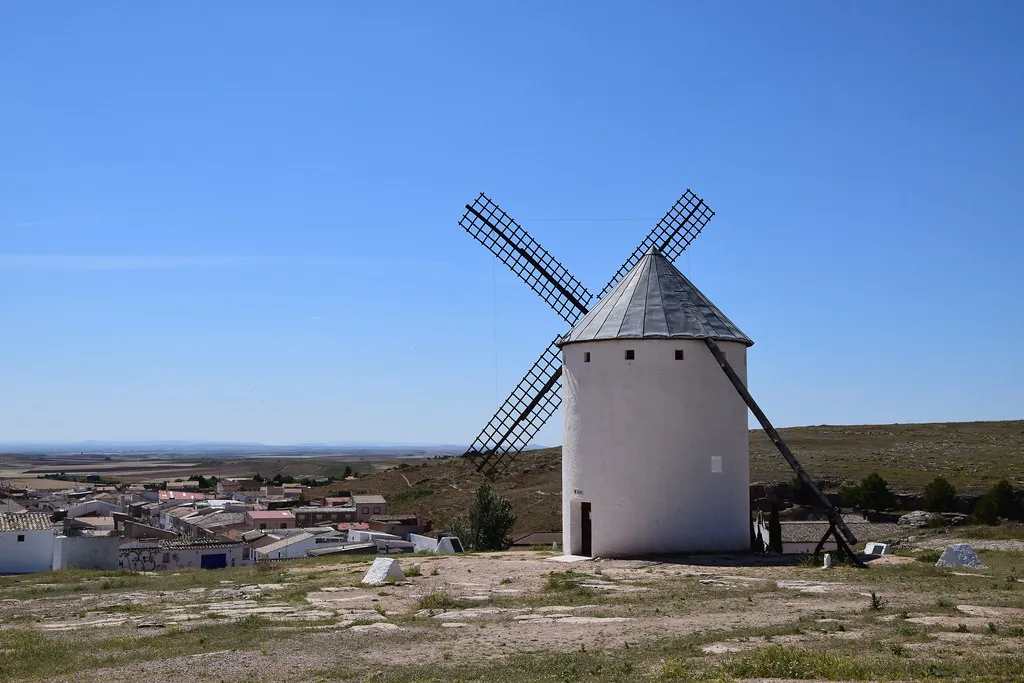
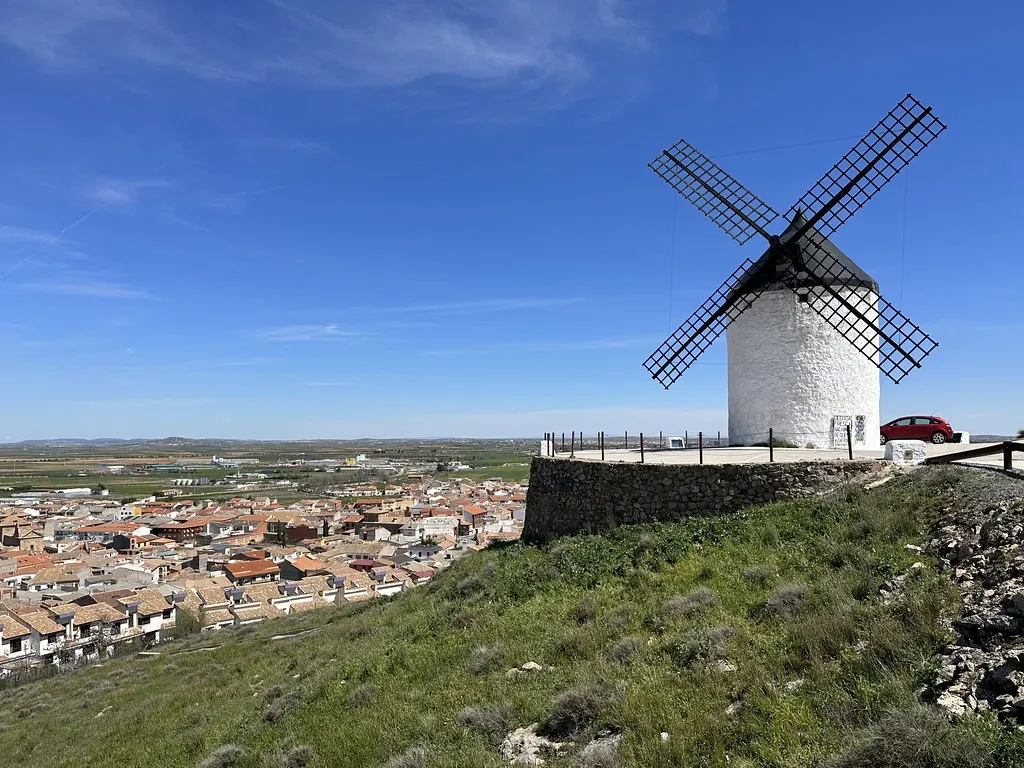
The seven windmills on Cerro Calderico turn when the poniente wind picks up, their canvas sails creaking like old floorboards. This isn't a theme-park tableau; two mills still grind grain on Saturdays, and the miller will let you heft the flour sacks while explaining why the machinery is painted Pompeii red (lead oxide keeps the termites out). From the ridge at 710 metres, the view south rolls away across vines, saffron plots and wheat so far and flat you can almost see the curve of La Mancha itself.
Giants with Names
Each mill has a nameplate—El Gigante, El Piqueras, El Cervantes—fixed above the door like a house sign in an English terrace. The circular walk that links them starts behind the cemetery where elderly locals pace out their evening paseo and British visitors usually realise they forgot a hat. There is no shade; the sun ricochets off white lime wash and pale limestone. Allow ninety minutes, plus another twenty if the flour is running and you linger inside El Bolero to watch the stones crush trigo candeal into fine, creamy semolina.
The ridge path is stroller-friendly until the final 100 metres, when a short scramble of packed earth and loose pebbles tips you onto the summit. Evening light turns the cereal stubble the colour of pale ale; photographers arrive an hour before sunset and still complain the sky is "too big" for a standard lens.
Below the Ridge
Drop into the town proper and the scale shrinks immediately. Calle San Miguel is barely two cars wide, but it delivers you to the plaza where the parish church doubles as orientation point—its tower is visible from every approach road and most kitchen windows. Inside, the Baroque retablo glitters with trompe-l'oeil drapery that looks like crimson theatre curtains carved in pine. Guides mention it was gilded with Peruvian gold shipped via Seville in the 1730s; the information sits in your mind next to the realisation that this quiet farming centre once had Atlantic trade links worth stealing from.
Opposite the church, the 16th-century Casa de la Tercia stored grain tithes in thick-walled vaulted rooms that now host temporary exhibitions. When there isn't one, the caretaker unlocks it anyway and follows you round, switching lights on and off to save electricity. Entry is free; tips go into a jar earmarked for new roof tiles.
Underground Tasting Notes
Mota's other architectural signature is less obvious. Around 300 family bodegas are tunneled into the hillside, their entrances disguised as ordinary garage doors. Many still hold the original tinajas—clay fermentation vats the size of Mini Coopers—lined up in galleries that stay a constant 14 °C winter and summer. Several owners offer tastings if you ring the day before; expect a chalky aroma of earth and a brief chemistry lesson on why the local airén grape tolerates both drought and July's 40 °C furnace. A basic visit plus three-glass flight runs €8; bring cash because the card machine is usually "left in Cuenca".
Monday Warning
Restaurants, pottery workshops and the ethnology museum pull steel shutters on Mondays. Tuesday feels like a different town: the bakery opposite the health centre sets rosquillas (lightly sweetened doughnuts) on the counter at 8 a.m., women in blue housecoats queue for pan de pueblo, and the pottery cooperative on Calle Virgen de Manjavacas fires its kiln so you can watch the hand-painting of cobalt-blue azulejos that end up in gift shops as far away as Norwich. A five-inch tile costs €6; they'll wrap it in newspaper and still fit it into a carry-on if you promise to keep it flat.
What to Eat Without Showing Off
You don't need adventurous taste buds. Lechazo—milk-fed lamb roasted in a wood-fired clay oven—tastes like a subtler version of Welsh mountain lamb, the meat so tender it barely holds onto the bone. El Chuletero serves it by the quarter (€24), enough for two if you share starters. The house red from DO La Mancha is light, almost Beaujolais in style, and €2 a glass, so you can keep refilling without Rioja prices. Vegetarians survive on pisto (pepper and aubergine stew topped with a fried egg) and gachas manchegas, a thick gram-flour porridge that predates polenta by several centuries. Pudding is usually arroz con leche dusted with cinnamon; order it even if you're full—cold leftovers make a respectable breakfast.
Getting Here, Staying Over
The railway station closed in the 1980s; the bus from Cuenca (1 hr 15 min, €5.80) runs twice daily except Sundays. A hire car is simpler: take the A-40 from Madrid, exit at Taracón, then follow the CM-310 for 19 km across plains so straight you can set cruise control and listen to three full tracks of Radio 2. Parking is free on the streets marked blue; feed the meter in the plaza only if you insist on Saturday morning shade.
Accommodation is limited to two small hotels and a handful of rural houses. Hotel San Marcos occupies a 19th-century merchant's home; rooms open onto an interior courtyard where swallows nest in the eaves and checkout is a relaxed 12 noon. Expect to pay €65–€80 B&B. During the patron-saint fiestas (week straddling 31 August) prices jump 30% and earplugs are advisable—the brass band marches past the doorway at 3 a.m. and nobody apologises.
When the Weather Picks a Side
Spring brings waist-high poppies and daytime highs of 22 °C; the wind can still knife through a denim jacket after sunset. Autumn smells of damp earth and saffron stigmas drying on café terraces. July and August are brutal: 38 °C by noon, asphalt soft underfoot, and only the most committed photographers scale the ridge. Winter is crisp, bright and often deserted; overnight frost whitens the windmill sails, but the roads stay clear because rainfall barely reaches 350 mm a year. If you want snow, drive 40 minutes south to the Cuenca mountains—Mota itself rarely sees a full covering.
A Parting Dose of Honesty
Mota del Cuervo won't keep adrenaline addicts busy for a week. Evenings are quiet, and night-life consists of one cocktail bar that shuts at half past eleven unless the owner's mother is babysitting. What the town does offer is a slice of functioning rural Spain where windmills grind flour, locals debate the saffron price over cañas and nobody feels compelled to romanticise the past. Turn up with comfortable shoes, a sense of chronological elasticity (shops reopen when they reopen) and enough Spanish to say "otro cortado, por favor". You'll leave with flour on your trainers, saffron threads in your pocket and a photograph that proves Don Quixote's giants are still very much alive—just a bit smaller than expected.