Full Article
about Paredes
Small farming town with simple charm; stone and adobe houses
Hide article Read full article
A Slow Morning in the Mancha Conquense
At eight in the morning, the air in Paredes still holds the dampness of the night. A cockerel breaks the silence from a nearby yard and, if the day is calm, the wind can be heard brushing through the wheat fields that surround the village. Light filters slowly through half-closed shutters, casting ochre and muted green tones across the landscape. Tourism in Paredes begins like this: unhurried, with the village waking very gradually.
Paredes lies in the Mancha conquense, the part of La Mancha that belongs to the province of Cuenca. It is a very small hamlet, home to just over fifty residents. Some streets are paved, others retain their longstanding rural feel, and the houses, built from stone or adobe, give the impression of a place that continues at its own steady rhythm, with no great changes in sight. There are no famous monuments or packed schedules of activities here. What there is instead comes down to small details: a wooden door that creaks, flowerpots lined up along a windowsill, a brief conversation in the middle of the street.
This is not a destination for headline attractions. It is a place defined by atmosphere and by the everyday.
The Parish Church and Vernacular Architecture
The parish church stands at the centre, with the understated presence typical of many villages in this part of Cuenca. Built using materials from the surrounding area, it keeps a simple outline: a pale façade, a small bell tower and an atrium where neighbours sometimes stop to talk as evening falls.
Walking through the village reveals familiar features of traditional Manchegan architecture. There are iron window grilles, wide gates once designed for carts, and interior courtyards where tools or firewood are still stored. It is not a monumental ensemble, yet it reflects clearly how life has been lived here for generations.
The overall impression is one of continuity. Buildings serve practical purposes. Spaces are shaped by agricultural routines. Even the layout of the streets feels tied to the needs of a farming community rather than to passing visitors.
Open Fields on Every Side
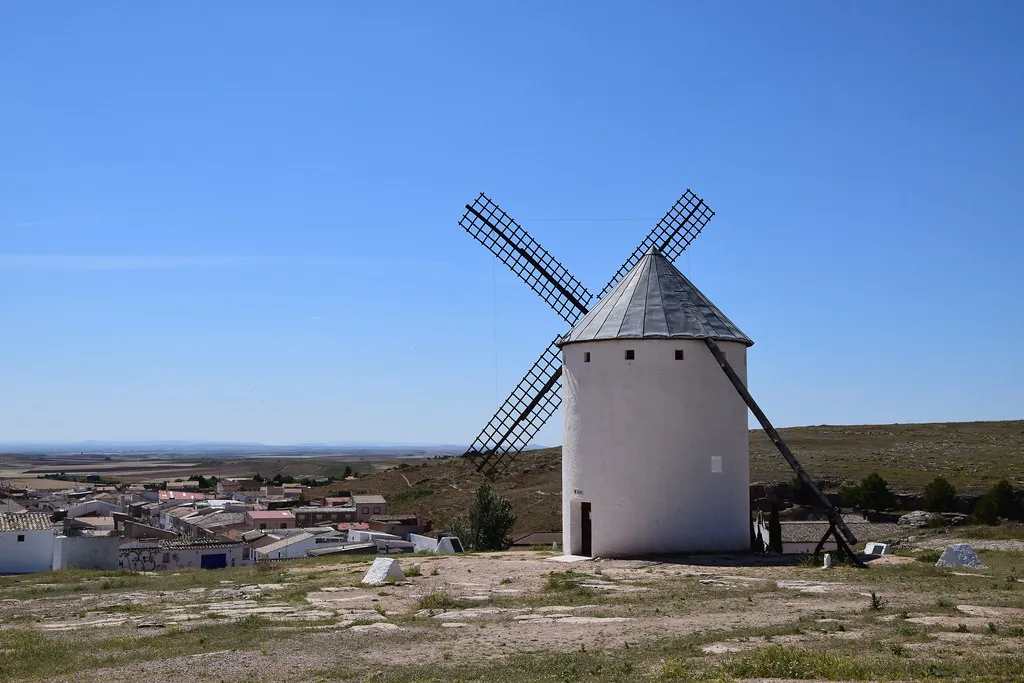
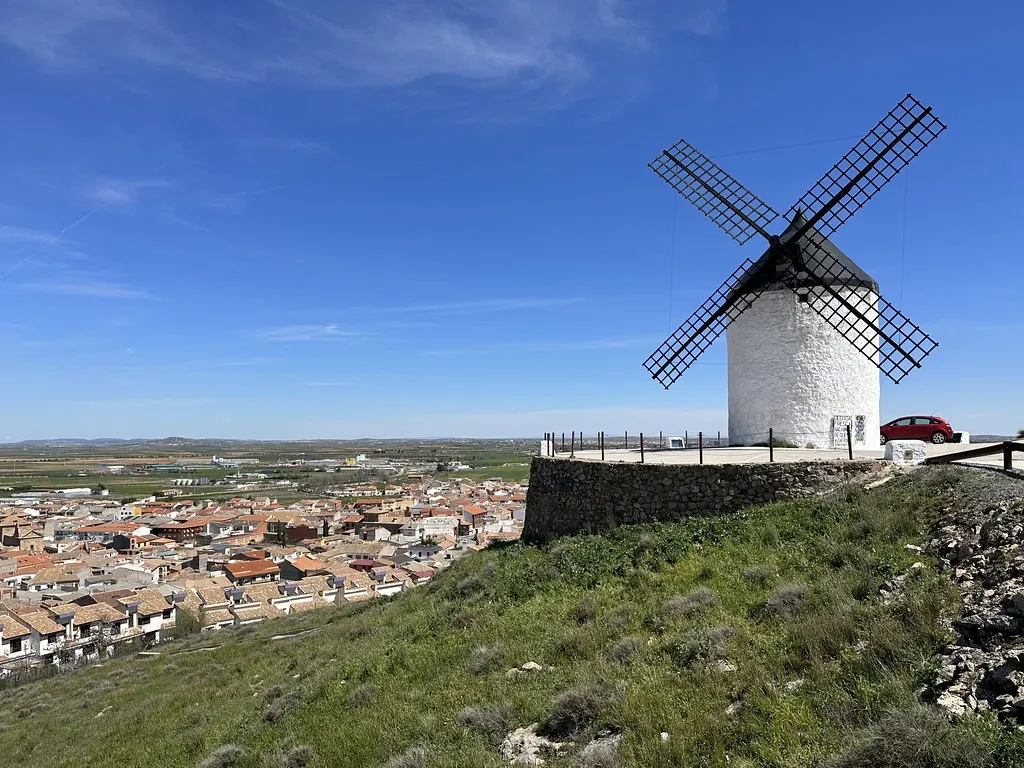
Step beyond the last cluster of houses and the countryside begins almost immediately. The landscape is typical of much of inland La Mancha: broad cereal fields, a few gentle rises in the terrain and agricultural tracks stretching straight towards the horizon.
In spring, green dominates. The wind moves through the ears of grain like a rippling surface. By late June or July, when the harvest arrives, the colour shifts to a dry gold that reflects the light intensely. In autumn, tones become more subdued and the land lies almost bare.
Several tracks lead out from the village, making it possible to walk for a while without meeting anyone at all. These are not marked hiking routes, so it is sensible to keep an eye on direction and, if heading further afield, to carry water and check the route in advance. The terrain is open and the distances can feel longer than they first appear.
With patience, birds of prey can sometimes be seen circling above the fields. In wetter years, some residents head out to look for mushrooms, although this is usually done with local knowledge of both the land and the species that grow there.
The defining feature of the surroundings is space. The horizon sits far off, and the dominant sound is often the wind moving through the cereal crops.
Food and Practicalities
Paredes is so small that it does not have dedicated tourist services. If spending the day here, the usual approach is to bring something to eat or to stop in a larger nearby town beforehand.
The cuisine of the wider comarca remains rooted in tradition. Mature cheeses, olive oil and hearty stews in the colder months form part of the local food culture. These are flavours closely linked to the countryside and to the traditional pantry of La Mancha. It is straightforward, sustaining cooking shaped by the climate and by agricultural life.
Visitors should plan with the village’s scale in mind. There is little infrastructure aimed at tourism, which is part of what preserves its quiet character.
Festive Moments and the Rhythm of the Year
Summer brings a little more movement to Paredes, as relatives who live elsewhere return for the holidays. At that time the feast of the patron saint is celebrated with simple events: mass, music in the evening and tables set out in the street if the weather allows.
For the rest of the year, life remains calm. Semana Santa, or Holy Week, is observed in a discreet way, more among neighbours than as an outward-facing celebration. The village calendar follows a familiar rural pattern, with seasonal changes felt more in the fields than in organised events.
The contrast between summer and the quieter months highlights how closely population and activity are linked. When families gather, the streets fill a little. Once they leave, daily life returns to its steady pace.
Getting There and Choosing the Moment
Reaching Paredes usually means driving along regional roads that run between cereal fields and small, scattered settlements. Public transport in this area is limited, so most visitors arrive by car and park without difficulty at the entrance to the village.
Spring and early autumn are often the most pleasant times to walk along the surrounding tracks. In summer, the sun becomes strong from midday onwards, making early morning or late afternoon more comfortable for time outdoors. In winter, the wind sweeping across the plain can feel cold and dry, so a jacket is useful even when the sky looks clear.
Paredes is not somewhere to seek out major attractions. It is a small point in the middle of the Manchegan plain, where distances stretch and the landscape dictates the rhythm of the day. Arrive early, when the village is still half in silence, and the way of life here becomes easier to understand.