Full Article
about Pedro Muñoz
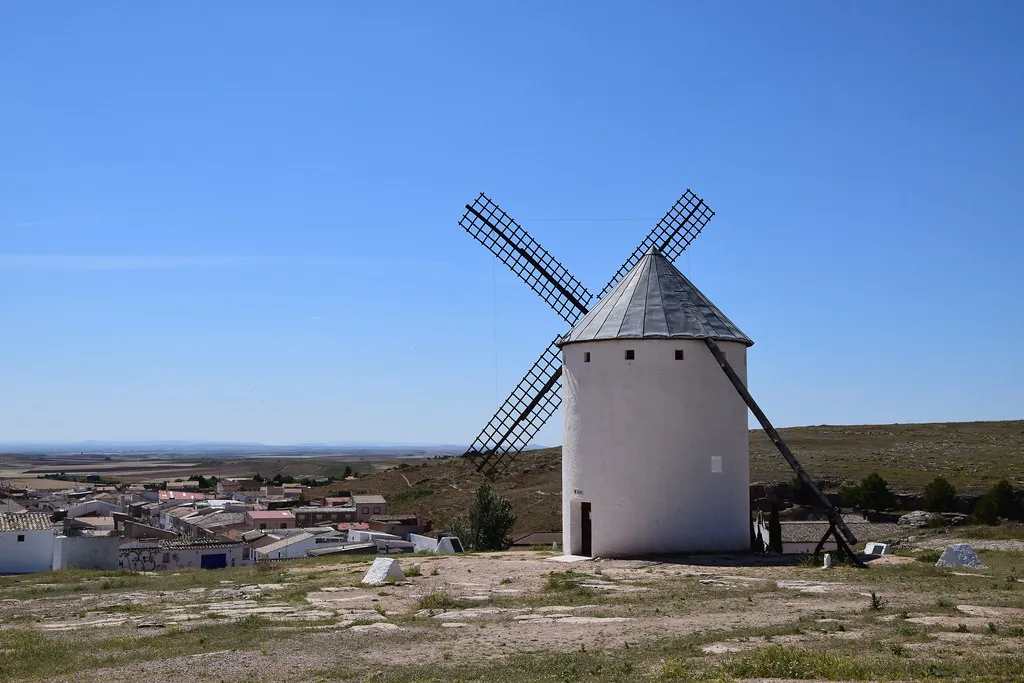
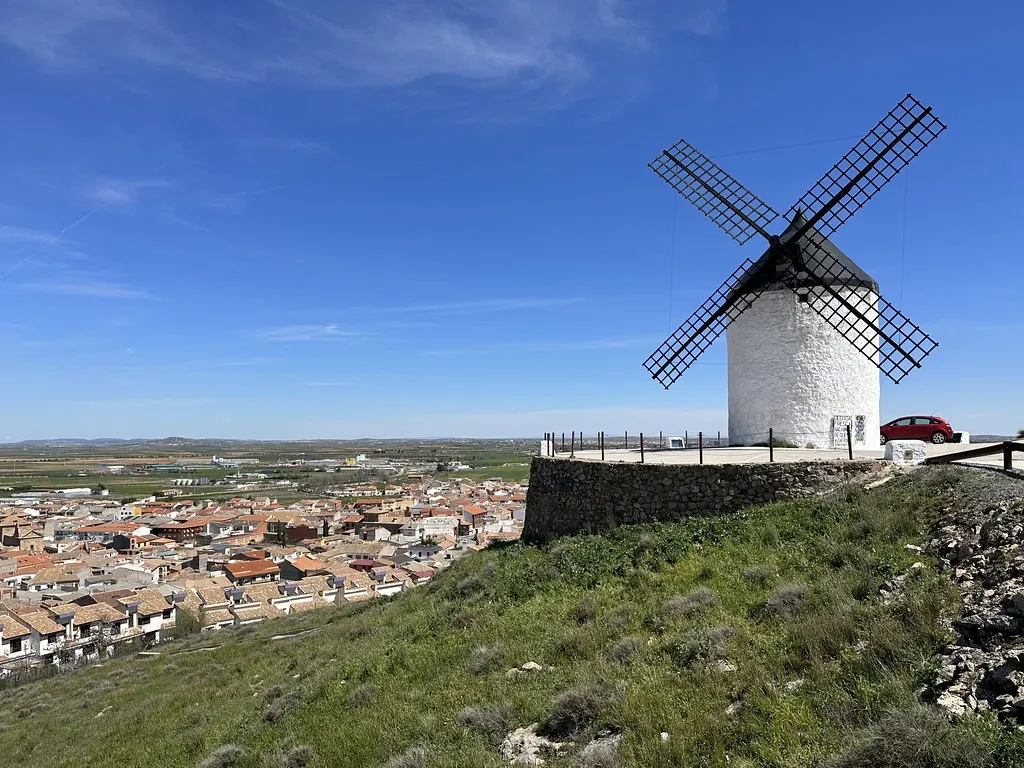
A Manchegan town known for its Fiesta del Mayo Manchego; it has a lagoon complex of great ecological interest and wineries.
Ocultar artículo Leer artículo completo
The Plain Truth
At 656 metres above sea level, Pedro Muñoz sits high enough for the air to carry a proper chill at dawn, even in July. The cereal fields stretch so flat and far that the horizon seems curved, and the sky overhead feels disproportionately large—like standing in the middle of a dinner plate. This is the geographical heart of La Mancha, 140 kilometres south-east of Madrid, where Spain grows half its wheat and most of its saffron. The village itself houses 7,480 people, a number that swells briefly during harvest and again for the fiestas, then settles back to a quiet hum.
There is no dramatic gorge, no cliff-hanging castle, no turquoise cove to frame the postcards. Instead, the drama is in the colour wheel of the fields: luminous green after winter rain, ochre stubble in late summer, then the brief, almost violent purple of the saffron crocus in October. Vineyards occupy every patch of ground that wheat dislikes; the rows run ruler-straight, the vines head-high, so you can look a long way down the line before perspective squeezes them together.
A Plaza That Still Works
Spanish planners love to talk about "equipamiento"—the kit that keeps a place alive. Pedro Muñoz has the basics and nothing spare: a health centre, two pharmacies, a primary school, a secondary school, and a municipal pool that costs €2 to enter. The Plaza de España, broad and tree-shaded, functions as open-air living room. Metal benches are positioned so the elderly can watch children chase pigeons; the 1960s stone fountain provides just enough splash to drown the traffic on the CV-31 that skirts the square. Between 11 a.m. and 1 p.m. the bars set out small tables under umbrellas; by 7 p.m. the same tables turn into vermouth stations. Order a caña and you will be brought a saucer of olives, then another, without asking.
The parish church of San Pedro Apóstol keeps one eye on the plaza. Its tower is square, plain, and slightly off-vertical—earthquakes in 1755 and 1910 knocked it askew, then locals decided it had character and left it that way. Inside, the nave is cool even at midday, the stone floor scooped into shallow bowls by centuries of foot traffic. Sunday Mass at 11:30 is still sung by a volunteer choir whose sopranos can hit the high C in "Salve Regina" even after a late Saturday night.
Wine Before Water
Drive five minutes in any direction and you meet a bodega. Some are stainless-steel cathedrals owned by Madrid corporations; others are family sheds where the grandfather checks the tanks with a torch and a wooden spoon. The DO La Mancha rules allow anything from crisp Airén whites to Tempranillo reds that taste of blackberry and dust. Most places will open bottles if you phone the day before; the standard charge is €5-8 for three wines, deductible if you buy. Bodega Los Lunnos (Calle Real 32) keeps a 1946 concrete tank in working order—ask nicely and they will climb the ladder so you can smell the interior, still faintly yeasty after 78 vintages.
September is the month to watch. Tractors towing trailers of grapes queue on the main road, hazard lights blinking; the air carries a sweet-sour whiff of crushed fruit that makes you thirsty and hungry at the same time. During the Fiesta de la Vendimia (third weekend) the town stages a grape-stomping contest in a plastic paddling pool; competitors are judged on speed, cleanliness, and how long they can keep laughing. First prize is a litre of last year's mosto—half wine, half grape juice, entirely drinkable.
Flat Roads, Big Sky
Cycling here is almost comically easy: the only hills are flyovers. A 20-kilometre loop east to El Toboso follows the old railway line, now a gravel track wide enough for two tractors. You pass an abandoned water tower painted with the Spanish flag, then mile after mile of vines. At km 12 the track crosses the A-4 motorway on a 1930s iron bridge; stand in the middle and you can watch lorries thunder underneath while skylarks sing overhead—two centuries of transport in one glance. Summer starts early: by 10 a.m. the temperature can touch 34 °C, so riders set off at dawn and finish in time for breakfast churros.
Walkers have fewer choices but better surprises. Head south from the cemetery along the irrigation canal; after 30 minutes the wheat gives way to a reedy wetland where herons fish among the drainage ditches. Local farmers created the laguna by accident—years of seepage from over-watering—and now it is a recognised bird reserve. Bring binoculars in March and you will see avocets, black-winged stilts, and the occasional glossy ibis that has taken a wrong turn out of Doñana.
What to Eat, When to Eat
Breakfast: tostada (€1.20) at Cafetería California on Avenida de la Constitución. They use yesterday's baguette, so the centre stays chewy while the edges blister under the grill. Lunch: Mesón La Mancha (Calle Granero 6) does a €12 menú del día—garlic soup, pisto manchego (the Spanish ratatouille), then a slab of confit cod. Dinner: you are on your own; most kitchens close at 5 p.m. and reopen only for tapas at 9. Try the morteruelo, a pâté of wild boar and liver so dense it can be sliced cold; spread it on warm bread and drink a glass of local red. Vegetarians survive on tortilla and the excellent tinned white asparagus that arrives from nearby Navarre.
Where to Sleep (and Why You Might Not)
The Juan Carlos I hotel has 32 rooms overlooking the municipal park. It is spotless, slightly dated, and staffed by people who remember your name after one night. Doubles run €55-65 including garage parking—useful because the streets are narrow and locals park by ear. The alternative is a casa rural in the surrounding fields; most sleep six, so they only make economic sense for groups. Whoever chose the village name failed to consider search engines: "Pedro Muñoz" returns 1.2 million Spanishmen, plus a Colombian singer. Book early and confirm coordinates or you may end up 200 kilometres away.
The Catch
Pedro Muñoz is not photogenic. The architecture is sturdy rather than pretty, and the 1970s left its mark in the form of orange-brick apartment blocks. August tops 40 °C; January can dip below –5 °C and the mist lingers until noon. Public transport is patchy: two buses a day to Madrid (2 h 15 min, €13.50), one to Ciudad Real, none on Sunday afternoons. Without a car you are effectively marooned.
Last Orders
Come if you want to see how Spain feeds itself, how wine is still made by people whose thumbs are permanently purple, how a plaza can host both Communion parties and political arguments without changing the furniture. Stay one night, maybe two. Move on before the horizon starts to feel like a wall.