Full Article
about Pozorrubio de Santiago
Santiago Order village with historic well; La Mancha-style architecture
Hide article Read full article
A village that moves at its own pace
There are days when you set off in the car without much of a plan and end up somewhere that seems to run two gears slower than the rest of the world. That is more or less what happens in Pozorrubio de Santiago. It sits in the La Mancha area of the province of Cuenca, and on arrival the feeling is immediate: life here follows a rhythm that has barely shifted in decades.
There are no headline attractions and no queues forming outside anything in particular. Just a handful of streets, open countryside all around and a noticeable amount of silence.
Pozorrubio is not the kind of place to visit with a checklist of monuments. It is better understood as a village to wander through almost without thinking about it. Stone masonry houses line the streets, their whitewashed façades broken by solid wooden gates and the occasional inner courtyard glimpsed through half-open doors. In half an hour you will have walked its streets. That, however, is not really the point.
Santiago Apóstol at the heart of the village
As in many villages across La Mancha, everything here revolves around the parish church. In Pozorrubio it is dedicated to Santiago Apóstol, Saint James the Apostle, and it occupies the centre of the village both physically and socially.
It is not a monumental church, nor a building that would justify a long detour on its own. Instead it fits the place perfectly: sober, functional and well kept. Its presence anchors the surrounding streets, giving structure to daily life in a way that feels natural rather than staged.
If it happens to be open, it is worth stepping inside for a moment. The interest lies less in specific artistic features and more in the sense of continuity. This is the sort of building where generations have gathered for baptisms, farewells and annual festivities. Even without knowing anyone locally, that lived-in atmosphere is easy to recognise.
The plains around Pozorrubio: La Mancha at its calmest
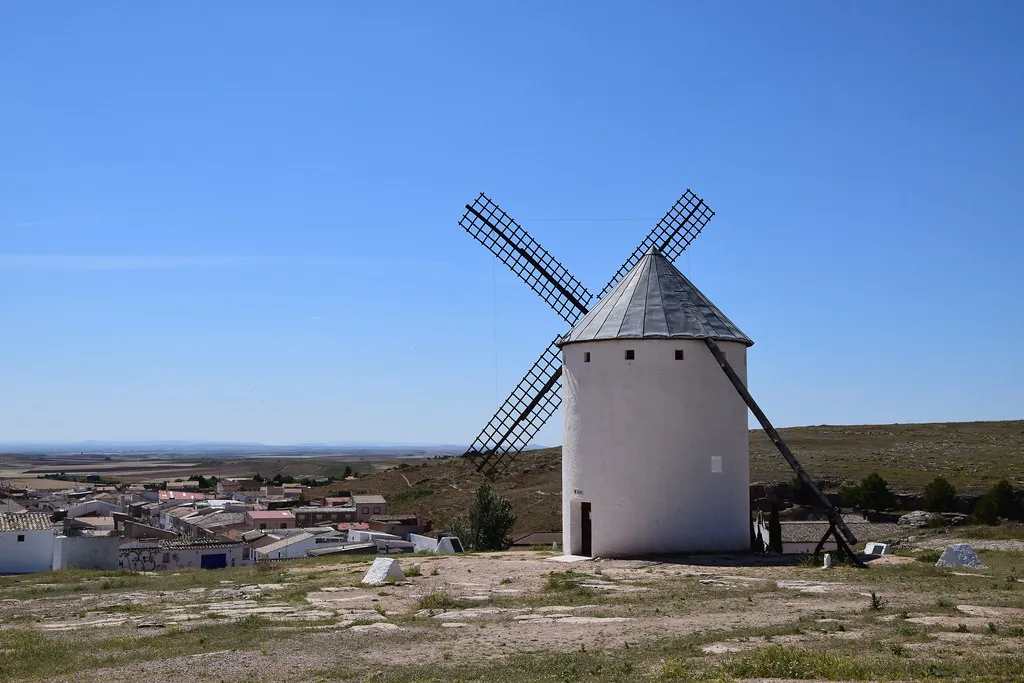
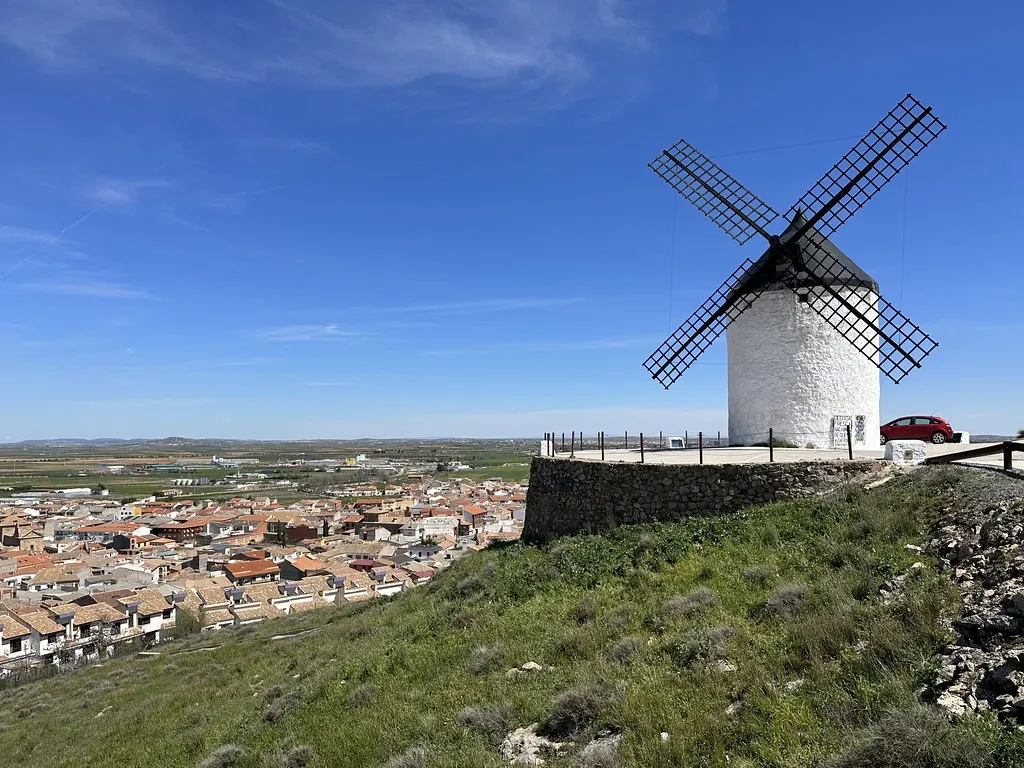
Beyond the last houses, the landscape takes over. Around Pozorrubio de Santiago the dominant feature is open countryside. This is La Mancha in its most unadorned form: broad cereal fields, large plots of farmland and the occasional solitary tree interrupting the horizon.
Anyone who has driven through this part of Cuenca will recognise the scene. Long, straight roads stretch ahead beneath an enormous sky. The terrain is flat, the views uninterrupted, and the sense of space constant.
Early in the morning or towards sunset the fields shift in character. Lower light turns the landscape into a mix of ochres and greens. It is not dramatic in a theatrical way, but it can be quietly absorbing. This is the sort of place where you stop for a moment, look around and notice how little noise there is.
That stillness is part of the appeal. There is no grand viewpoint or marked scenic stop. Just the plain, the sky and the feeling that time has slowed down a fraction.
Straightforward walks through working farmland
For those who feel like stretching their legs, there is no need to look for signposted trails. Simply follow any of the agricultural tracks that lead out from the village. These paths have connected farms and fields for decades, possibly longer. Today they double as traffic-free routes for walking or cycling.
The terrain is completely flat, so there is no mountaineering drama to be found here. What you gain instead is ease. You can walk without watching every step, without checking a map, without worrying about steep climbs. It is simple countryside walking.
In summer the sun can be intense, as it often is in La Mancha. Heading out early in the day or closer to sunset makes the experience far more comfortable.
Moving at an unhurried pace, it is common to spot wildlife. A partridge may dart across the track, hares can be seen sprinting away through the fields and birds of prey circle above the crops. Harriers are frequently visible in this area, gliding low over the farmland in search of movement.
There is no interpretation centre, no information boards explaining what you are seeing. It is farmland first and foremost. The fact that it is accessible on foot is simply a by-product of how the land has always been used.
Food shaped by the countryside
In small villages across La Mancha, cooking remains closely tied to agriculture and hunting, and Pozorrubio de Santiago is no exception. During family gatherings or local celebrations, it is common for dishes such as migas to appear on the table. Migas, traditionally made from breadcrumbs fried with garlic and other simple ingredients, are rooted in rural cooking.
Hearty stews and caldereta de cordero, a lamb stew prepared for sharing, are also part of the repertoire. When hunting season arrives, partridge or rabbit often feature in recipes that have been passed down from one household to another.
This is not about culinary trends or modern gastronomy. Food here is still primarily an excuse to gather around a table and extend the sobremesa, the long, unhurried conversation that follows a meal in Spain. The social aspect matters as much as what is served.
Festivities that still shape the year
The main celebration in the village is dedicated to Santiago Apóstol, around 25 July. That is when Pozorrubio sees its busiest days. Processions move through the streets, music fills the centre and neighbours who live elsewhere for most of the year return for the occasion.
In September, festivities in honour of the Cristo take place. These include religious events and gatherings for the community. They do not tend to attract large numbers of visitors from outside, but they bring a noticeable lift in activity and atmosphere for several days.
Winter has its own traditions. In private homes, some families continue the long-standing custom of the pig slaughter, an event that historically supplied meat for the year ahead. Celebrations linked to San Antón, associated in many parts of Spain with animals and rural life, also remain part of the social calendar. These occasions are not performances for outsiders. They are simply how the year has long been structured.
Is it worth the detour?
The most honest answer is this: Pozorrubio de Santiago is not a destination for ticking off sights. It is a quiet pause if you are travelling through this part of La Mancha and feel like pulling over, taking a short walk and looking at the landscape without rushing.
A little time in the village, a wander along the farm tracks and then back on the road. Sometimes that is more than enough.