Full Article
about Puebla de Almenara
Dominated by the imposing Castillo de Almenara; a town of history and legend
Hide article Read full article
A Hilltop in the Mancha Countryside
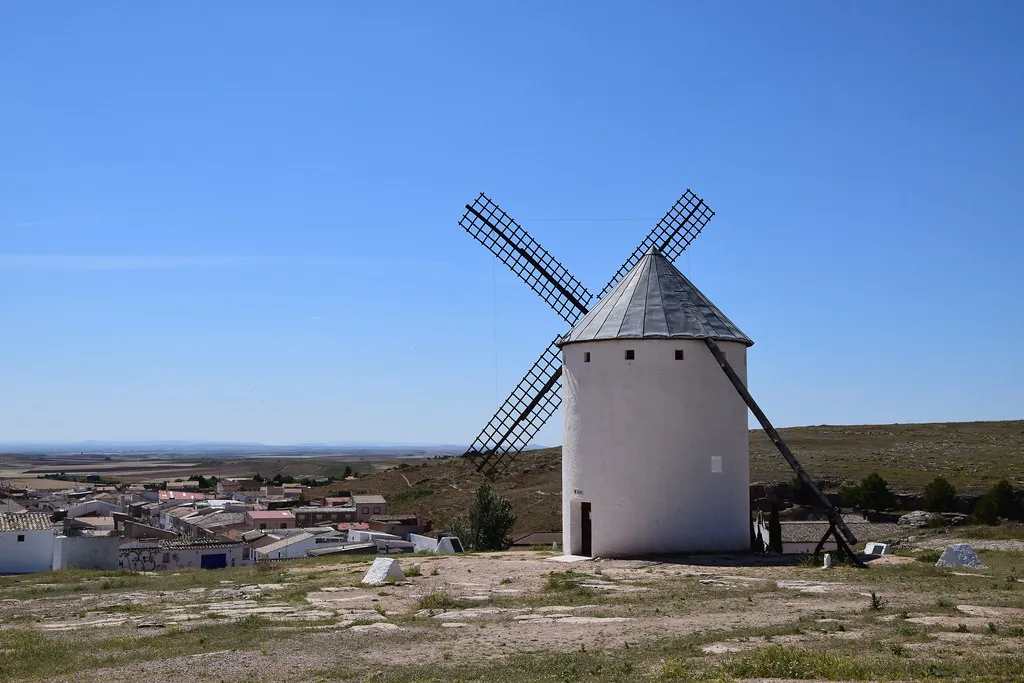
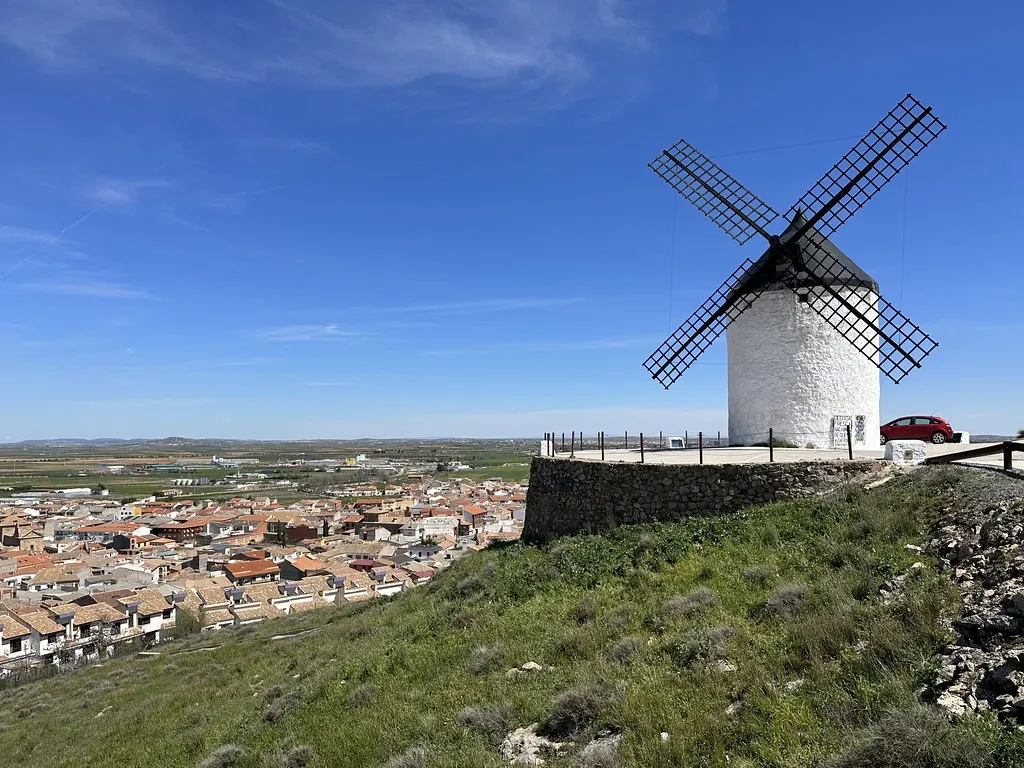
In the Mancha region of the province of Cuenca, Puebla de Almenara stands on a gentle rise surrounded by farmland. At around 850 metres above sea level, the village looks out across open horizons that seem to stretch in every direction. Here, the landscape carries more weight than any single monument.
Puebla de Almenara is small and agricultural in character. The main streets cut through a compact cluster of houses, many of them whitewashed, with wrought-iron window grilles facing the road. Behind these simple façades, interior courtyards often lie hidden from view. From the outside, the village appears closed in on itself. Step inside a gateway and the space opens up.
The centre revolves around the church of San Pedro Apóstol. The current building appears to date from the 16th century, with later alterations, possibly in the 18th. It is not a large church, yet it organises the space around it. The tower acts as a reference point when moving through the surrounding streets, visible above the roofs and guiding the way back to the square.
Today, Puebla de Almenara has around three hundred inhabitants, slightly fewer according to the most recent counts. Daily life remains closely tied to the land. That connection shapes both the rhythm of the year and the appearance of the landscape.
Fields, Tracks and Big Skies
Around the village, broad plains extend in soft undulations. Cereals dominate, along with some legumes. The colours shift noticeably with the seasons. In spring, green covers the fields. By summer, the tones turn golden as the grain ripens. Autumn brings freshly ploughed plots, darker against the light.
Several rural tracks cross these fields. They are simple agricultural paths rather than developed walking routes, yet they can be followed on foot or by bicycle without special infrastructure. Now and then, small irrigation channels or seasonal streams appear. For much of the year they are dry, but they trace subtle lines across the terrain and hint at how water moves through the land.
These plains form part of the habitat of various steppe birds. During migration periods, species such as the ganga ortega, a type of sandgrouse, and the aguilucho cenizo, the Montagu’s harrier, are sometimes seen. Observation is best done at a distance, without disturbing them. The openness of the landscape also makes the sky a constant presence.
At night, that sense of openness deepens. Public lighting in the village is limited, and on clear evenings the stars are easily visible. The darkness is not staged or organised for visitors. It is simply a by-product of rural life with little artificial light.
A Village Without Spectacle
Tourism in Puebla de Almenara is quiet and largely unstructured. There are no large visitor facilities or organised circuits. The interest lies elsewhere, in walking slowly and paying attention to small details.
Near the church, old wooden gates still survive, some with hand-worked iron grilles. These elements are not presented as attractions, yet they speak of continuity in building styles and local craft. The streets are straightforward, functional, shaped more by daily use than by any attempt to impress.
The village is not defined by a single landmark. Instead, it offers a chance to observe how a small Manchego settlement functions. That means noticing the pace of agricultural work, the way houses cluster together, and how the square becomes the natural meeting point.
Paths lead out towards nearby villages such as La Almarcha and Villarejo de la Peñuela, both roughly ten kilometres away. For long stretches, the terrain is flat. At times, small rises interrupt the line of the horizon. Secondary roads also make these journeys possible by bicycle. The distances are modest, but the scale of the landscape makes them feel expansive.
Agriculture and the Local Table
The local economy remains closely linked to farming and to small-scale producers in the surrounding area. In the wider region, the production of queso manchego and wine with denominación de origen status is common. Many of these operations work on a small scale, reflecting the rural character of the area rather than industrial output.
Food follows the climate and the demands of field work. Traditional dishes such as gachas, morteruelo and asadillo are still present. Gachas is a thick, savoury preparation often associated with rural cooking. Morteruelo, typical of the province of Cuenca, is a rich pâté-like dish made with meat. Asadillo usually combines roasted peppers and tomato. These are simple, substantial recipes, designed to sustain rather than to decorate the table.
The matanza del cerdo, the traditional pig slaughter, is usually held in November. From it come cured meats that form part of household consumption. In autumn and winter, stews made with small game also appear. The cuisine reflects the agricultural calendar and the colder months of the interior plateau.
Festivities in the Square
The main festivities revolve around San Pedro Apóstol, traditionally celebrated in June. During those days, the square becomes the focus of village life. Activity concentrates around the church and the surrounding streets, reinforcing the role the building plays throughout the year.
Semana Santa, Holy Week, also maintains a presence in the local calendar. Processions move through the main streets, marking the religious season in a setting where distances are short and participation is visible.
Puebla de Almenara is not a place to visit for a single monument or headline sight. Its appeal lies in understanding how a small village in La Mancha continues to function. That understanding comes from stepping onto the rural tracks, observing the rhythm of the fields and walking the streets without hurry.