Full Article
about Puerto Lápice
Historic natural pass mentioned in *Don Quixote*; known for its La Mancha main square with wooden arcades and old inns.
Hide article Read full article
A village shaped by light and horizon
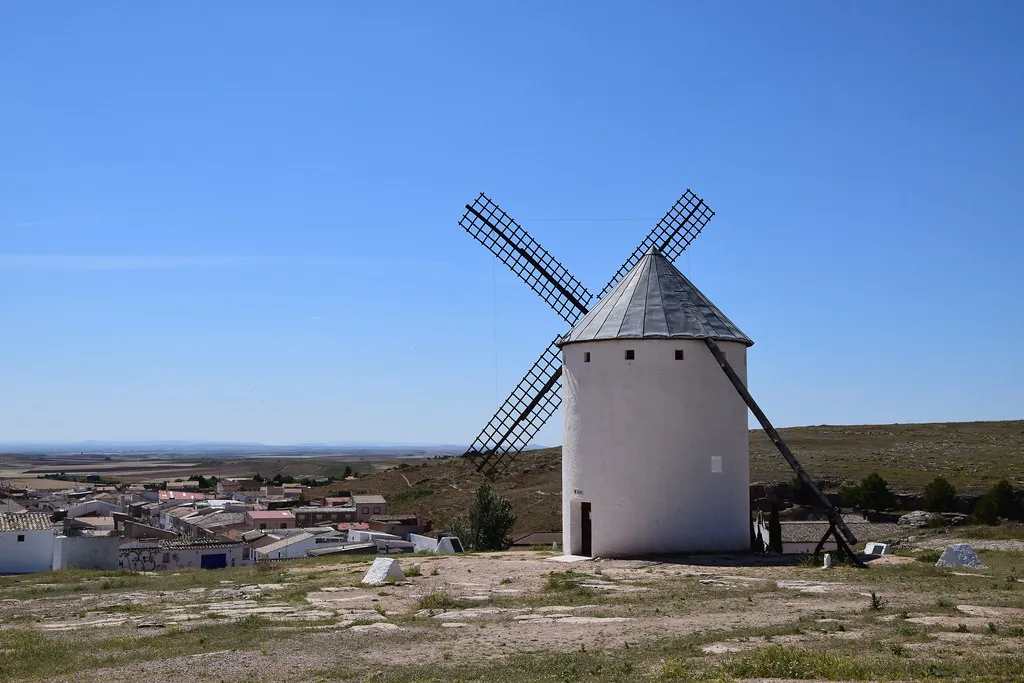
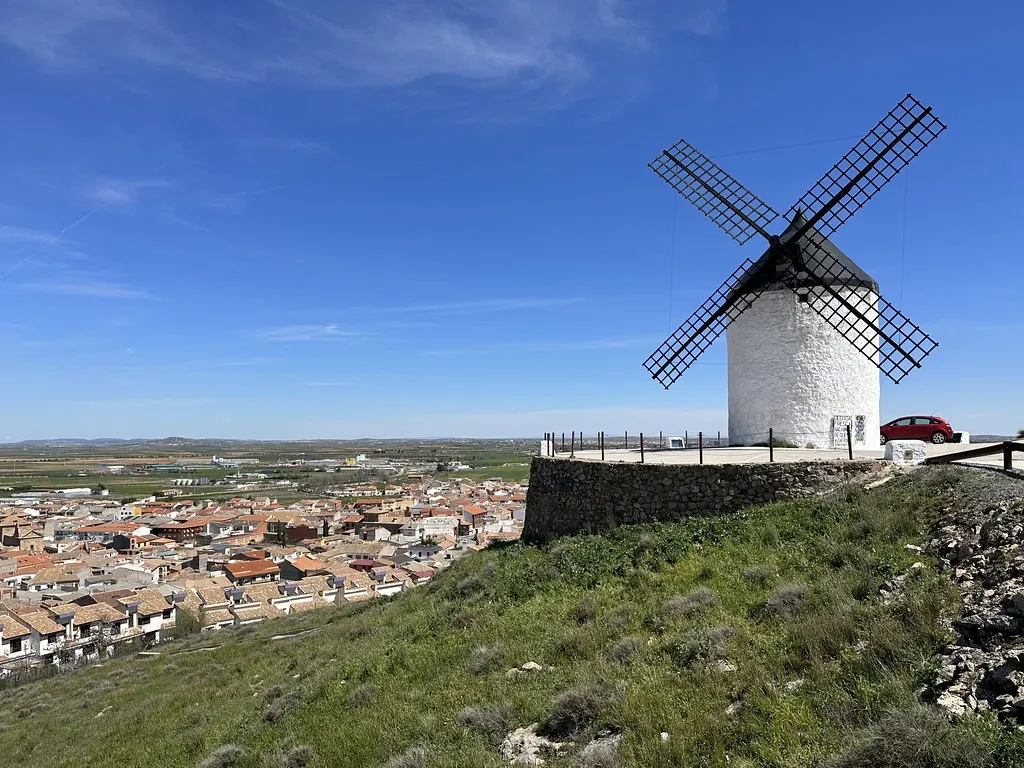
By late afternoon, when the sun drops low across the plains of La Mancha, the air in Puerto Lápice turns dry and golden. The road approaches through open fields where wheat, when tall, moves like a single shifting surface. The village appears suddenly: low whitewashed houses, reddish roofs and a broad silence typical of places where nothing interrupts the horizon.
Puerto Lápice sits at around 680 metres above sea level, in the province of Ciudad Real, at the heart of La Mancha. Its connection with Don Quijote is very present, especially around the old venta, or roadside inn, linked to the story. Even so, walking through the streets feels grounded in something simpler: the everyday life of a small village, tractors crossing the main road and the square acting as a natural meeting point.
As you move through the streets, familiar details appear, shared with many villages in this part of La Mancha. White façades reflect the light strongly, dark wooden windows contrast against the walls, and interior courtyards remain mostly hidden behind tall gates. The square tends to be busiest early in the morning and again towards evening. For the rest of the day, the pace slows right down.
The venta and its Quijote connection
The best-known building in Puerto Lápice is the traditional venta associated with the episode in which Don Quijote is dubbed a knight. Its origins are usually placed in the 16th century, and it retains the typical structure of these inns: a large central courtyard, thick walls and galleries running around the sides. Today the building has been restored and displays objects linked to rural life in La Mancha and to the Cervantes tradition.
While the connection to the novel forms part of the local identity, the building’s appeal also lies in its architecture. In the courtyard, when the heat builds, the air settles and stays cool near the stone walls. It is easy to picture the movement of travellers and animals from a time when this route served as an important link between Madrid and Andalucía.
A short walk away stands the church of Nuestra Señora de Belén. It is a sober building, with a tower visible from several points in the village. Inside, the decoration is simple. Some altarpieces and features reflect changes made over time rather than a single defined style.
Streets, tracks and the open plain
Puerto Lápice makes more sense when seen in relation to its surroundings. The land is almost entirely flat, with cereal fields dominating the landscape. In spring, the colours shift completely: strong greens, small flowers along the edges of paths, and damp earth after rainfall. By July and August, yellow takes over as the wheat dries, and the hot air lifts dust along the tracks.
One of the routes associated with the Ruta de Don Quijote passes through here. This network of paths, inspired by locations linked to the novel, can be explored on foot or by bicycle along agricultural tracks. They are usually in good condition, although after periods of rain some sections become clay-heavy and harder to cross. In summer, the central hours of the day are best avoided, as shade is scarce and the sun falls directly for long stretches.
Within the village, wandering without a set plan works well. You come across houses with old coats of arms, stone entrances and interior yards that hint at its past as a stopping place for merchants and travellers.
Food rooted in the land
Local cooking follows the classic patterns of La Mancha: filling dishes designed for long days working outdoors. Gachas, made with almorta flour, migas, pisto prepared with very ripe tomatoes, and roast lamb are all common in the area. Manchego cheese and wine from nearby vineyards also feature regularly.
In winter, these dishes are particularly welcome. During the summer, meals tend to become lighter, and many residents adjust both eating habits and daily routines to the intense heat around midday.
Festive moments and the passing year
The fiestas dedicated to the Virgen de Belén are traditionally held in September. This is when the rhythm of Puerto Lápice changes most noticeably. Streets fill with music, processions take place, and many people return to the village for these days even if they live elsewhere.
In April, activities linked to Cervantes and Don Quijote are usually organised. These are not large-scale events, but rather cultural gatherings and local acts that reflect the village’s connection to the novel.
For a slower, more comfortable visit, spring tends to be the most appealing time. Temperatures are milder, the fields turn green and the wind carries the smell of freshly worked soil. In contrast, August heat can empty the streets from midday onwards. Summer life here shifts to the early morning and the hours when the sun begins to drop again.