Full Article
about Quintanar de la Orden
Key commercial and industrial town in La Mancha; rich religious and civil heritage
Hide article Read full article
A town shaped by the road
At the eastern edge of the province of Toledo, Quintanar de la Orden sits on what was once an important route across La Mancha. Paths linking Toledo with the south-east passed close by, and that steady movement of people and goods helps explain the town’s present scale. It also clarifies its historical role within the surrounding area.
That sense of continuity still appears in everyday life. The carnival remains one of the most visible events in the local calendar. February tends to be cold and dry here, yet the comparsas, carnival groups, take to the streets every year regardless. Floats move through streets with irregular layouts, lined by brick façades that reflect the town’s long development. This is not a celebration designed for visitors. It belongs to local tradition and has done so for generations.
Under the Order of Santiago
In 1353, Quintanar came under the control of the Orden de Santiago, a military and religious order that held significant power in medieval Spain. Soon after, the area became part of the so-called Común de la Mancha, a group of settlements governed under that same authority. Quintanar was placed at the head of this network, a decision tied to its useful position for overseeing routes and collecting taxes.
The Plaza Mayor still reflects that administrative function. It is large and open in character, with the town hall occupying one side. The space feels designed for public life and authority rather than decoration.
Nearby stands the Iglesia de Santiago Apóstol. Construction began in the late fifteenth century and continued through much of the sixteenth. Its structure combines brick and stone, a common feature in Manchego architecture of that period. Later changes reshaped the interior, and the main altarpiece belongs to the late Baroque. The tower rises above the flat landscape and can be seen from a considerable distance. For centuries, it served as a visual guide for those crossing the plains.
Beneath the surface
The Ermita de la Piedad occupies a well-known spot within the town. Beneath it, there are indications that a fifteenth-century synagogue may once have stood. This is not always clearly marked or formally presented, but it remains part of local memory.
The surrounding streets differ from other parts of Quintanar. They are narrower, with a tighter layout that often appears in areas where Jewish communities lived before the expulsion of 1492. After that moment, changes came quickly. Buildings shifted in purpose, taking on new religious or domestic uses.
In the main square, the rollo de justicia still stands. This stone column dates from the fifteenth century and marked the town’s legal authority. It was not merely decorative. Public punishments were displayed there, reinforcing local jurisdiction and power.
Flavours and trades
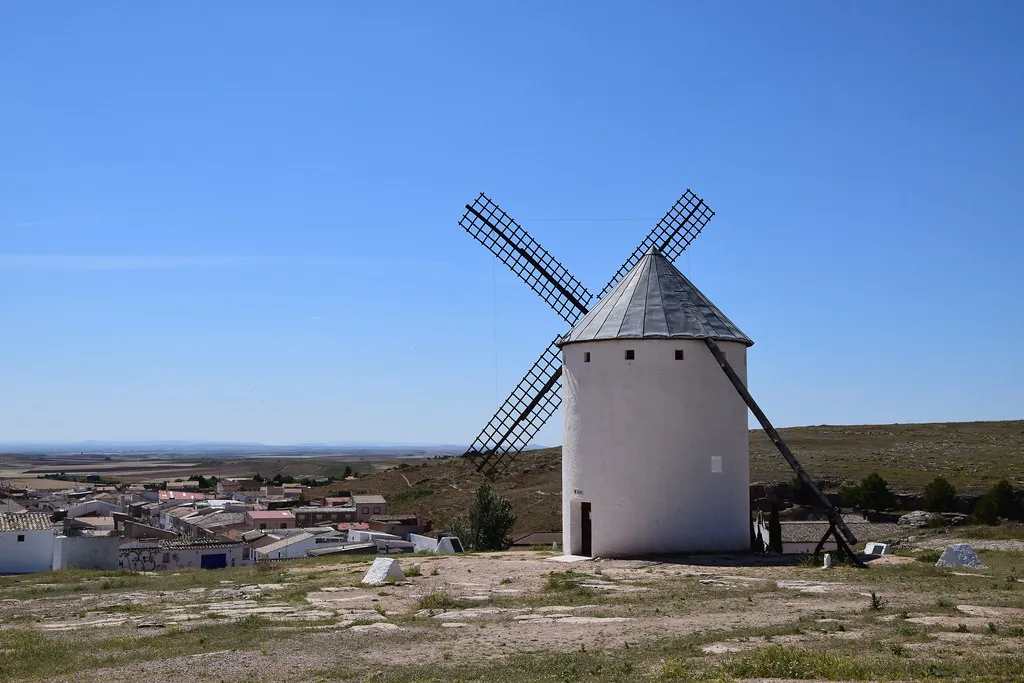
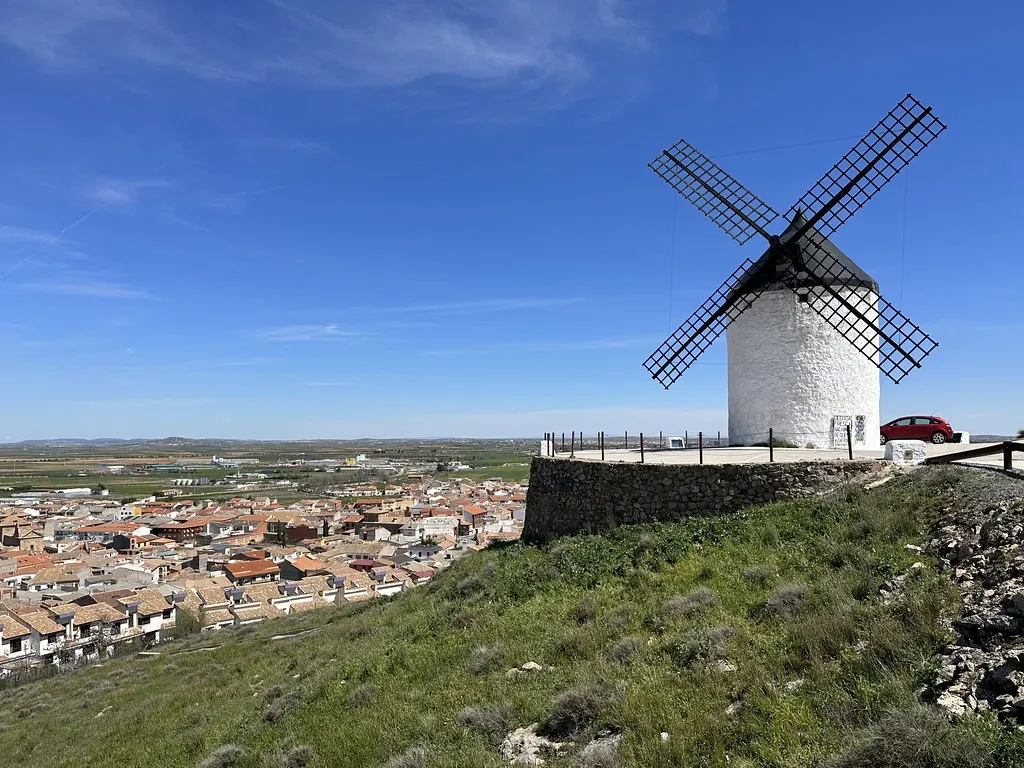
Chocolate production played a notable role in Quintanar during the nineteenth century. Cocoa arrived from the ports and was processed in small workshops within the town. Some windmills, once used for grinding grain, were adapted to support this new activity when their original function declined.
Anise production forms another part of the town’s more recent history. Several families maintained distilleries from the early twentieth century onwards, keeping that craft alive across generations.
Wine remains part of daily life in La Mancha, and Quintanar is no exception. Local production falls within the region’s designation of origin. Many wineries began as agricultural cooperatives during the twentieth century, when small-scale growers joined forces to sustain their work and adapt to changing conditions.
Cervantes and echoes of fiction
Links between Quintanar and the literary world of Cervantes appear in texts from the period. Antonio de Villaseñor, known as “El Bárbaro”, is mentioned in Persiles, where Cervantes describes him as a strong, formidable man.
Another figure sometimes connected to the town is Juan Haldudo, the livestock owner who appears early in Don Quijote. It is not always easy to separate documented history from local tradition in these cases. Even so, such associations show how closely Cervantes’ writing draws on the real landscapes and people of La Mancha.
The bullring, built in a neo-Mudéjar style, reflects the importance livestock once held in the area. Within the wider municipality, structures linked to former livestock farming still remain, offering traces of that economic past.
Walking the landscape
Quintanar lies to the south-east of Toledo, reached by roads that cross wide agricultural plains. The setting is open, with long views that rarely change as you approach.
The town centre can be explored on foot without difficulty. Traditional houses deserve a closer look. Many retain wide entrances designed for carts, along with interior courtyards connected to agricultural life.
Beyond the built area, the landscape stays consistent. Fields of cereal and vineyards extend across the terrain, with scattered holm oaks breaking the horizon. Water is scarce in this part of La Mancha, and rivers lie at a distance. That condition has always shaped how land is organised and used, influencing both settlement patterns and daily activity.
Quintanar de la Orden does not present itself through grand gestures. Its character comes through in details: the layout of its streets, the memory beneath its buildings, and the steady rhythm of a place long tied to movement across the plain.