Full Article
about Rada de Haro
Small town with a history tied to the nobility; set amid plains and hills
Ocultar artículo Leer artículo completo
The church bell strikes noon and nobody appears. Not a single shop door opens, no café terrace fills with chatter. At 820 metres above sea level, Rada de Haro's only response to the bell is a pair of swifts slicing across the cereal-coloured sky. Forty-nine residents, one grocery-less plaza, zero traffic lights: the statistics sound like a set-up for a joke, yet the punchline is simply silence you can record and play back later.
A Plateau that Refuses to Rush
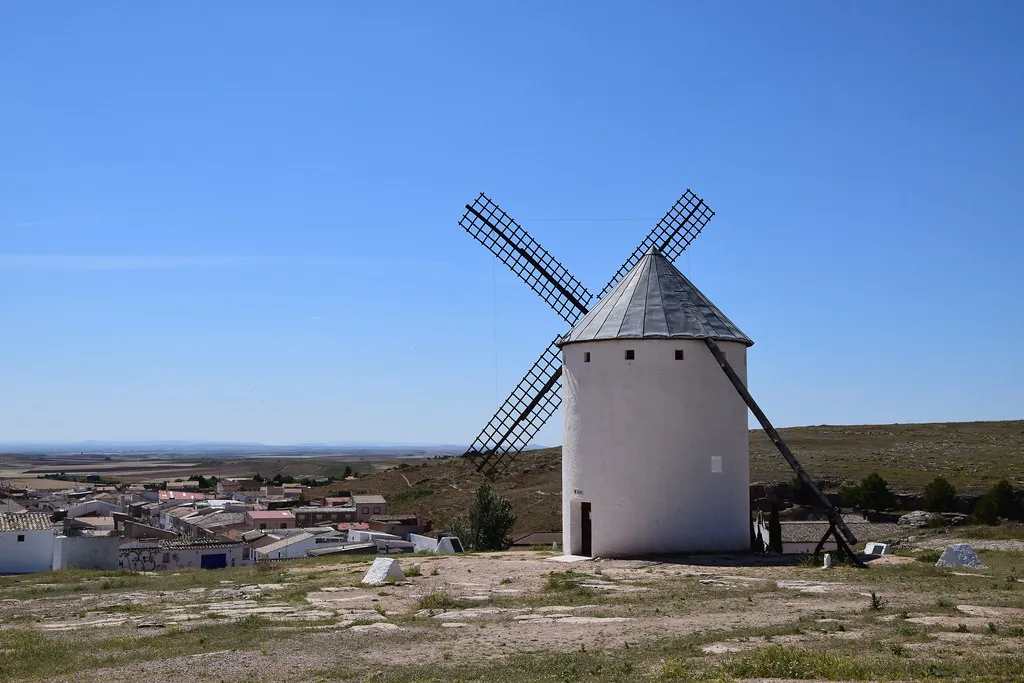
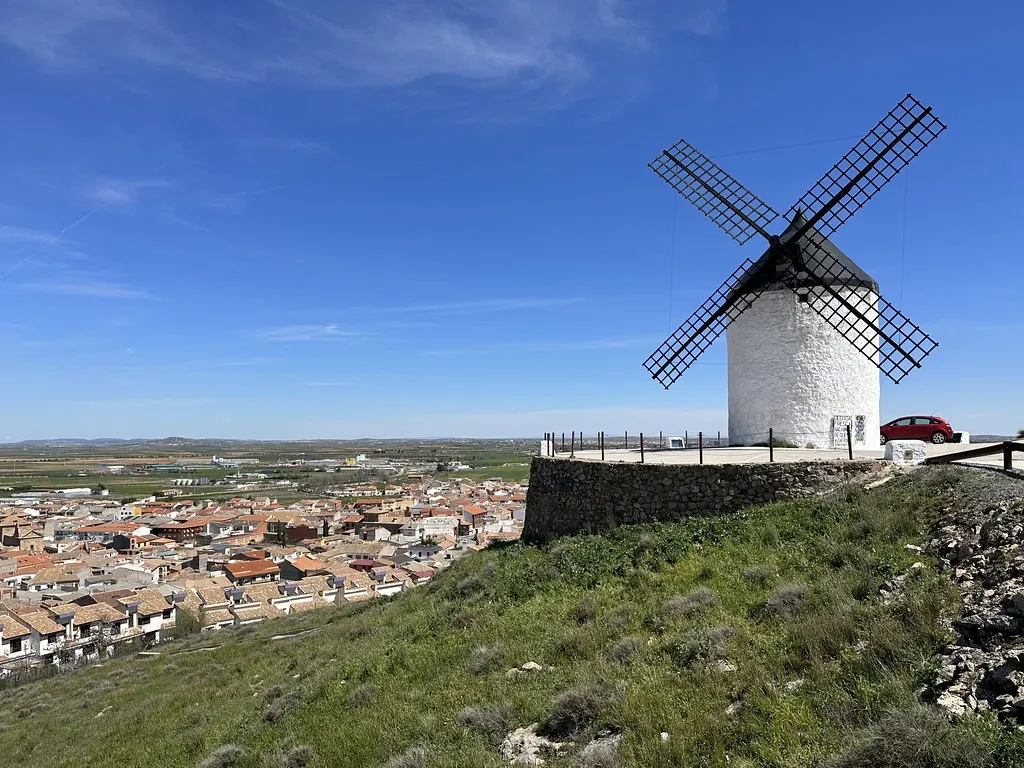
Castilla-La Mancha is famous for Don Quixote's windmills, but the province of Cuenca keeps its giants further north. Around Rada de Haro the land unrolls instead into an ocean of wheat stubble and fallow earth. The horizon shimmers, not from heat haze alone, but from distance itself; on a clear winter morning you can make out the slate roofs of Villaescusa de Haro six kilometres away without raising your eyes. Come July that view dissolves into gold so bright it hurts, and the village becomes a fortress of shadowed stone where even the dogs crawl under tractors at midday.
Altitude rescues visitors from the worst of the southern meseta's furnace. Daytime temperatures still reach 35 °C in August, yet after sunset the mercury can skid fifteen degrees in an hour. May and late-September sweeten the deal further: larks nested in the crop margins, threshing crews stacking last-season's straw bales, and evenings cool enough for a fleece. Winter is another proposition altogether. Night frosts of –5 °C are routine, the CM-412 access road ices over, and the solitary rural house, Casa Rural La Simona, often closes for weeks while owners wait for a forecast above freezing.
Walking Through Layers of Ordinary Time
No ticket office greets you, no heritage QR code on a stick. What Rada offers is a twenty-minute circuit of lanes so narrow two umbrellas cannot pass without negotiation. Adobe walls bulge like well-proofed loaves; timber doors, iron-studded and sun-blistered, hang on medieval hinges. Peer through the gap beneath the church's bell tower and you will see a patchwork of roofing slate, solar panel and television aerial—three centuries compressed into one frame.
Step outside the ring of houses and the soundtrack changes from distant cockerel to wind combing through barley stubble. Unmarked farm tracks strike north towards Horcajo de Santiago and south to the abandoned wine caves at Los Pedrones. They are not scenic in the chocolate-box sense—there are no craggy peaks or cork-oak forests—but the scale is cinematic. Walk for half an hour and the village shrinks to a Lego cluster; walk for two and you will understand why locals measure journeys in beer-and-bread stops rather than kilometres. Stray from the track and phone coverage vanishes, so download an offline map before you set out and carry more water than feels reasonable. A 4×4 might pass you every ninety minutes; otherwise the fields swallow sound and you become your own weather report.
After Dark: The Province's Cheapest Planetarium
Light pollution maps colour Rada de Haro pitch black for a reason. When the last kitchen light clicks off, the Milky Way switches on overhead with an intensity that startles first-time stargazers from Manchester or Milton Keynes. You do not need a telescope; a £30 pair of 10×50 binoculars held steady against a gate post will resolve the Pleiades into individual diamonds. Bring a folding chair, a red-filter torch and a flask of something hot from October through March—the sky show is free, but hypothermia is an optional extra. Meteor showers in August work equally well, though you may find yourself counting Perseids while wiping sweat from your eyebrows.
Eating, or Why Your Car Has a Boot
The village itself feeds only the spirit. Bar La Plaza opens at irregular hours, essentially when owner Pepe feels like it, and stocks little beyond ice creams and a fridge of ice-cold lager. Plan on a picnic or, better, use Rada as a midday pause on a longer cheese-and-wine loop. Twenty-five minutes north-east by car, the Quesería de Horcajo sells raw-milk Manchego aged for fourteen months; staff vacuum-seal wedges so you can haul them home in hand luggage. A further ten minutes, in Villanueva de la Jara, Bodegas y Viñedos Ilusión offers weekday tastings of tempranillo that slips down like Beaujolais wearing a leather jacket. Both close between 14:00 and 17:00—Spain's working day still bends to the sun, not to TripAdvisor.
If you need a sit-down meal, drive to Belmonte (18 km). Mesón Casa Julio turns local lamb into pink, pull-apart cordero a la Manchega for €14 a portion, while the set-menu pisto—Spain's answer to ratatouille—keeps vegetarians happy for half the price. Expect laminated tables, swift service and a television showing muted football: functional Spain rather than Instagram Spain, and all the better for it.
When the Village Throws a Party
Rada's patronal fiestas happen around the second weekend of August, when the population quadruples as grandchildren and great-grandchildren return. The programme is gloriously low-key: Saturday evening mass followed by a communal paella eaten at trestle tables in the square, a mobile disco pumping out 90s Spanish pop until 04:00, and Sunday lunchtime bingo with legs of ham for prizes. Outsiders are welcome but anonymity is impossible; within ten minutes someone will have asked where you are from and whether you would like another beer. Accommodation in the village itself is impossible during fiestas—book Casa Rural La Simona for a different week, or stay in Belmonte and drive over after dinner. The road is policed only by hedgehogs at that hour, so take it steady.
Getting There, Getting Out
Public transport is a theoretical concept. Buses link Madrid to Cuenca in under an hour on the AVE, but the onward connection to Rada involves a taxi from Belmonte costing €30 each way—if you can persuade a driver to come out. Hire a car at the airport instead. From Madrid-Barajas, the A-3 motorway spits you onto the CM-412 at Tarancón; after that it's 45 minutes of empty two-lane blacktop climbing gently onto the plateau. Fill the tank in Tarancón: the last petrol station before the village closed in 2008 and locals buy diesel in jerrycans. In winter carry snow socks even if the forecast shrugs; the council gritter reaches Rada eventually, but eventually operates on Spanish time.
Worth It, With Conditions
Rada de Haro will never appear on a Spain-by-numbers itinerary. There is no souvenir shop, no medieval castle, no craft brewery with Edison bulbs. What you receive instead is a calibration reset: wind instead of Wi-Fi, grain silos instead of gift stalls, conversations that end only when both parties run out of weather comments. Visit with modest expectations and a full water bottle; leave before you start counting passing cars for entertainment. The village will still be there next year, still at 820 metres, still refusing to hurry.