Full Article
about Saelices
Home to the Segóbriga Archaeological Park; a must-see Roman site.
Ocultar artículo Leer artículo completo
The thermometer drops six degrees the moment the road leaves the plain and begins to climb. At 930 metres above sea level, Saelices sits high enough for the air to carry a bite even in late May, and for the horizon to unfurl like a map rolled out by a giant. From the village edge you can watch weather systems approach twenty minutes before they arrive—first a bruised line along the western sky, then the smell of rain on dry clay, finally the drumming on corrugated roofs that passes as quickly as it came.
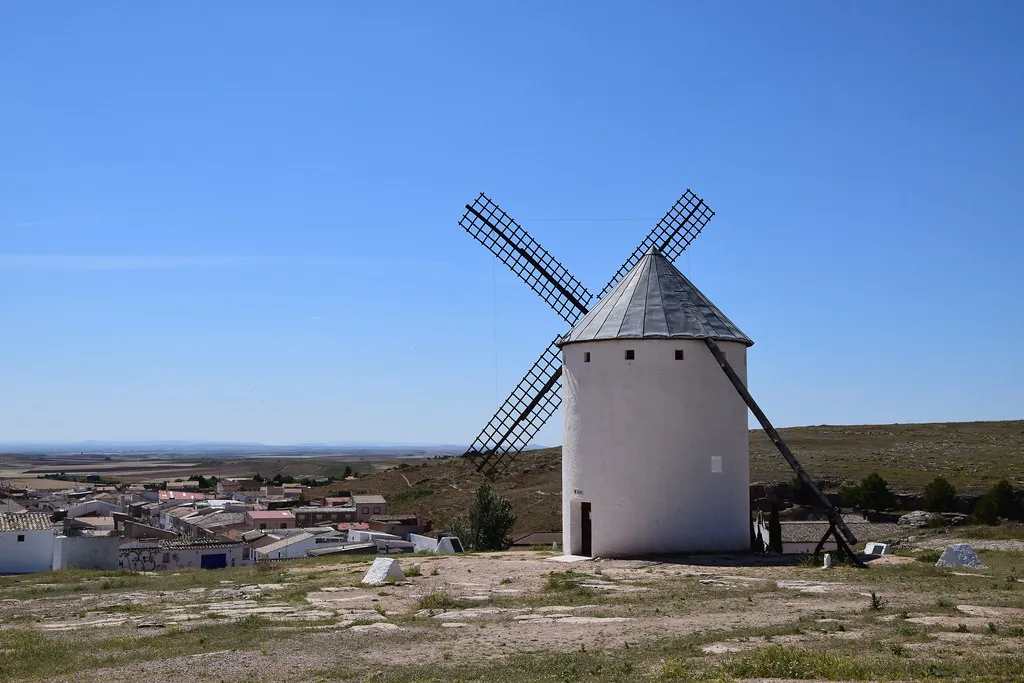
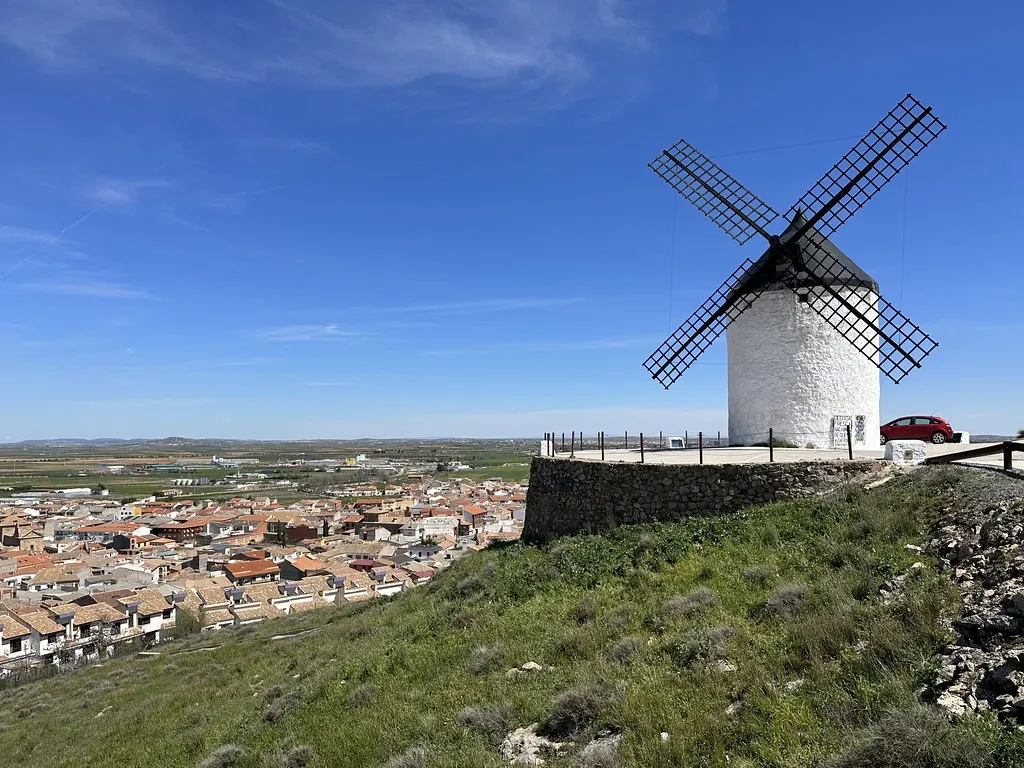
This is Spain’s cereal plateau stripped of postcards. No almond blossoms, no Moorish arches, just a grid of cream-coloured houses wedged between vineyards and wheat that changes from emerald to brass depending on the month. Roughly 450 people live here year-round, a figure that doubles when Madrid families drive down for the August fiestas and collapses again when school starts. They keep the place functioning: one bakery, one chemist, two bars that open when the owners feel like it, and a Saturday market where you can buy a goat collar, a kilo of broad beans and political gossip in the same breath.
What passes for a centre
The parish church of San Pedro has no façade worth photographing, yet it anchors the village more firmly than any tourism office could. Built from the same limestone that ploughs turn up each season, its walls have absorbed four centuries of harvest prayers and drought curses. Step inside during mass—Sunday at eleven, Thursday at seven—and you’ll hear Castilian Spanish delivered so slowly that even GCSE students can follow the Gospel. The bell still calls field workers in for lunch, though these days the sound competes with the hum of air-conditioning units poking through twentieth-century brick.
Radiating from the church are four streets wide enough for a tractor and a dog. Houses wear their original lime wash, repainted whenever a wedding or funeral demands respectability. Wooden doors hang on medieval iron hinges; lean close and you’ll catch the sour-wine breath of old cellars dug into the clay beneath. Most are private, but knock at number 22 and Dionisio—retired, talkative—might show you the press he used when grapes outweighed wheat. He’ll tell you the harvest now goes to the cooperative in Villanueva de la Jara, fifteen kilometres east, because the youngsters “don’t fancy staining their trainers purple”.
The calendar written in soil
Visit in mid-April and the surrounding fields look like a giant chessboard: green wheat squares alternate with brown stubble where barley was already cut. By late June the palette turns metallic, stalks bleached almost white, heads bowed under their own grain. July is the month of dust—fine, mineral, working its way into camera sensors and sandwich fillings. Then September rinses everything: sudden storms flatten the stubble, vines redden, and the air smells of damp iron and fermenting must.
Those seasonal swings dictate more than photography. Winter weekends favour clay-pot cooking: pisto manchego (a thicker, smokier cousin of ratatouille), migas (fried breadcrumbs laced with garlic and chorizo), and morteruelo, a liver pâté spread so dense it keeps for weeks under pork fat. Order any of these at Bar El Pilar on Plaza de España and the price hovers around €9 including a glass of La Mancha tempranillo drawn from a tap behind the coffee machine. Summer menus shrink to gazpacho and tomato salad; the same bar closes at 22:00 because the cook prefers the municipal swimming pool to overtime.
Walking without waymarks
There are no signed footpaths, which suits the handful of hikers who arrive by Cuenca bus and realise they have the plateau to themselves. A farm track heading north from the cemetery gate crosses three properties before reaching a ridge crowned with ruined grain silos. The climb takes forty minutes; the reward is a 360-degree view where the only vertical features are telegraph poles and the occasional cypress circling a farmhouse. Take water—at this altitude the breeze evaporates sweat before you notice you’re sweating.
Cyclists use the same tracks; the surface is hard-packed clay that corrugates into bone-shaking ridges after heavy rain. A loop east towards the Marquesado wind farm is 28 km with 400 m of gentle ascent. You’ll share it with the odd 4×4 checking irrigation pipes and, in October, tractors towing trailers piled so high with saffron crocus bags you can smell the pollen.
Night skies and other silence
Street lighting switches off at midnight, part of the council’s austerity package and, incidentally, a boon for anyone carrying binoculars. Walk five minutes south past the last lamppost and the Milky Way snaps into focus like someone adjusted a lens. No organised stargazing, no entry fee—just a horizon so low that satellites rise from the wheat and set behind the vines. The August Perseids are a local secret: families drag mattresses on to flat roofs and count shooting stars until the chill drives them indoors around 02:00.
That same silence can feel oppressive. Winter nights drop to –8 °C; pipes freeze, dogs bark at their own echoes, and the nearest 24-hour petrol station is 35 km away in Tarancón. Mobile reception is patchy inside stone houses—WhatsApp messages arrive in clumps when you step into the plaza. If you crave soundtrack, time your visit for the fiestas of San Roque (14–17 August) when amplifiers the size of hay bales power bands that play until the Guardia Civil turn up with decibel metres.
Getting here, getting stuck, getting out
There is no railway. From Madrid’s Estación Sur, Alsa runs one daily coach to Cuenca (1 hr 45 min), where a smaller Samar bus continues to Saelices (50 min). The connection waits only if the motorway is clear; miss it and you’re looking at a €70 taxi. Driving is simpler: take the A-3 to Tarancón, then the CM-412 signposted to Cuenca; after Horcajo de Santiago turn left on the CM-3106 and climb for 19 km. Fill the tank in Tarancón—the village garage closed in 2019 and the next fuel is in Villanueva de la Jara.
Accommodation consists of three rural houses licensed under the region’s Casa Rural scheme. Prices range from €70 to €95 per night for two people, linen included. They book up for Easter and the August fiestas; outside those weeks you can usually arrive unannounced and collect the key from the bakery. None serve breakfast, but the bakery opens at 07:00 and will warm a loaf while you wait. Hotel alternatives lie 25 km away in the Roman spa town of Segóbriga, handy if you need a reception desk or a minibar.
Leave before the wheat turns gold, or stay until it does
Saelices will not change your life. It offers no epiphanies, no Instagram trophies, merely a calibration of scale: you against sky, appetite against season, your city watch against a rooster that has never heard of British Summer Time. Come once and you might file it under “quaint”; come three times and you’ll recognise the same farmer by the way he lifts two fingers from the steering wheel, understand why curtains stay closed against the afternoon sun, and find yourself checking the moisture in the wind. Book a flexible ticket—departure times sound optional until the harvest starts and nobody bothers to drive you to the bus stop.