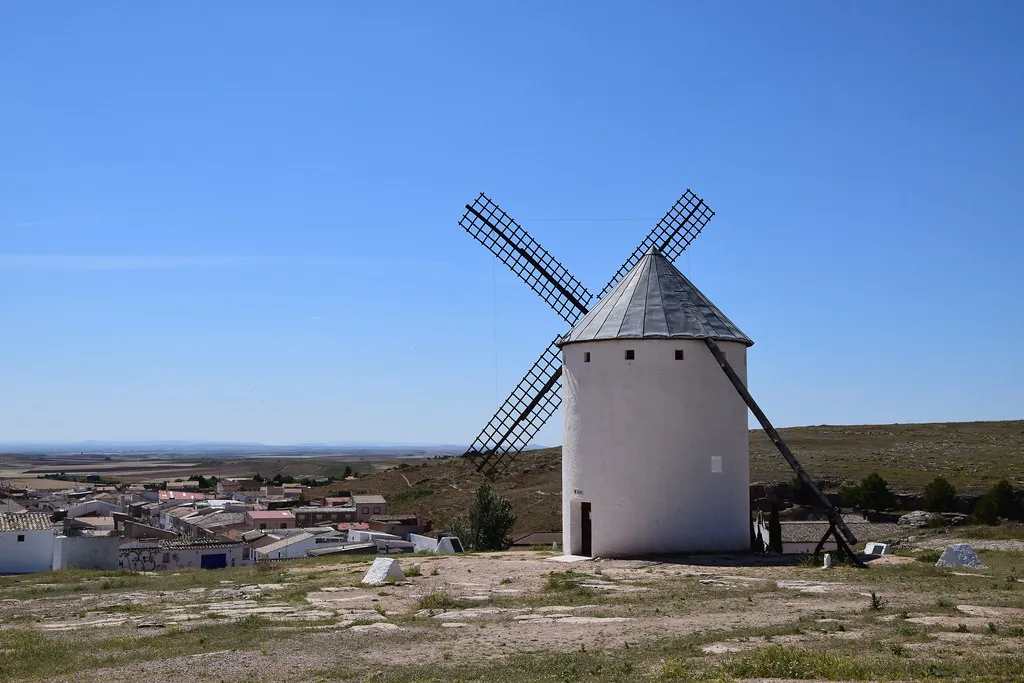
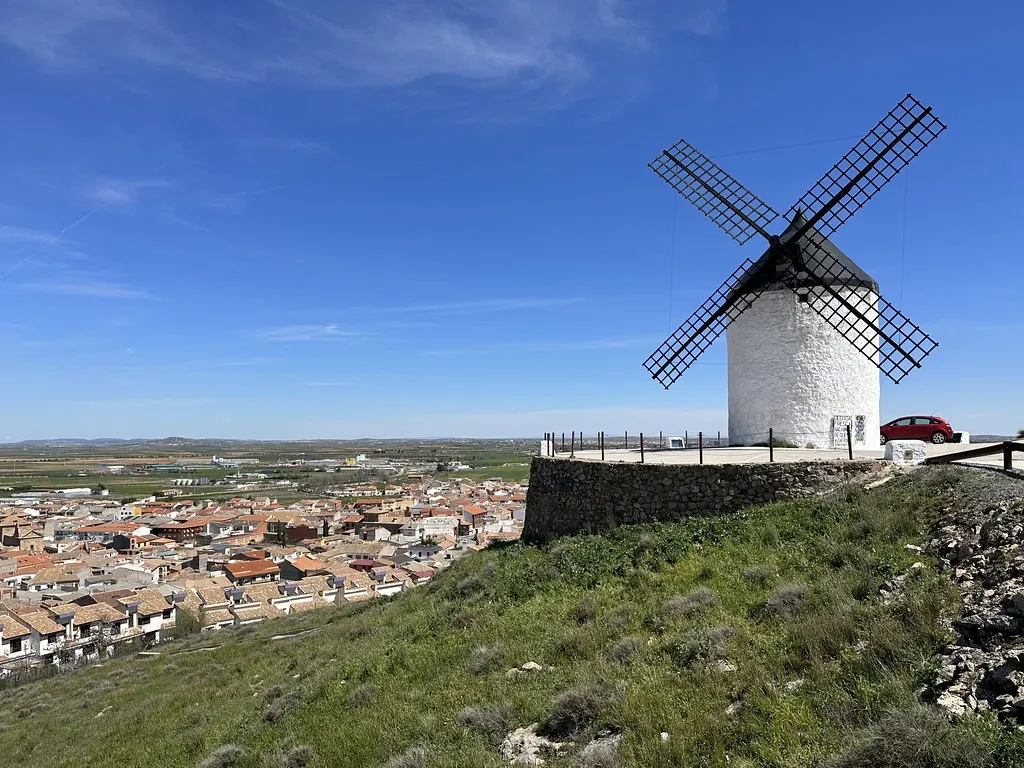
Vista aérea de Santa María de los Llanos
Instituto Geográfico Nacional · CC-BY 4.0 scne.es
Castilla-La Mancha · Land of Don Quixote

Santa María de los Llanos

The bells strike noon across a plateau so level that sound carries for miles. In Santa María de los Llanos, the church tower serves less as archite...

660 inhabitants · INE 2025
740m Altitude

Why Visit

Church of the Assumption Don Quixote Route

Best Time to Visit

summer

San Antón Festival (January) agosto

Things to See & Do
in Santa María de los Llanos

Heritage

  • Church of the Assumption
  • Roman well

Activities

  • Don Quixote Route
  • Walks

Festivals
& & Traditions

Fecha agosto

Fiestas de San Antón (enero)

Las fiestas locales son el momento perfecto para vivir la autenticidad de Santa María de los Llanos.

Full Article
about Santa María de los Llanos

Manchego town with Roman well and hermitage; farming tradition

Ocultar artículo Leer artículo completo

The bells strike noon across a plateau so level that sound carries for miles. In Santa María de los Llanos, the church tower serves less as architecture and more as a sundial for the surrounding grain fields. At 740 metres above sea level, the village sits high enough for the air to carry a snap even in May, yet low enough that the horizon still feels within walking distance. This is La Mancha stripped of windmills and tourist coaches: just 680 souls, a grid of lime-washed houses, and an ocean of cereal that changes colour faster than the British sky.

A Village Drawn with a Ruler

Planners never bothered with curves here. The streets run true north-south, east-west, following the same logic as the tractor tracks that stripe the surrounding farmland. Stone thresholds flush with the asphalt show where doorways were raised after the last road resurfacing—evidence of a place that adapts slowly, preferring incremental change to grand projects. House walls are thick enough to swallow mobile signal; enter a doorway and temperature drops by five degrees without air-conditioning. Most roofs still support the original clay canal tiles, half-cylinders the colour of burnt toast that ring like bells when hail arrives.

The parish church of Santa María occupies the physical centre, but social gravity shifts according to season. In July the benches outside the lone bar become the de facto plaza; in January men gather inside the heated chemist's waiting room to discuss rainfall figures. British visitors expecting a manicured square will find instead a utilitarian rectangle of tarmac where vehicles reverse around the stone cross for Sunday service. Flowerpots appear only in late spring, timed to the agricultural calendar rather than civic pride.

Walking the Agricultural Clock

Distances are measured in harvests rather than kilometres. A ten-minute stroll east brings you to the first barley field currently the shade of young leeks; walk west for fifteen and you reach the boundary where last year's stubble still pokes through disc-harrowed earth. Public footpaths are signed in fading paint on concrete posts, but locals navigate by telegraph poles—each bears a metal plate stamped with its row number. Stick to odd numbers and you return to the village within the hour; even numbers will deliver you to the service road of the N-420, thumb required.

Cycling works better than hiking. The lack of gradient means a standard hybrid can cover 40 km before lunch, looping past abandoned threshing floors that dot the fields like stone UFOs. Take water: the only fountain outside the village sits beside the cemetery, a fact nobody finds morbid. Spring brings calandra larks overhead and the risk of tractor-induced punctures; autumn offers threshing dust and headwinds sharp enough to chap lips. Summer midday rides are for lizards only.

What Arrives on the Plate

Forget elaborate tasting menus. Order a beer at Bar Ángel and you receive a slab of manchego cut from the wheel displayed on the counter, still bearing the basket-weave imprint of its mould. The cheese arrives at room temperature—the altitude keeps indoors cooler than London fridges—so the fat softens properly and the sheep's-milk tang has nowhere to hide. A second round brings thin slices of morcilla that taste of cinnamon rather than blood; ask for the house wine and you get a glass of something drawn from the stainless-steel barrel behind the door, grape variety unimportant, price €1.20.

Evening meals centre on the wood-fired oven that the village bakery fires up on Fridays. Residents bring trays of marinated lamb to slide beside the bread; the baker keeps the first chops as payment. Visitors can pre-order at the bakery before 10 a.m.; collect at eight, wrapped in aluminium foil that still sizzles during the walk back to the guesthouse. Vegetarians survive on grilled pisto and eggs laid by hens that scratch between the grain silos—expect bright-yellow yolks and the occasional feather stuck to the shell.

Seasons Spelled in Colour

April turns the plateau emerald so sudden it hurts the eyes after winter's beige. Red poppies appear in tractor-compacted margins, brief as British bluebells. By late June the green bleaches to straw; combine harvesters work through the night, headlights floating like low planets. August air smells of chaff and hot engine oil; locals sleep with windows shut against dust that drifts like fine snow. October brings ploughing, the earth revealed as heavy clay the colour of milk chocolate, cracked into polygons that shrink underfoot. Winter is the domain of stone and sky—no snow guarantee, but frost lacework lasts until eleven, and the clarity of light makes the Sierra de Alcaraz look close enough to hit with a stone.

Festivals follow the same practical rhythm. The August fiesta piggybacks on the grain-drying lull, when combines are parked and wages counted. Events start late because days are too hot for dancing; fireworks begin at midnight so children can watch before falling asleep on parents' shoulders. Semana Santa processions step off at the agricultural hour of 7 p.m.—late enough for fieldwork to finish, early enough to finish before the temperature plummets. Visitors expecting Seville-style pageantry will find instead a single brass band and bearers who swap shoulders outside the bar. The emotion is real; the budget is not.

Getting There, Staying Put

No train line serves the village. From Alicante airport hire a car, leave the A-31 at Villarrobledo, then follow the CM-412 for 38 km of straight road so hypnotic the radio becomes essential. Petrol stations close at 10 p.m.; fill up in the provincial capital of Albacete if you land late. Buses depart Albaceste's Estación de Autobuses at 14:30 on weekdays only, arriving 16:05 after stopping at every crossroads village—£6.40 single, exact change appreciated.

Accommodation totals three options. Casa Rural La Torre offers four rooms above the old olive mill; beamed ceilings, terracotta floors, Wi-Fi that copes with email but buckles under Netflix. Price hovers round €70 for two including breakfast of toast rubbed with tomato and a litre of coffee weaker than British instant. Hostal El Grano has simpler rooms opposite the bakery—hand-painted bedsteads, shared terrace overlooking the grain co-op, €35 without breakfast but morning scent of baking bread drifts through the window. Wild camping is tolerated beside the dry riverbed south of the village; leave no trace and expect the Guardia Civil to check passports at dawn during boar-hunting season.

Leave the phrasebook at home. Nobody speaks fluent English, yet patience runs thicker than in coastal resorts. Ask for "un vino de la casa" with a smile and you'll get what the barman drinks after his shift. Mention you drove from Cuenca and expect the map to appear, annotated with biro circles around the best spot to photograph short-toed eagles. Just don't request vegetarian paella—rice arrives here in sacks labelled for animal feed, and the concept causes genuine confusion. Order the gazpacho instead; tomatoes grow 20 km south, and the baker's daughter makes it daily when thermometers top 30 °C.

Stay two nights minimum. The first sunset will trick you into thinking the landscape empty; by the second dawn you'll notice the kestrel hovering over the football pitch and realise the village soundtrack is simply set to a lower volume than home. Pack a light jacket even in July—nights up here can drop to 14 °C—and bring binoculars if you can carry them. The plains look flat until you see a harrier circling beneath your eye line, using the same thermal the storks ride towards Africa. Then you understand the true scale: not empty, just breathing slowly.

Key Facts

Region
Castilla-La Mancha
District
La Mancha
INE Code
16196
Coast
No
Mountain
No
Season
summer

Livability & Services

Key data for living or remote work

2024
ConnectivityFiber + 5G
EducationHigh school & elementary
Housing~5€/m² rent · Affordable
Sources: INE, CNMC, Ministry of Health, AEMET

Official Data

Institutional records and open data (when available).

  • ESCUDO EN 07161960033
    bic Genérico ~0.7 km
  • ESCUDO EN 07161960037
    bic Genérico ~0.6 km
  • LEGUARIO
    bic Genérico ~0.9 km

Planning Your Visit?

Discover more villages in the La Mancha.

View full region →

More villages in La Mancha

Traveler Reviews