Full Article
about Santa María del Campo Rus
Place of death of Jorge Manrique; farming town with a literary past
Hide article Read full article
A Village on the Flatlands of Cuenca
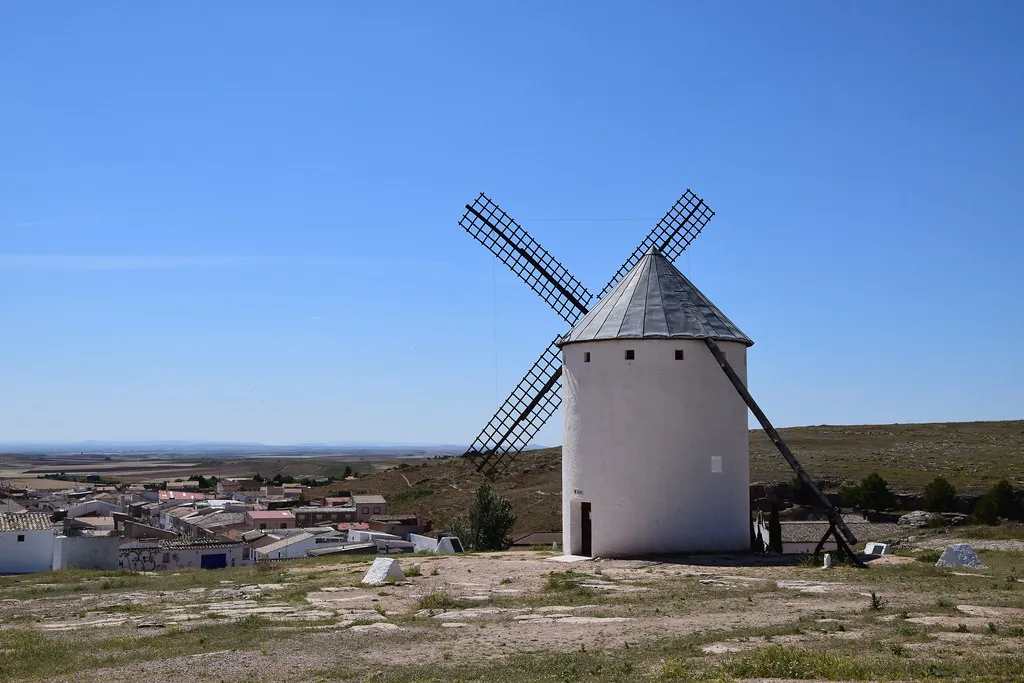
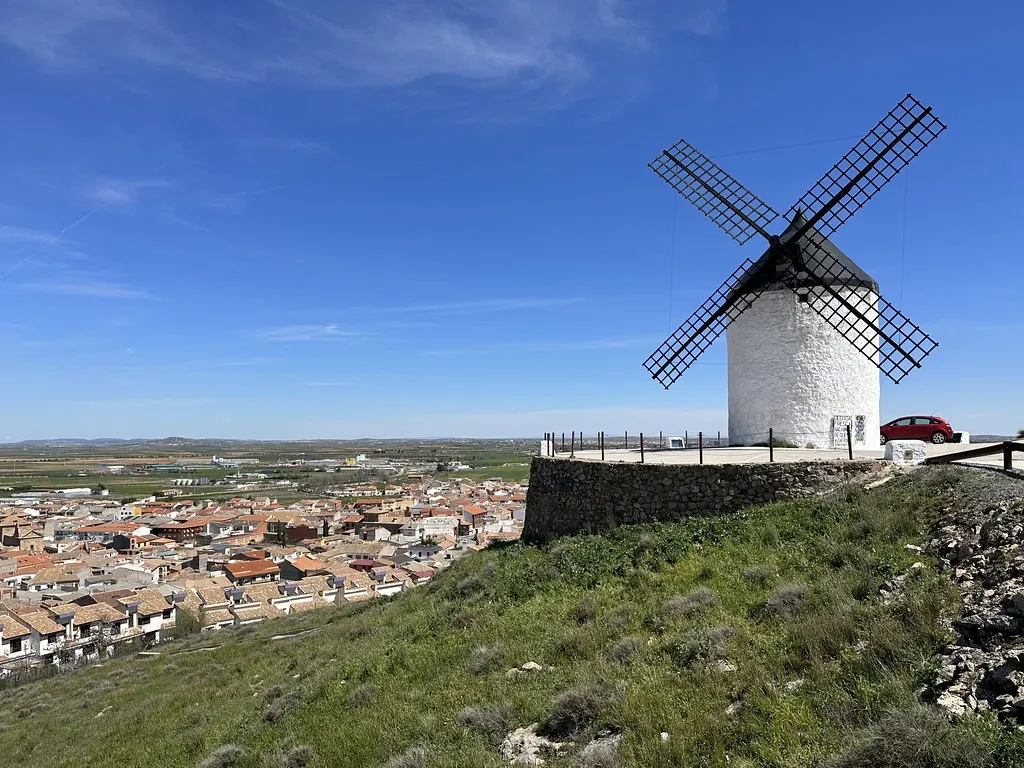
Santa María del Campo Rus sits in the Mancha area of the province of Cuenca, in Castilla La Mancha, surrounded by wide, level farmland. The landscape is open and agricultural, with long horizons and very little to interrupt them. It is reached by regional roads from Cuenca or Tarancón without much difficulty.
Driving into the village is straightforward. Once inside, getting around is easy enough, although the streets near the centre are narrow and there is limited space to park close to the main square. During the summer or when local festivals are taking place, it makes more sense to leave the car in one of the wider streets on the edge of the village and continue on foot.
Santa María del Campo Rus stands at around 800 metres above sea level. Altitude here does not mean mountains, but rather a high plain of cereal fields and open countryside typical of La Mancha.
The Look and Layout of the Village
This is not a monumental town filled with grand buildings. Most houses are simple homes, many of them whitewashed, with large wooden or metal doors designed to accommodate cars, farming tools or whatever else is needed. Practicality defines the architecture.
The parish church occupies the main square. It is a sober building with thick walls and a simple tower, with little in the way of decoration. It does what it was built to do and little more. There are no elaborate façades or ornate details competing for attention.
The rest of the urban layout follows a pattern common to many villages in La Mancha: relatively straight streets, an occasional small square and interior courtyards that help residents cope with the intense summer heat. These patios are not tourist attractions, but they are part of how daily life adapts to the climate.
There is no especially preserved historic quarter and few buildings that demand a long stop. The appeal lies elsewhere.
A Short Walk Through Everyday Life
The centre can be covered quickly. In about half an hour it is possible to walk through most of it at an unhurried pace.
Rather than architectural highlights, what stands out is ordinary village life. Neighbours chat in doorways. Cars move in and out of garages. Tractors pass through on their way to the fields. Santa María del Campo Rus feels like a working agricultural community rather than a place arranged for visitors.
Anyone looking for significant historic architecture will find little to hold their attention. Those interested in how a present-day farming village in La Mancha functions may find it more meaningful to pause and observe.
The rhythm is calm. Streets are not crowded, and daily routines shape the atmosphere far more than tourism does.
Fields, Tracks and Big Skies
Outside the built-up area, everything revolves around cultivation. Depending on the season, the surrounding fields may show wheat, barley or stubble after harvest. The plots are large and the tracks between them are straight, cutting clear lines through the land. An isolated tree occasionally breaks the horizon.
At night, the sky can appear strikingly clear. There is little lighting in the surrounding countryside, and when the weather cooperates the stars are easy to make out. The openness of the plain becomes even more evident after dark.
Along some of the rural tracks, old wells and dry-stone livestock enclosures appear. They are not signposted and do not form part of an organised route. Anyone wanting to find them would usually need to ask a local resident for directions.
The landscape does not change dramatically from one kilometre to the next. Its character lies in repetition and scale rather than contrast.
Walking and Cycling the Agricultural Tracks
The farm tracks around Santa María del Campo Rus are suitable for walking or cycling without technical difficulty. They are wide paths running between fields, and almost always flat. There are no steep climbs or complicated terrain.
There is also no dedicated hiking infrastructure. No marked trails, no interpretive panels, no facilities designed specifically for walkers. It is simply a network of working agricultural routes that can be used respectfully.
In summer, the heat can be intense at midday and there is virtually no shade. A hat and water are essential. Distances can feel deceptive on the plain. What looks close may take longer to reach than expected, especially under a high sun and with wind sweeping across the open land.
Early morning or late afternoon are more comfortable times for a walk. When the sun is lower, the light softens and the fields take on warmer tones.
Eating and Stopping Over
Santa María del Campo Rus does not depend on tourism. Services vary according to the time of year and the day of the week, so it is wise not to arrive with rigid plans.
Many people passing through choose to eat in other towns in the surrounding area, where there is generally more activity. Across this part of Castilla La Mancha, it is common to find dishes based on small game, local cured sausages and Manchego cheese, the region’s well-known sheep’s milk cheese.
The village functions primarily as a place to live and work, not as a visitor hub. That shapes what is available.
Festivities and Local Traditions
The main celebrations revolve around the Virgen de Santa María and usually take place in August. They are typical village festivities: processions, music and residents returning for a few days even if they live elsewhere during the rest of the year.
There are no large-scale productions or elaborate staging. The atmosphere is local, centred on family reunions and neighbours meeting again.
There is also a continuing reference to the grape harvest, the vendimia, although agricultural work today is far more mechanised than in the past. The connection to the land remains part of local identity, even if the methods have changed.
A Brief Stop on the Mancha Plain
Santa María del Campo Rus is best approached with realistic expectations. There are no grand monuments and no spectacular historic centre waiting to be explored.
It works better as a short stop to see a quiet village in La Mancha and to look out over the fields that define it. The interest lies in its ordinariness, in the way daily life unfolds against a backdrop of cereal crops and open sky.
If visiting, aim for the cooler hours. Under the full force of the midday sun, with wind sweeping across the plain, even a simple walk can feel longer than planned. Bring water. On this high, open land, distances have a way of misleading the eye.