Full Article
about Tembleque
A gem of La Mancha with one of Spain’s most beautiful main squares; typical architecture
Hide article Read full article
The church bells strike eight. Sunlight, flat and pale, spreads across the wheat fields. From the square comes the dry rattle of a metal shutter being lifted. A man crosses with a loaf under his arm. At this hour, Tembleque is an abstraction. There are only neighbours, the smell of fresh bread, and the Manchegan earth already gathering heat.
A square built for spectacle
Plaza Mayor does not behave like an ordinary square. It feels more like a set. The stone arcades, low and cool even in summer, act like seating. The cobbled ground slopes slightly toward the centre, a clue to its former use: this was once an arena for bullfights. Iron rings for tethering barriers are still fixed in the stone.
By mid-morning, light cuts in at an angle and draws long shadows under the arches. It is a good moment to sit on the edge of the fountain and look around slowly. Two-storey façades line the space, along with dark wooden balconies and a stone carving of the Cross of Saint John. They built it in the early seventeenth century. The layout has changed very little.
In August, more tables appear around lunchtime and the square grows loud. For a different rhythm, weekdays are quieter. On Wednesdays there is usually a market under the arcades, where people from nearby villages come to buy fruit or work clothes.
From the tower, a view that explains everything
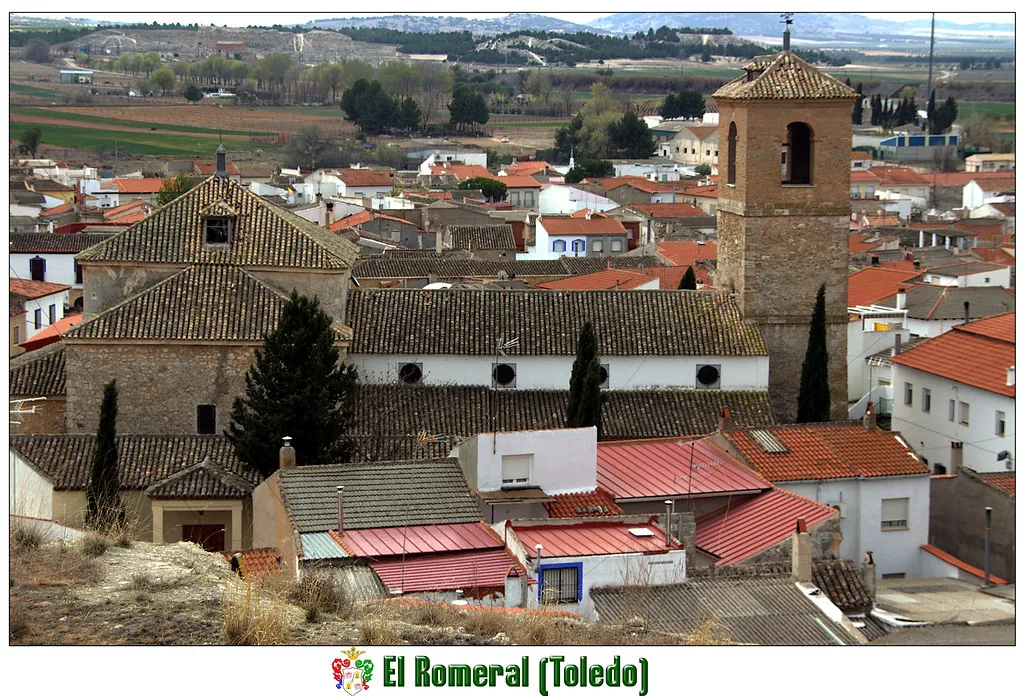
From the tower of the church of the Asunción, the town makes sense. Red-tiled roofs, straight streets, and beyond them the open fields. The tower is from the seventeenth century, though the church itself began earlier, with support from Cardinal Cisneros. Inside, the temperature drops. Stone vaults hold the echo, and the air carries a mix of wax and old wood.
At the end of the main street stands the Casa de las Torres. Its façade, marked by heavy iron grilles and worn plaster, has a severe feel. Older residents say the building has as many doors and windows as there are days in the year. No one seems to have counted them properly, but the idea sticks when you stand and look. Inside, a courtyard with stone columns suggests the scale it once had.
The hermitage in the fields
About fifteen kilometres from town, out in the flat landscape, stands the Ermita del Cristo del Valle. You reach it by a dirt track that cuts through cereal fields. After rain, the surface becomes uneven with ruts and loose dust.
The hermitage is white and simple. Inside is a painted image of Christ directly on the wall. Local tradition says two pilgrims made it in the late seventeenth century, mixing pigments with whatever they had at hand.
Twice a year, people from Tembleque travel there in a romería. It usually happens on a Sunday in spring and another at the start of September. Some go on foot, others by car or tractor. Around the hermitage, tables are set up beneath olive trees for food and wine.
In May, the fields are green and the air carries rosemary. By September, stubble replaces the green and dust hangs in the heat. On those days, arriving early helps; the track fills up quickly.
Walking up to the windmills
The hill above Tembleque can be reached in about twenty minutes on foot from town. The path is straightforward but offers little shade. In summer, go early or wait until late afternoon.
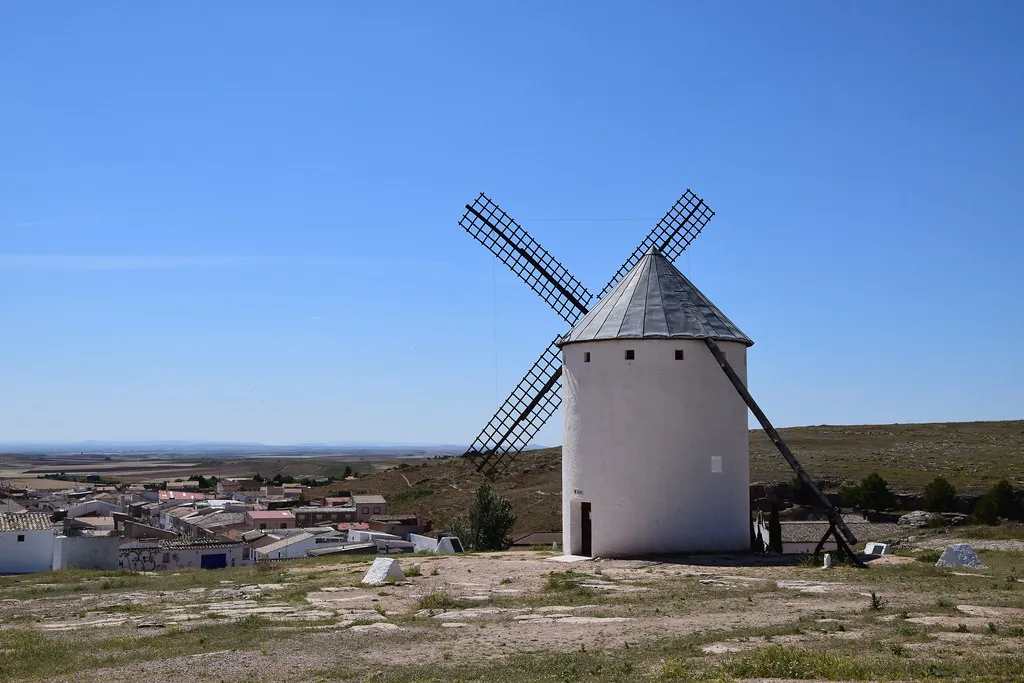
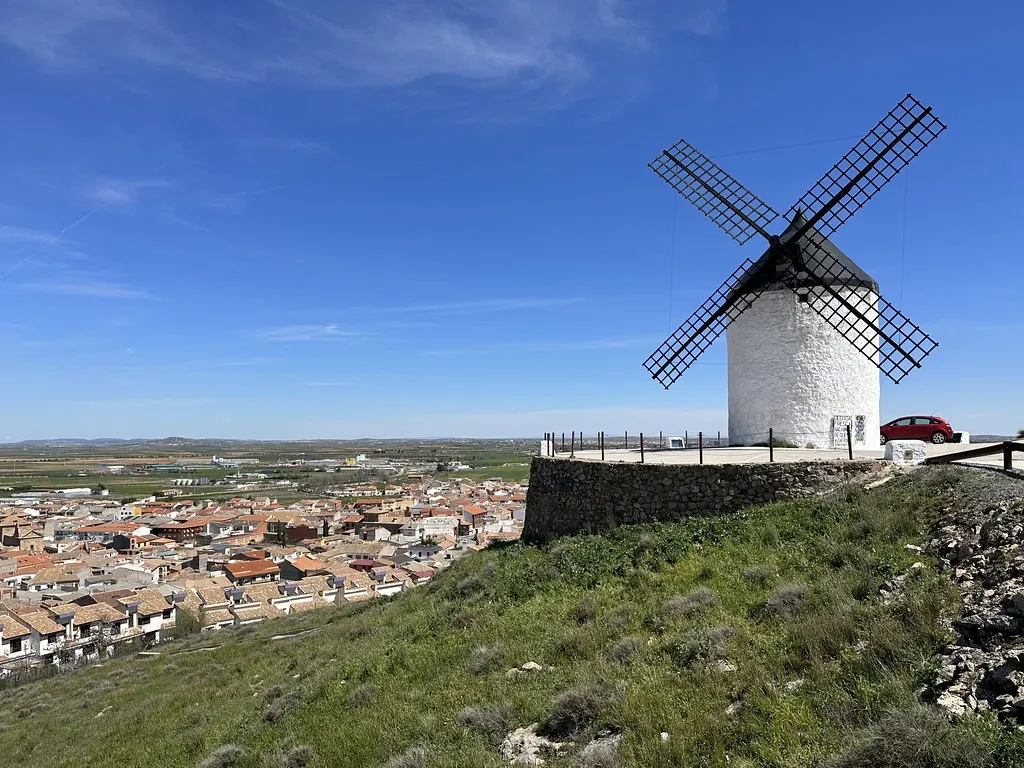
At the top stand several windmills. They are the same type as those in Consuegra, though this hill is usually quieter. Wind moves through dry grass with a papery sound. From here you see the full outline of Tembleque and the patchwork of fields around it.
Some link these mills to Cervantes. There is no clear reference to this specific place, but standing here, looking at that horizon of nothing but sky and wheat, you understand why windmills became tied to this region.
Many are deteriorated. You can observe them from close up, but take care. Avoid going inside if they are closed; old wood and stone do not hold together easily.
What to eat and when to eat it
The local cooking follows patterns found across La Mancha. In bars at midday, substantial dishes appear. Gazpacho manchego here is not a cold soup but a dense stew of game meat with flat bread broken into it—a dish for autumn after hunts. Pisto manchego comes in a small earthenware dish still hot from the stove, its colours bright: green pepper, red tomato, pale courgette.
Meals often start with queso manchego aged for months, its texture firm and salty, paired with membrillo if you ask for it. For something simpler on a cold morning before exploring, try migas—fried breadcrumbs with garlic and chorizo or grapes.
If you want to eat well without complication, look for places where tables are not set for large groups and where you see locals at midday ordering un plato del día.