Full Article
about Uclés
Headquarters of the Order of Santiago with a spectacular monastery known as the El Escorial of La Mancha.
Ocultar artículo Leer artículo completo
The monastery bell strikes eleven and the only other sound is a tractor ticking over in the almond groves below. From the fortress wall you can watch the plain of La Mancha roll eastwards for fifty kilometres, the colour of biscuit until late April when the vines fuzz green. This is Uclés: 222 residents, one monumental monastery, and a view that makes you understand why the Knights of Santiago chose the hilltop for their headquarters four centuries ago.
A Hill Made for Defence (and for Leg-Stretching)
At 870 m above sea level the village sits high enough to catch a breeze when the plateau cooks in mid-summer, but low enough that winter rarely blocks the road. The climb through the cobbled lanes is short—under ten minutes from the car park—but steady; anyone with dodgy knees should drop passengers at the monastery gates before parking on the perimeter track. Coaches manage it, so a family hatchback will cope, yet the tight hairpin just inside the walls has scraped more than one rental bumper.
The defensive logic is obvious the moment you arrive. Muslim builders started the castle, the Order of Santiago enlarged it, and the whole ensemble still faces south-east like a ship’s bridge scanning an ocean of grain. What you see today is part-ruin, part-restoration: enough walls and towers survive for photos, but sections are roped off and the interior is more rubble than rampart. Come for the panorama, not for a full-blown castle experience.
Inside the “Escorial of La Mancha”
They call the monastery the Escorial of La Mancha, an ambitious nickname that raises expectations the interior sometimes fails to meet. The façade is magnificent—golden stone, Herrerian severity, a dome that glows at sunset—but the standard visit lasts only twenty-seven minutes and costs €12. English tours must be requested when you buy the ticket; otherwise you follow Spanish commentary and try to decode the panels. Numbers are capped, so mid-week visitors may have the Renaissance cloister almost to themselves while Saturday mornings resemble a school outing.
What you get: the church with its gilded baroque retable, the chapter house where knight-commanders once met, the sacristy whose ceiling earns the loudest “ooh” of the day, and a string of almost empty cells. What you don’t get is furniture, armour, or interactive displays; this is a building tour rather than a museum. Bring binoculars if you like stonework—the best carving is overhead—and a translation app for the finer points of Santiago heraldry.
What to Do When You’ve Seen the Stones
Unless you are an avid student of military orders, the monumental heart takes ninety minutes, two hours at most. Stretch the stay by walking the almond lanes that radiate downhill. The signed “Ruta de los Castillos” slices through olive groves to the abandoned watchtower of Almenara; it’s 6 km there and back, flat enough for trainers, and you’ll meet more hoopoes than humans. Serious hikers can link a circuit past the Ermita de la Soledad (3 km), but bring water—shade is scarce and cafés disappear once you leave the village core.
Back in the centre the parish church of Nuestra Señora de la Asunción offers a quieter counterpoint to the monastery. It is small, plain, locked unless the caretaker is around; ring the bell and wait. The reward is a single-nave interior washed white, with a sixteenth-century Flemish panel that most visitors walk past. Stand still and you can almost hear grain trucks grinding along the CM-410 far below.
Where to Eat (and Where Not To)
Uclés has two proper restaurants, one bar, and a petrol-station cafeteria that even locals avoid. La Posada de Perico, opposite the monastery steps, serves a set menú del día for €12: slow-roast lamb on Sundays, judiones (butter beans) with partridge the rest of the week, house wine from the Uclés D.O. included. Portions are generous; ask for “medio ración” if you normally eat lightly. They close without warning if a tour group books the dining room, so reserve or arrive before 14:30.
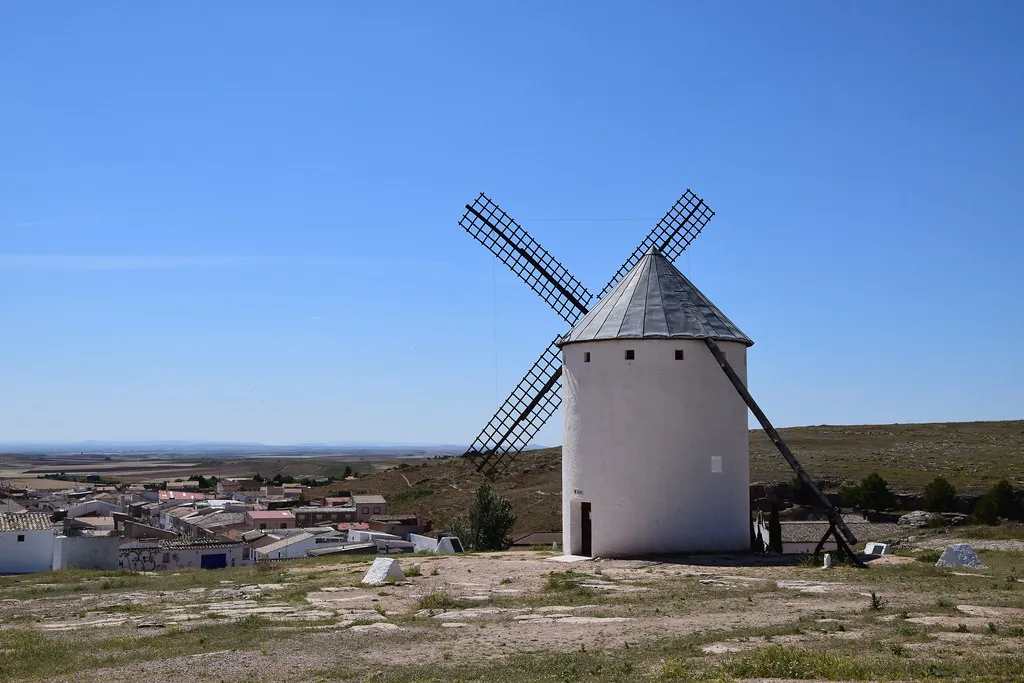
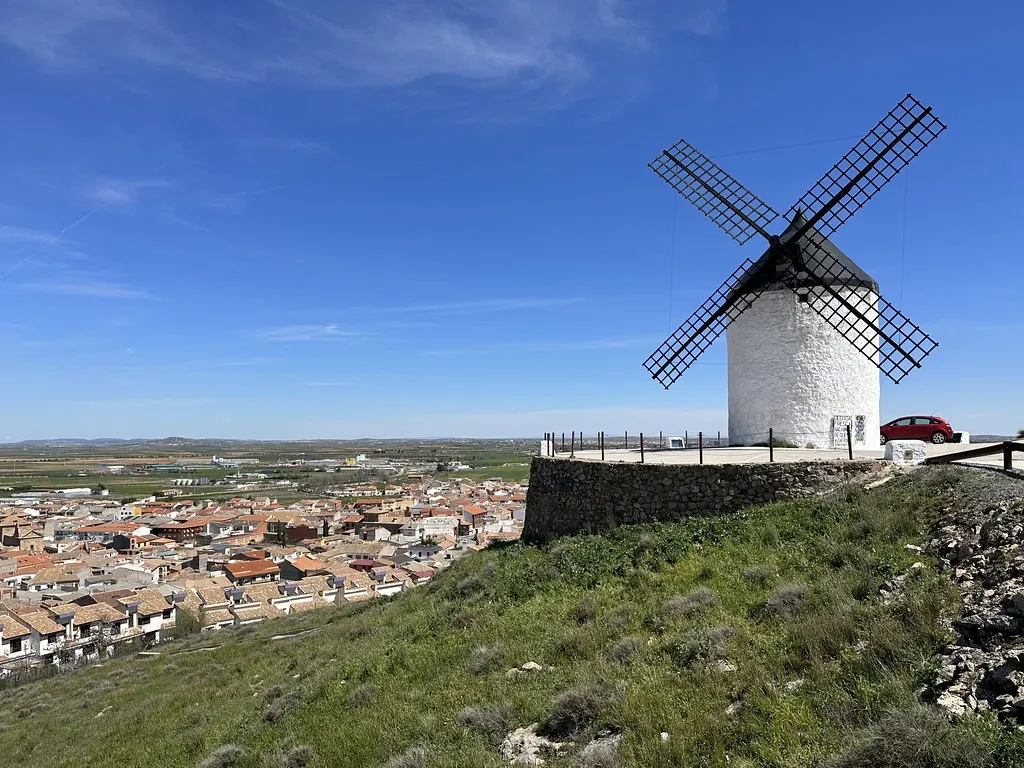
The monastery shop sells disks of local sheep cheese and jars of lavender honey—mild enough for British toast—and will vacuum-seal cheese for travel. Pair it with a €6 bottle of white made from the native Macabeo grape: bright, slightly nutty, ideal picnic gear for the windmill route at Campo de Criptana thirty-five minutes north.
Timing, Tickets and Cash
No bus reaches the village; a car is essential. From Madrid it is 1 h 45 min down the A-3 and CM-412, a straight run broken only by tolls outside Tarancón. Combine Uclés with Cuenca’s hanging houses (50 min east) or plan an overnight in the province to justify the detour.
Monastery hours: 10:30–14:00 and 16:00–18:00 daily except Monday; last entry 45 min before closing. English guides are volunteers—phone ahead (+34 969 13 00 30) if your Spanish stretches only to “una cerveza, por favor.” Bring cash: the ticket desk accepts cards, but the village has no ATM. The nearest hole-in-the-wall is 13 km away in Tarancón; discovering this after dessert is an unwelcome tradition among British visitors.
Fiestas and the Sound of Silence
For fifty weeks a year Uclés trades in quiet. Then the fiesta of La Asunción lands around 15 August and the population quadruples. Marching bands, outdoor discos until 03:00, and a procession that squeezes every visitor into the single main street—fun if you came for atmosphere, less so if you wanted that solitary sunrise photo. Easter is busier than you might expect: the monastery cloister becomes the stage for sung vespers, and the echo of drums bouncing off stone walls is genuinely spine-tingling, believer or not.
Come in late September and you may stumble into the grape harvest. Small tractors towing trailers of Airén grapes clank through the streets; the cooperative winery at the foot of the hill offers free tastings if you turn up around 17:00, plastic thimble provided. The juice is cloudy, sweet, and still fermenting—decidedly an acquired taste.
Worth the Detour?
Uclés gives you monumental Spain without the queues, but it is not a glossy heritage site. Expect rough edges, limited signage, and the sense that you have arrived ten years before the marketing department. If that sounds appealing, devote half a day, linger for lunch, and leave before the afternoon sun flattens every photograph into cardboard. If you need cafés with soya milk and souvenirs in twenty languages, keep driving—the A-3 will deliver you to Cuenca in under an hour.