Full Article
about Vara de Rey
Historic town with palace and chapel; ancient crossroads
Hide article Read full article
A village shaped by the plain
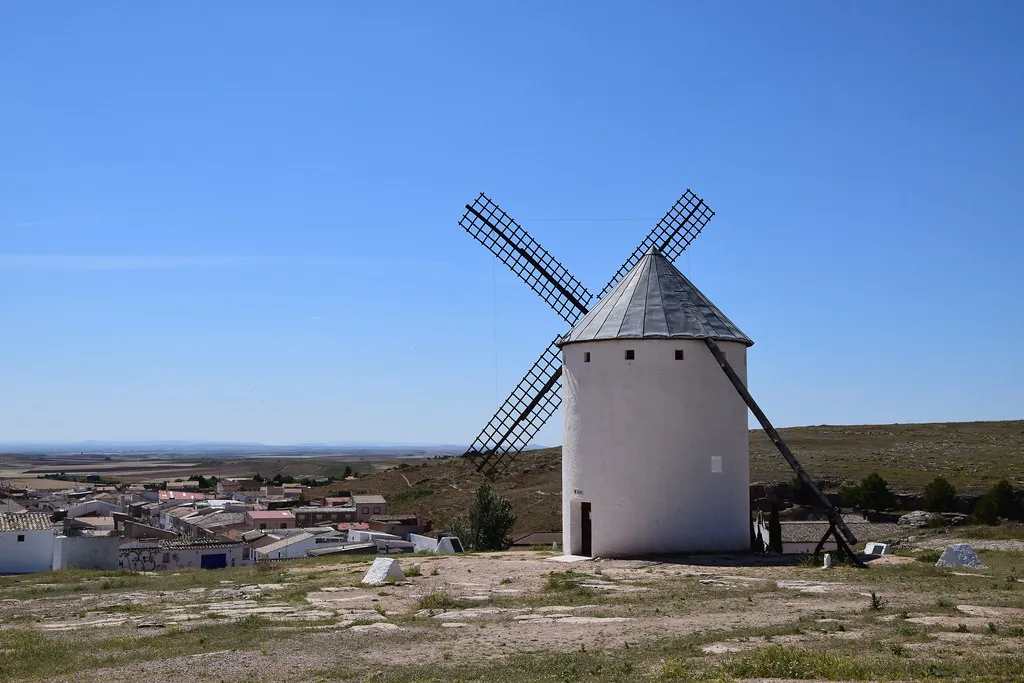
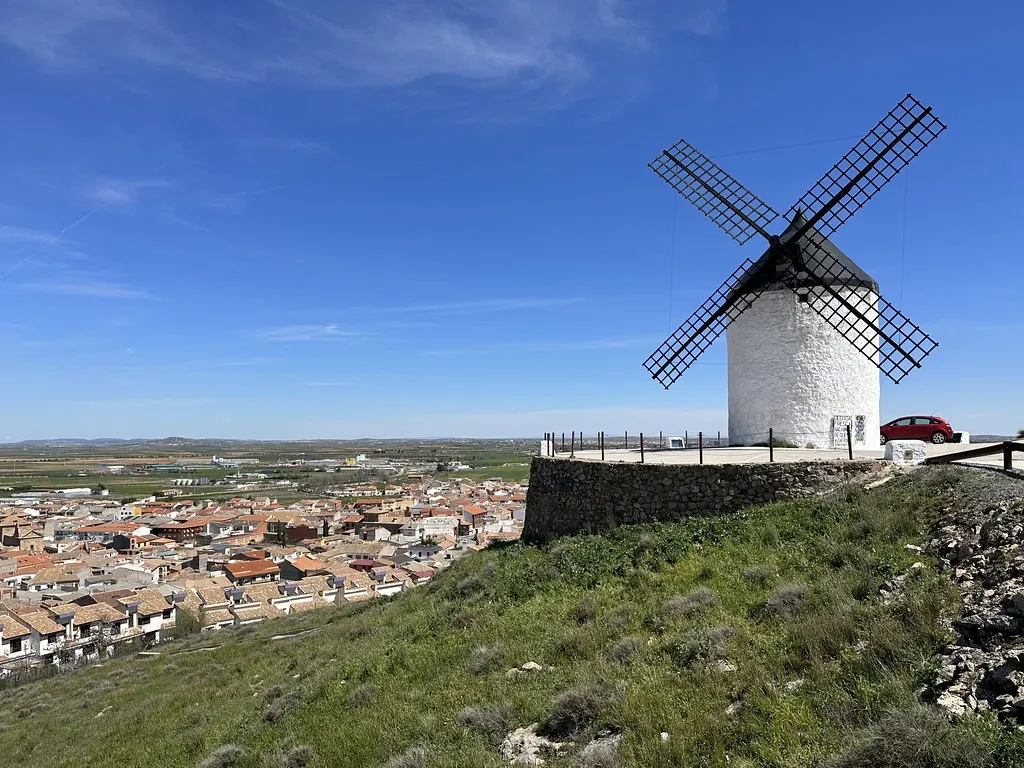
Vara de Rey, in the La Mancha area of the province of Cuenca, is one of those places best understood by looking at what surrounds it rather than searching for headline monuments. It sits on a broad plain at just over 800 metres above sea level, in a landscape of cultivated fields and straight tracks that define much of this part of Castilla La Mancha.
With just under five hundred inhabitants, it follows the familiar layout of agricultural villages in the region. There is a central square, a parish church and a compact network of streets where daily life unfolds. The scale is modest and the rhythm unhurried, shaped by the seasons and by the needs of the surrounding farmland.
This is not a destination built around grand sights. Its interest lies in how it fits into the territory, and in how its urban core remains closely tied to the fields that sustain it.
A name linked to the 19th century
The name Vara de Rey is often associated with events from the Peninsular War, known in Spain as the Guerra de la Independencia, at the start of the 19th century. Troop movements and clashes took place in these lands, which occupied a strategic position between routes connecting the interior of La Mancha with other parts of the Meseta, Spain’s central plateau.
Today, that history does not translate into large commemorative buildings or imposing memorials. There are no grand monuments dominating the skyline. Instead, the legacy is more diffuse, part of the wider historical memory of a region that saw shifting fronts and military manoeuvres.
What stands out more clearly is the continuity of agricultural life and the way the village has maintained its rural character. Vara de Rey remains defined less by singular landmarks and more by its relationship with the open plain around it.
The square, the church and everyday architecture
The heart of the village revolves around its main square and the parish church of San Pedro. The church presents a sober architectural style, in keeping with many rural temples across La Mancha. Its façade is simple, its overall volume compact, and the building reflects the successive alterations that have accumulated over time.
Around this centre stretch short, quiet streets where elements of traditional architecture are still visible. Whitewashed walls are common, bright under the strong summer light. Wide wooden gateways, originally designed to allow carts and farming tools to pass through, punctuate the façades. Behind them lie interior courtyards that remain hidden from the street.
In some of the older houses, the windows are noticeably small. This was a practical solution, helping to keep interiors cooler during the hot Manchego summers and warmer through the cold winters that sweep across the plateau. The architecture speaks of adaptation to climate as much as to custom.
The square functions as a meeting point. At certain times of day it is easy to see neighbours sitting on benches or talking in doorways, a familiar scene in villages of this size. Social life is concentrated and visible, with the plaza acting as a shared living room.
Fields, tracks and steppe birds
Step beyond the last houses and the landscape becomes fully Manchego. Cereal fields and vineyards begin almost immediately, stretching out in broad parcels that change character with the seasons. In spring, green tones dominate. Summer brings the golden hues of the harvest. By autumn, the earth often lies more exposed again, awaiting the next cycle.
Some of the agricultural tracks follow older routes that once linked Vara de Rey with nearby villages such as Villarta and La Pesquera. These paths are now used mainly for farming work, yet they can also be walked or cycled provided tractors and machinery are given priority. The terrain is open and largely flat, with long views across the plain.
In these expanses it is not unusual to spot steppe birds. With patience, species such as the sisón, the aguilucho or, more occasionally, the avutarda can be seen moving among the crops. Their presence is a reminder that this agricultural landscape also supports wildlife adapted to wide, treeless spaces.
The overall impression is of openness. The sky feels large here, and the village appears as a compact cluster within a much broader rural setting.
Festivities rooted in the local calendar
Celebrations in Vara de Rey follow the traditional calendar common to many villages in La Mancha. The patron saint festivities take place in summer and often bring back residents who live elsewhere during the rest of the year. These days tend to include popular events, evening music and activities organised by the community itself.
The feast of San Pedro, linked to the parish church, maintains processions associated with the saint. Religious imagery is carried through the streets, reinforcing the connection between faith and local identity.
In winter, the tradition of San Antón continues to gather neighbours around bonfires. Animals are blessed and food is shared outdoors, an occasion that combines religious custom with social gathering. The scene of flames against the cold season reflects a pattern repeated across rural Spain, though always with local nuances.
These are straightforward festivities, closely tied to everyday life. They are less about spectacle and more about continuity, about marking time together in a small community.
A short, unhurried walk
Vara de Rey can be explored at a relaxed pace in a short amount of time. Rather than seeking out specific attractions, it makes sense to pay attention to details: old wooden gates worn by years of use, farmyards still hinted at behind certain façades, the quiet that settles over the streets in mid-afternoon.
A walk towards the surrounding tracks helps complete the picture. From there, the village can be seen as a small nucleus encircled by fields that continue to set the rhythm of the year. Sowing, growth and harvest shape both the landscape and the routines of those who live here.
The appeal is subtle. It lies in observing how built space and cultivated land fit together, and in understanding how a settlement of modest size persists within a vast plain.
Getting there
From the city of Cuenca, the journey is around 90 kilometres, generally following the CM‑310 and then regional roads. From Madrid, the most common route takes the A‑3 as far as Tarancón before continuing south through secondary roads into this part of the province.
It is advisable to check road conditions before setting out, particularly in winter or after storms, which are relatively frequent across this area of the Manchego plain.