Full Article
about Villacañas
Unique for its visitable underground Silos; major door-making industry
Hide article Read full article
The Village Beneath the Clay
Silo number 14 is reached by a spiral staircase that drops around seven metres. On the wall, a sign dated 1957 records the price of wheat: 7.40 pesetas a kilo. The owner died two decades ago, yet his handwriting remains, chalked onto hardened clay. Villacañas makes more sense when seen from below ground. For centuries it stored its grain there, and much of its memory with it.
The explanation lies in the soil. The clay in this part of La Mancha is easy to cut and, once dry, it holds firm. That made it possible to excavate deep silos with side chambers for storing wheat. Inside, the temperature stays relatively stable throughout the year, helping to preserve the harvest.
Many of these underground deposits were opened in the early modern period, when the local economy depended almost entirely on crops. They also served as hiding places in difficult times. During the Peninsular War, when French troops passed through the area, silos were used to conceal food supplies and valuable possessions.
Hundreds still exist across the municipality. Some remain privately owned. Others have been adapted to explain how they worked. This is not monumental architecture. It is a practical solution devised by farmers who understood the land beneath their feet.
From Granaries to Furniture
The twentieth century brought change. Villacañas shifted from an agricultural economy to one based on wood and furniture. Part of that manual knowledge was already present: someone who could fit a silo door properly could also work a wooden board with precision.
From the mid-twentieth century onwards, workshops began to open. Over time, cooperatives and small industries appeared. Production became specialised in doors and furniture components. The village came to be identified with that trade. Even today, many industrial buildings recall that period of expansion.
Some craftspeople still work wood by hand. They are not numerous, yet it is still possible to see someone examining the grain carefully before applying varnish, with a patience that ignores the pace of modern schedules. The connection between clay and timber may not seem obvious at first glance, but both trades grew from a close understanding of materials and a habit of making do with what was available.
Food and Festivity in Early May
Local cooking reflects what this land has long provided: modest market gardens, small game and bread. Pisto manchego, a stew of tomatoes and peppers, appears regularly on family tables. In Villacañas some cooks add a splash of white wine while the vegetables simmer, although each household follows its own method.
The most important celebrations are held in honour of the Cristo de la Viga at the beginning of May. During those days gazpachos manchegos are prepared, made with game or farm-raised meat. Despite the name, this dish is not a cold soup but a hearty preparation typical of La Mancha.
At dawn on the main day, the Danzantes del Cristo take to the streets. They wear white outfits decorated with coloured ribbons and perform an old choreography in front of the ermita, or chapel. The precise origin of the dance is unclear. The tradition continues because the community recognises it as its own, repeated year after year without the need for a written explanation.
Between Steppe and Wetland
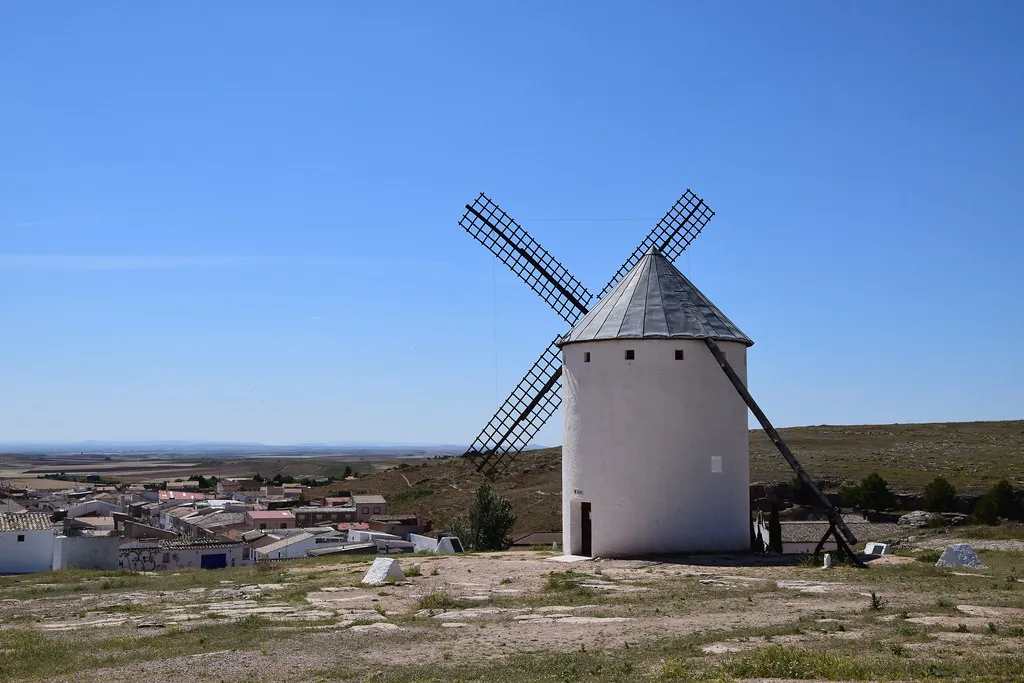
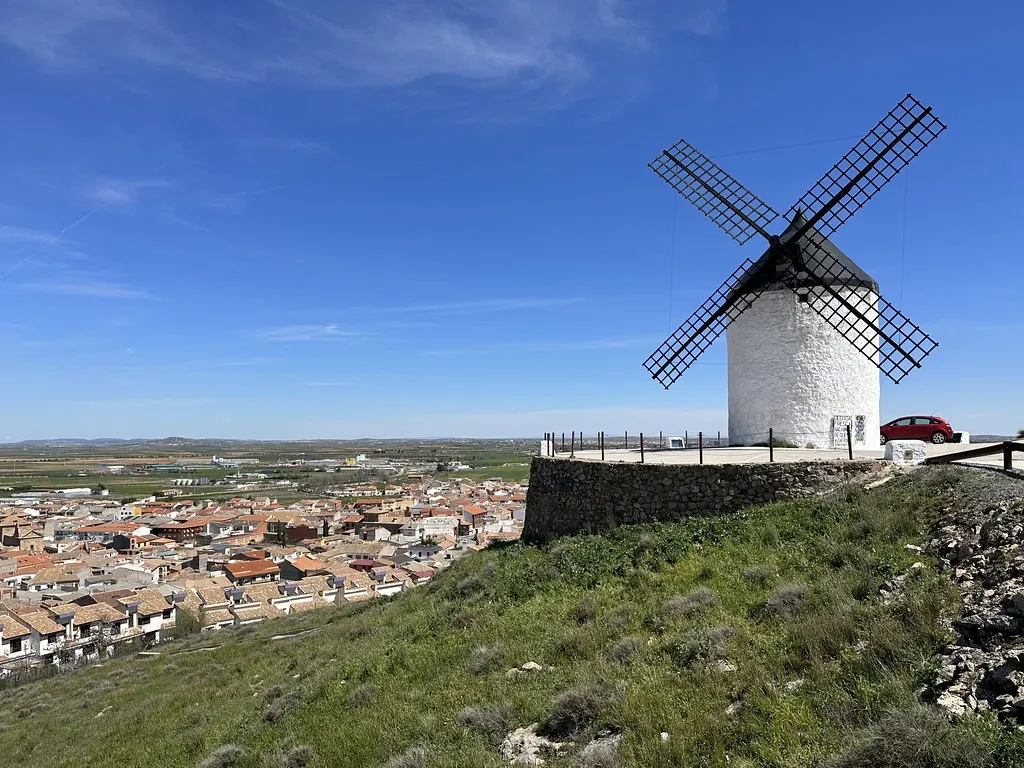
The landscape around Villacañas is that of dry La Mancha: wide plots of land, thyme, cereal crops and open horizons. The light is strong, the terrain flat. A few kilometres away lies the Laguna Larga, one of the wetlands in this part of the province of Toledo. In spring it is common to see water birds, including flamingos stopping over during migration or pausing to rest.
There is a path linking several of these wetlands in the direction of Quero. The route crosses cultivated fields and the occasional agricultural building standing alone in the plain. It is a quiet area, exposed to sun and wind. The terrain has changed little over time because water still sets the rhythm of everything here, whether by its presence or its scarcity.
The contrast between steppe and marsh defines this corner of Castilla La Mancha. Dry farmland stretches out for miles, yet pockets of water gather birdlife and alter the horizon. Both elements are part of the same system that once made underground grain storage essential.
Finding Your Bearings
Villacañas lies in the north-east of the province of Toledo, within the plains of La Mancha. It can be reached by road from Toledo or via the motorway that connects with Madrid. There are also railway stations in nearby towns, from where the journey continues by road.
Some of the visitable silos tend to open at weekends or by prior arrangement. It is advisable to ask in advance at the local information point. Inside, humidity lingers and the stone steps have been worn smooth, so closed footwear is a sensible choice.
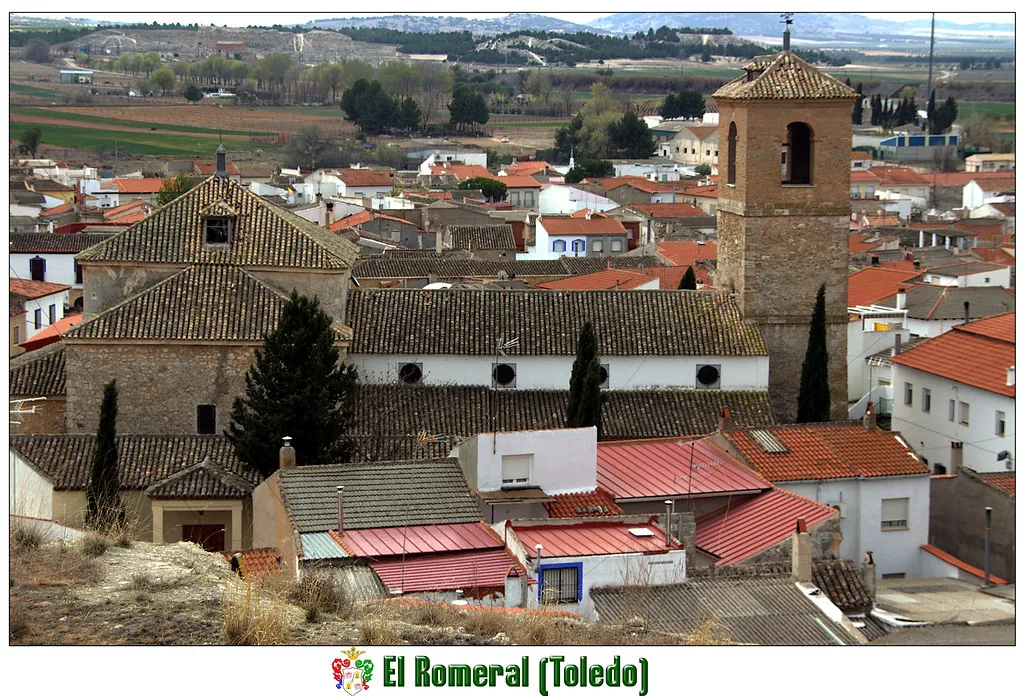
The town centre can be explored easily on foot. Villacañas does not concentrate its story in a single monument. It is dispersed among the mouths of the silos, the wood workshops and the ermitas that appear along quiet streets. The past is not presented as spectacle. It survives in clay walls marked with chalk, in industrial units that once hummed with machinery, and in dances performed at first light each May.
To understand Villacañas is to look down as well as ahead. Beneath the dry fields of La Mancha, the earth still holds the spaces that sustained the community for generations. Above ground, timber and tradition continue to shape daily life. Together they form a place defined less by grand landmarks than by the steady work of those who learned how to live with what the land offered.