Full Article
about Villafranca de los Caballeros
Known for its lakes (Biosphere Reserve) and summer tourism
Hide article Read full article
A slow start in the heart of La Mancha
Tourism in Villafranca de los Caballeros begins quietly. The day here announces itself with church bells rather than traffic. It feels early, not because of the clock but because of the stillness: a shutter opening somewhere, a car starting up, little else.
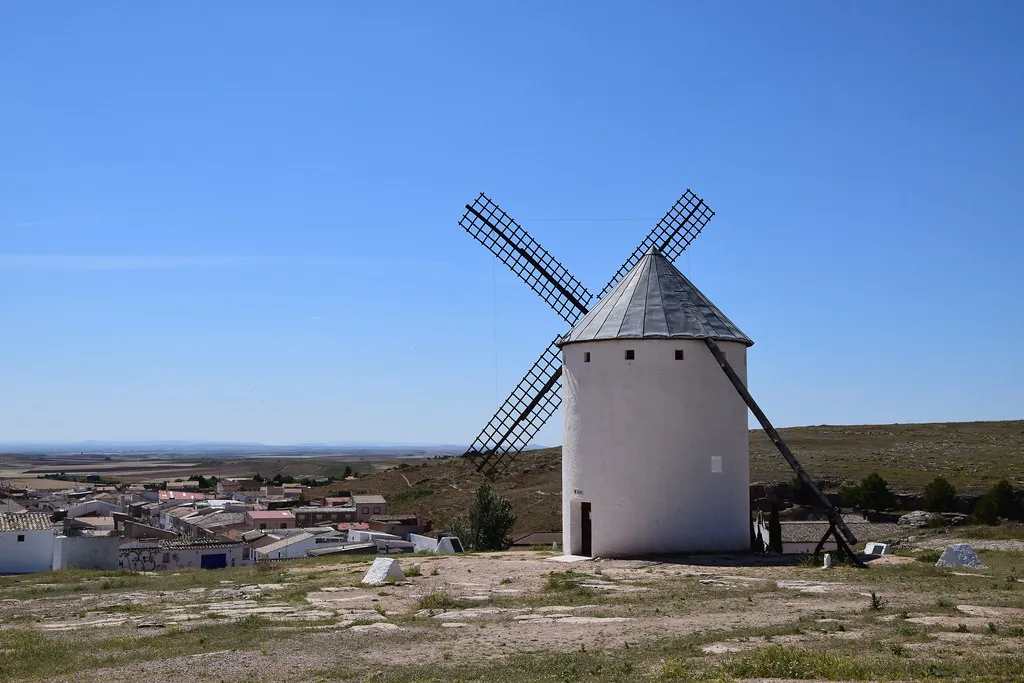
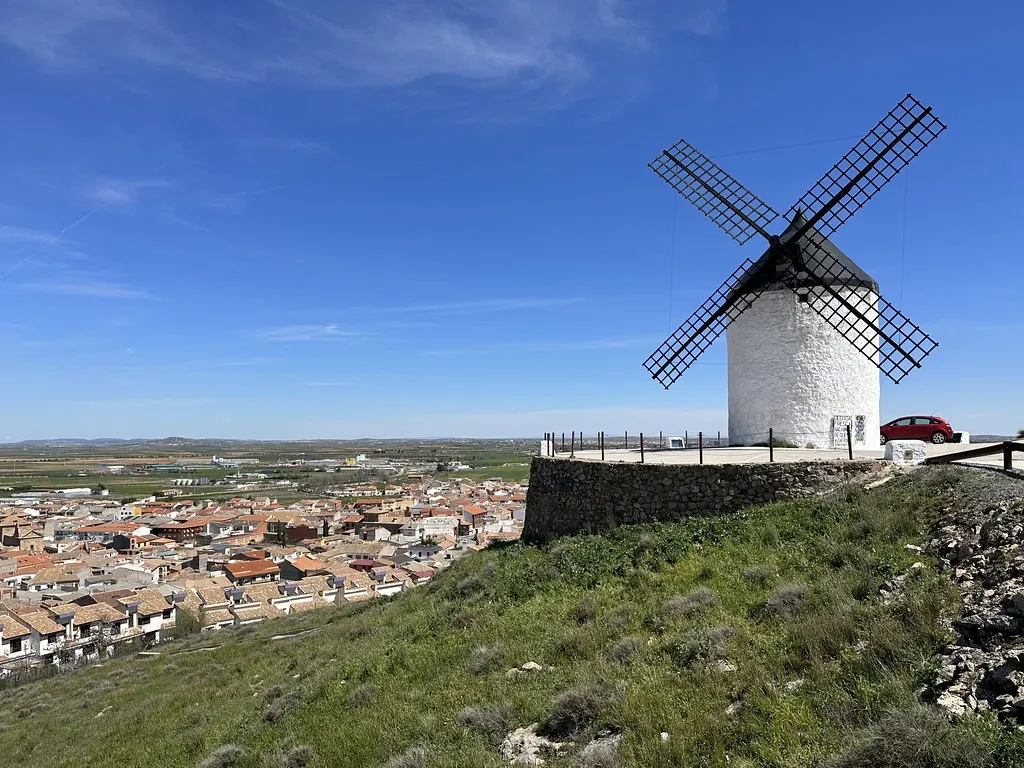
The approach sets the tone. After kilometres of La Mancha countryside that seem to repeat themselves, the village appears almost suddenly. White houses dominate, many edged with the blue trim typical of the area. That colour is not decorative. It comes from limewash, used to protect façades from the sun and built to last without much upkeep.
This is not a place built around ticking off landmarks. Villafranca de los Caballeros makes more sense when you pay attention to how life unfolds in the middle of La Mancha. The first impressions are telling: the smell of bread from a local bakery, freshly turned earth from nearby fields, and the curious glances that quickly size up whether a visitor is in a hurry or prepared to linger. After a couple of walks around the main square, a simple “where are you from?” tends to appear, more as conversation than interrogation.
The lagoons that are never called lakes
About three kilometres from the village lie the lagoons. You do not really see them coming. La Grande, La Chica and La Sal reveal themselves all at once, like three mirrors placed across the flat landscape.
A walk around the area early in the day offers the clearest sense of the place, before the dry wind typical of La Mancha begins to lift dust from the ground. The main sounds are birds and water shifting through reeds. Flamingos are often part of the scene, though photographing them proves less poetic than expected. On camera, they tend to become little more than pink shapes balanced on legs.
The setting may feel calm, but the sun carries weight even when the sky looks slightly overcast. Water, a hat and sun cream make a noticeable difference. Local language matters too. Calling La Grande a lake rather than a lagoon draws puzzled looks, as if a basic rule has been broken. It sits somewhere between humour and quiet correction, the kind of detail that reveals how closely people here identify with their surroundings.
Food that asks for a slower afternoon
Gazpacho manchego often surprises visitors. It shares a name with the cold Andalusian soup, but little else. In Villafranca de los Caballeros it arrives hot, served on a plate, with pieces of flatbread mixed in and meat that may come from game or farm animals. It is firmly rooted in rural life.
A local explanation sums it up clearly: this is food for after a morning of work. It is substantial and designed to sustain. Meals like this help explain why the siesta still holds its place in many villages. The rhythm of the day adapts naturally to what is eaten.
During the Cristo de Santa Ana festivities, usually held towards the end of summer, the atmosphere shifts. Streets become busier, and it is common to see improvised tables set up outside homes. Food circulates among neighbours and relatives in a way that feels habitual rather than staged. The celebration does not present itself as a spectacle for visitors. It continues as a shared tradition, open but not designed for an audience.
Traces of a forgotten aerodrome
Beyond the village centre, in an area of low scrubland, lie the remains of an aerodrome used during the Spanish Civil War. The site does not resemble a formal historical park. At first glance, some of the structures pass as little more than scattered ruins: low walls, shallow trenches, fragments that blend into the landscape.
Context changes everything. When someone from the village explains what stood where, the space takes on a different meaning. Shelters dug into the ground, areas once occupied by hangars, each piece begins to connect. Some years ago, local residents installed panels to help explain the site and preserve its memory.
The route through the area is short and exposed. Wind plays a constant role. On blustery days, the sensation is that the entire landscape shifts slightly, as if nothing is entirely fixed in place.
A place you choose to reach
Villafranca de los Caballeros does not sit along a major motorway. The journey takes place on regional roads, often with long straight stretches cutting through cereal fields and vineyards. It is the kind of drive where the horizon barely changes until, without much warning, the village appears.
Many visitors stop briefly, take a quick look and continue on their way. The character of the place becomes clearer with a bit more time. Late in the afternoon, chairs begin to appear outside front doors, and conversations move easily from one small group to another. It feels informal, almost like a local radio station without a presenter, where voices overlap and drift.
Practical details matter in small ways. Walking around the lagoons is easier with closed footwear, as vegetation can grow thick and some sections of path feel slightly untamed. Encounters tend to shape the experience as much as the setting. If someone offers a coffee while chatting, it is worth accepting. The coffee itself may be ordinary. The conversation often is not.
Villafranca de los Caballeros does not compete with Spain’s more monumental towns. Its appeal lies elsewhere. After a few hours, one idea comes through clearly: a strong sense of community. In the middle of a wide, open plain, that carries more weight than any landmark façade.